
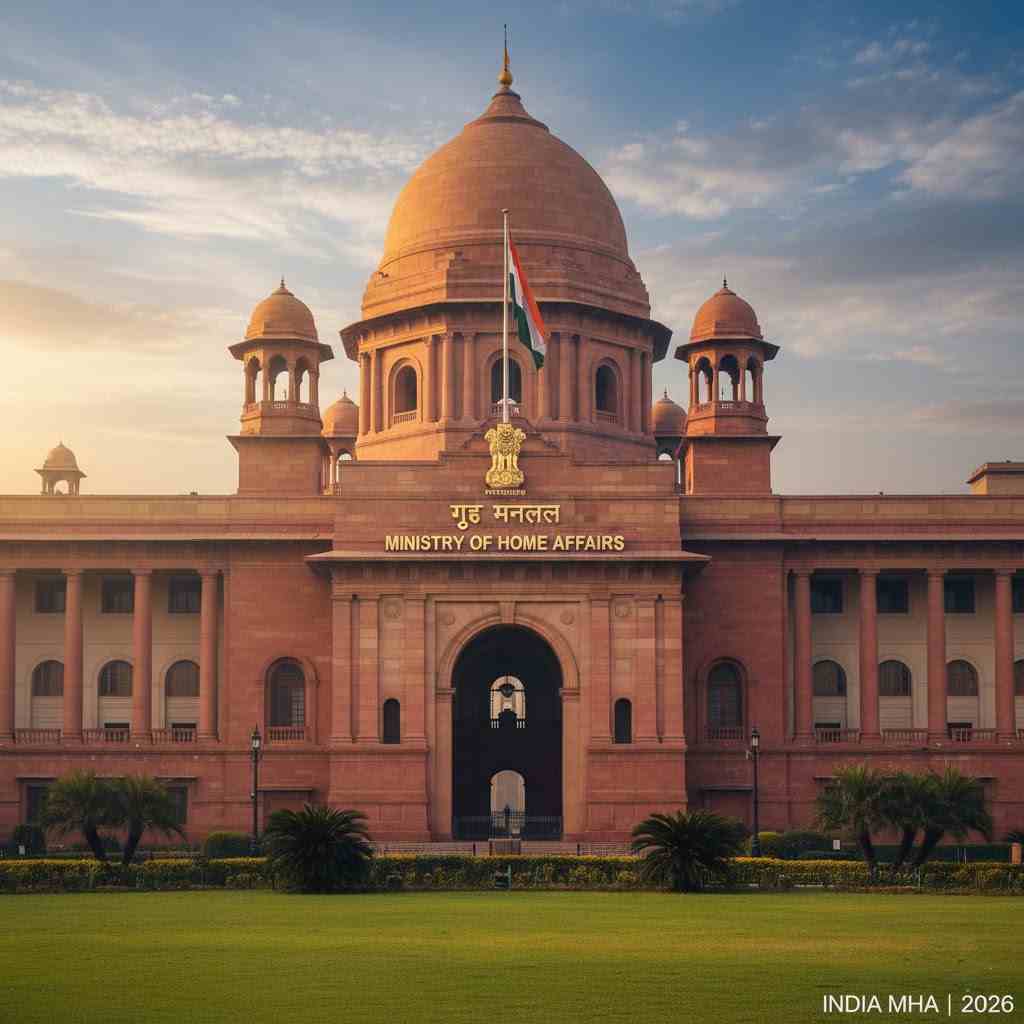
‘Vande Mataram’ Before ‘Jana Gana Mana’:In a move that has sent shockwaves through India’s political and social landscape, the Union Ministry of Home Affairs (MHA) has issued a definitive new set of guidelines regarding the protocol for the national song, ‘Vande Mataram’. According to the rules uploaded on February 6, 2026, the national song must now be played before the national anthem, ‘Jana Gana Mana’, at all government events and schools.
This directive, while aimed at standardizing national symbols during the 150th anniversary of the song’s creation, has reignited a century-old debate over religious imagery, secularism, and the limits of mandated patriotism.
‘Vande Mataram’ Before ‘Jana Gana Mana’:The New Protocol What Has Changed?
The MHA guidelines provide a granular look at how ‘Vande Mataram’ is to be integrated into official life. The most striking change is the reinstatement of the “official version”, which lasts approximately 3 minutes and 10 seconds and includes all six stanzas of Bankim Chandra Chattopadhyay’s original poem.
Previously, only the first two stanzas were commonly used. The new rules also introduce specific ceremonial instructions: when played by a band, the song must be preceded by a roll of drums (or instruments like the mridang or trumpet) to alert the audience, followed by a marching drill of seven steps leading into the melody.
| Feature | New Guideline (Feb 2026) |
| Order of Performance | Must be played/sung before the National Anthem when both are performed. |
| Official Duration | Approximately 3.10 minutes (full six stanzas). |
| Audience Conduct | All persons must stand to attention when played (except in cinema/newsreels). |
| Presidential Events | Mandated during arrival and departure; before and after addresses on AIR/DD. |
| Mandatory Settings | All schools, government events, and civil investitures (e.g., Padma Awards). |
The 1937 Conflict Returns
The inclusion of all six stanzas is perhaps the most contentious point. In 1937, the Indian National Congress—guided by Mahatma Gandhi and Rabindranath Tagore—truncated the song to its first two stanzas. This was a move toward inclusivity; the first two verses focused on the beauty of the motherland, while the later stanzas contained explicit imagery of Hindu goddesses like Durga and Lakshmi.
By mandating the full version, the current government has broken with nearly 90 years of tradition. Prime Minister Narendra Modi has characterized the 1937 decision as a “historical blunder” that “sowed the seeds of partition,” alleging that the Congress bowed to pressure from the Muslim League. In response, Priyanka Gandhi Vadra and other Opposition leaders argued in the Lok Sabha that the decision was a collective one made by icons like Sardar Patel and Maulana Azad to reflect India’s secular character.
Standing for the Song: The Legal Grey Area
While the MHA requires the audience to stand, the legal standing of this “requirement” remains complex. Unlike the National Anthem, which is protected under the Prevention of Insults to National Honour Act, 1971, ‘Vande Mataram’ does not have a dedicated statutory framework for penalties.
Legal experts point to the landmark Bijoe Emmanuel vs State of Kerala (1985) case, which ruled that citizens cannot be compelled to sing if it conflicts with religious beliefs, provided they show respect. The All India Muslim Personal Law Board (AIMPLB) and Jamiat Ulama-i-Hind have termed the mandate “unconstitutional” and a violation of Article 25 (Freedom of Religion), arguing that certain verses portray the motherland as a deity.
The “Classroom Command” & Regional Furore
The MHA has placed heavy emphasis on schools, stating that the day’s work may begin with community singing of the song. Authorities are tasked with “popularising” it to foster a “spirit of nationalism.”
However, the directive has sparked a specific firestorm in West Bengal. With assembly elections approaching, the Trinamool Congress (TMC) has labeled the move an “insult to Rabindranath Tagore” by prioritizing Bankim Chandra’s song over Tagore’s anthem. State Education Minister Bratya Basu alleged that the move aims to create a “hierarchy” of symbols, while the BJP maintains it is simply restoring the song to its “full dignity” in its milestone 150th year.
What’s Next?
As the guidelines take effect, a legal challenge in the Supreme Court seems inevitable. With the 9th Party Congress and major state elections on the horizon, the performance of the full ‘Vande Mataram’ will become a litmus test for the country’s evolving definition of national identity.