
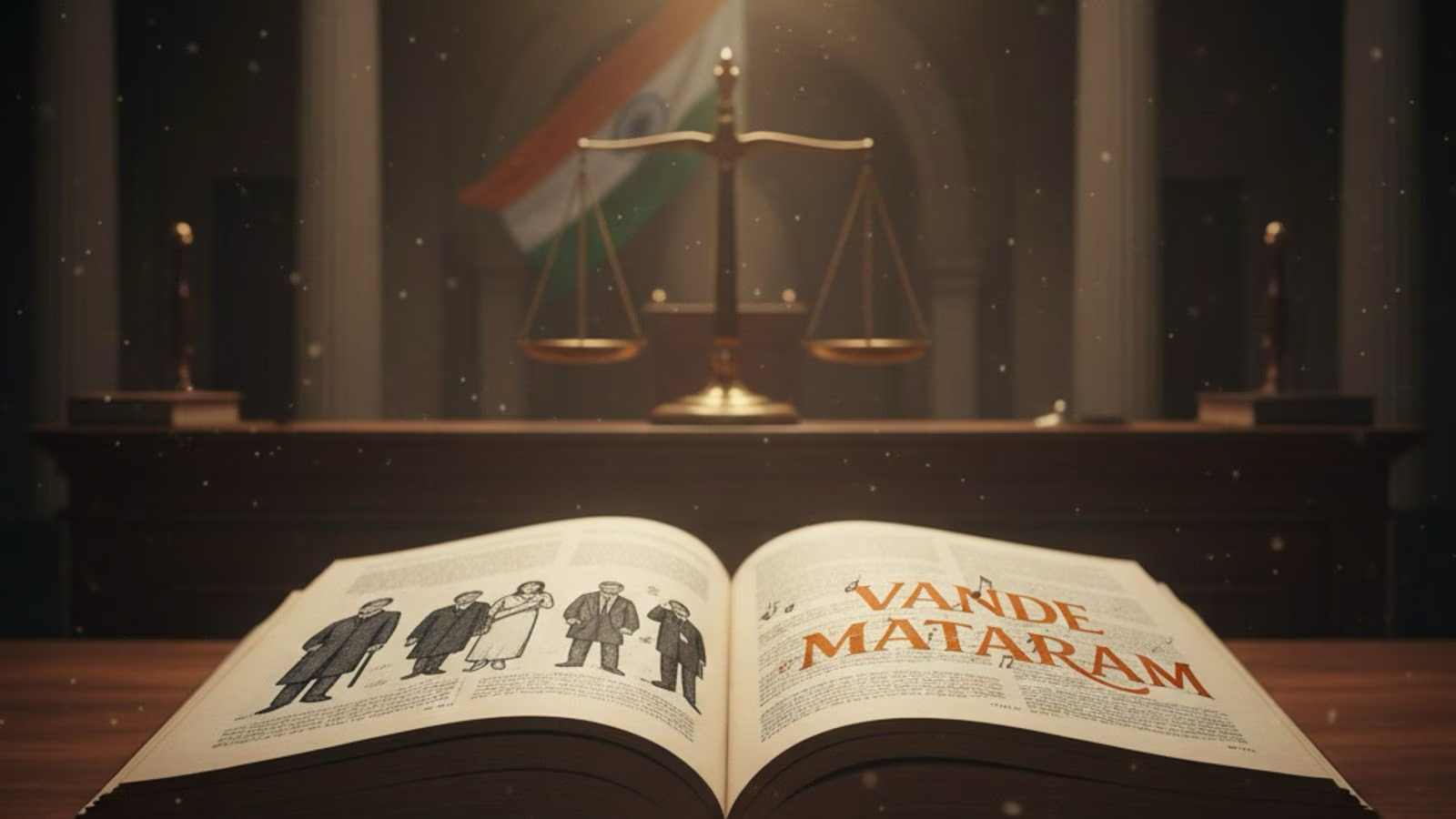
Battle of the Songs in Poll-Bound Bengal: The air in West Bengal, already thick with the electrical charge of upcoming Assembly elections, has been further ignited by a new directive from the Union Ministry of Home Affairs (MHA). On February 12, 2026, a formal notification mandated that the national song, ‘Vande Mataram’, must be sung or played before the national anthem, ‘Jana Gana Mana’, at all official functions.
While the Centre frames this as a “restoration of dignity” for Bankim Chandra Chattopadhyay’s composition, the ruling Trinamool Congress (TMC) has branded it a direct affront to Rabindranath Tagore. The move has reopened historic wounds and transformed a matter of protocol into a high-stakes battle over Bengali identity and pride.
Battle of the Songs in Poll-Bound Bengal: A New Hierarchy?
The MHA notification, dated January 28 but officially notified this week, establishes the first-ever codified protocol for the national song. It specifies that:
- The “Full Version” is Mandatory: All six stanzas of Bankim Chandra’s poem, lasting 3 minutes and 10 seconds, must be performed.
- Precedence: When both are performed together, ‘Vande Mataram’ must precede ‘Jana Gana Mana’.
- Occasions: This protocol applies to the unfurling of the national flag, the arrival/departure of the President and Governors, and the presentation of civilian honors like the Padma Awards.
TMC: “Attempt to Diminish Tagore”
Senior TMC leader and state Education Minister Bratya Basu led the charge against the Centre, alleging that the BJP is attempting to create a “cultural hierarchy.” Basu argued that by forcing the national anthem to follow the national song, the government is subtly “belittling” Tagore’s legacy.
“They are trying to create a hierarchy. In the process, Rabindranath has been insulted. Certain communal forces have historically been uncomfortable with Tagore’s inclusive and secular worldview.” — Bratya Basu, Education Minister, West Bengal
Other TMC leaders, like Chandrima Bhattacharya, linked the move to the upcoming polls, suggesting it is a desperate attempt at symbolism. For the TMC, this controversy fits perfectly into their “Bengali vs. Outsider” narrative, portraying the BJP as a force that does not understand or respect the nuanced cultural history of Bengal.
BJP: “Correcting a Historical Wrong”
The BJP has dismissed the allegations of insulting Tagore as “childish” and politically motivated. Union Minister Sukanta Majumdar and state president Samik Bhattacharya countered that it was the Congress party that historically “truncated” ‘Vande Mataram’ in 1937 under the guise of communal appeasement.
BJP leaders argue that the 150th year of the song’s composition is the perfect milestone to restore it to its “full glory.” They maintain that Tagore himself first sang the song publicly in 1896 and that there is no inherent conflict between honoring Bankim Chandra and respecting Tagore.
| Party | Stance on the Directive | Core Argument |
| BJP | Support | Restoring “full dignity” to the national song and correcting the 1937 truncation. |
| TMC | Oppose | An “insult to Tagore” and an attempt to impose a Hindutva-aligned hierarchy. |
| Congress | Oppose | A “divisive ploy” aimed at scoring electoral points in poll-bound Bengal. |
The Historical Fault Lines
The row revives a debate that has lingered since the 1930s. While the first two stanzas of ‘Vande Mataram’ are widely accepted as a secular salutation to the motherland, the subsequent four stanzas contain explicit religious imagery. The 1937 Congress decision to use only the first two stanzas was a compromise aimed at inclusivity.
By mandating all six stanzas, the Centre is effectively overturning a 90-year-old consensus. In Bengal, where both Bankim Chandra and Tagore are towering figures, the TMC is navigating a delicate path—honoring the “Sahitya Samrat” (Bankim) while positioning themselves as the ultimate protectors of the “Gurudev” (Tagore).
Conclusion: A Litmus Test for Bengali Pride
As the Assembly elections approach, this “Battle of the Songs” is likely to dominate the campaign trail. For the BJP, it is a test of their nationalist credentials; for the TMC, it is a tool to consolidate the Bengali sub-nationalist vote. In the heart of Kolkata, the question remains: Can two icons of the soil be honored equally, or must one always come before the other?
Disclaimer: This information is based on various inputs from news agency.