
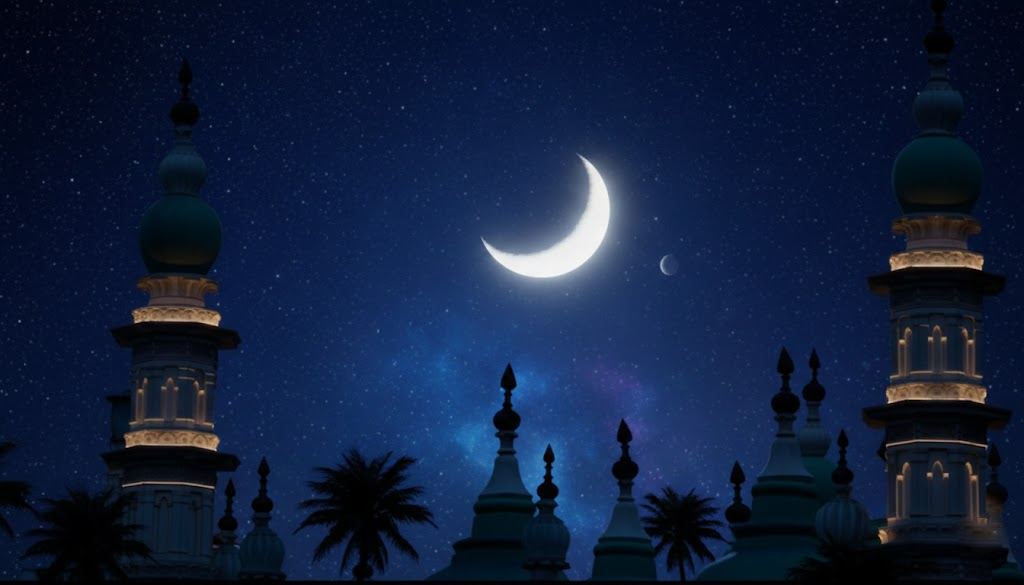
NEW DELHI —Ramadan 2026: The spiritual atmosphere across India shifted into a higher gear on Wednesday evening as the crescent moon (Hilal) was officially sighted, marking the beginning of the holy month of Ramadan (Ramzan) 2026.
Following the tradition of the Islamic lunar calendar, the Shahi Imam of Delhi’s Fatehpuri Mosque, Maulana Mufti Mukarram Ahmed, made the formal announcement on February 18. “The moon has been sighted in various parts of the country. Consequently, the first fast (Roza) of the month will be observed on Thursday, February 19,” the Shahi Imam declared.
The Naib Shahi Imam of Jama Masjid, Syed Shaban Bukhari, also confirmed the sighting, signaling the start of a month-long period of intensive prayer, self-discipline, and community service for millions of Muslims across the subcontinent.
Ramadan 2026: Global and Regional Sightings
While India prepares for its first fast on Thursday, the holy month has already commenced in Saudi Arabia and other Gulf nations on Wednesday, February 18. The Saudi moon-sighting committee verified the crescent on Tuesday evening. In contrast, officials in Oman and Turkiye reported that the moon was not visible on Tuesday, leading them to align their first day of fasting with India on February 19.
This variation is common in the Islamic tradition, where the start of the month is determined by the physical sighting of the thin crescent sliver, rather than purely astronomical calculations.
Ramadan 2026: The Five Pillars and the Purpose of Fasting
Fasting during Ramadan is one of the Five Pillars of Islam, the foundational acts of worship that define a Muslim’s life.
- Shahada: Declaration of faith.
- Salah: Five daily prayers.
- Zakat: Giving to charity.
- Sawm (Fasting): Abstinence during Ramadan.
- Hajj: Pilgrimage to Mecca.
The primary goal of the fast is to achieve Taqwa (God-consciousness). By abstaining from food, drink, smoking, and negative behaviors from dawn until sunset, believers seek to purify the soul, practice patience, and cultivate empathy for the less fortunate.
Daily Rituals: From Sehri to Taraweeh
The daily routine during Ramadan is structured around specific spiritual and physical milestones:
- Sehri (Suhoor): The pre-dawn meal consumed before the first light. It is a vital moment for families to gather and prepare for the day’s abstinence.
- Roza (The Fast): A 13- to 14-hour period of complete abstinence.
- Iftar: The sunset meal to break the fast, traditionally started with dates and water in emulation of the Prophet Muhammad.
- Taraweeh: Special congregational night prayers performed at mosques after the Isha prayer. During these sessions, the entire Quran is often recited over the course of the month.
Sample Prayer Timings (New Delhi – Day 1):
- Fajr (Fast Begins): 5:37 AM
- Maghrib (Fast Ends): 6:14 PM
A Call for National Well-being
Beyond the personal spiritual journey, Islamic leaders in India have emphasized the communal and national spirit of the month. Mufti Mukarram Ahmed, during his announcement, made a poignant appeal to the community:
“I urge everyone to pray as much as possible for the well-being and prosperity of the 140 crore people of our country. This month is a time for peace, harmony, and seeking blessings for all.”
Sharing the Blessings
Ramadan is also a time of joy and social connection. For those wishing to greet friends and family, traditional greetings include:
- Ramadan Mubarak: (Have a blessed Ramadan)
- Ramadan Kareem: (May Ramadan be generous to you)
As the moon rises over India tonight, mosques are lighting up, markets in neighborhoods like Old Delhi and Hyderabad are bustling with preparations, and the “Night of Power” (Laylat al-Qadr) looms ahead in the final ten nights of the month.