
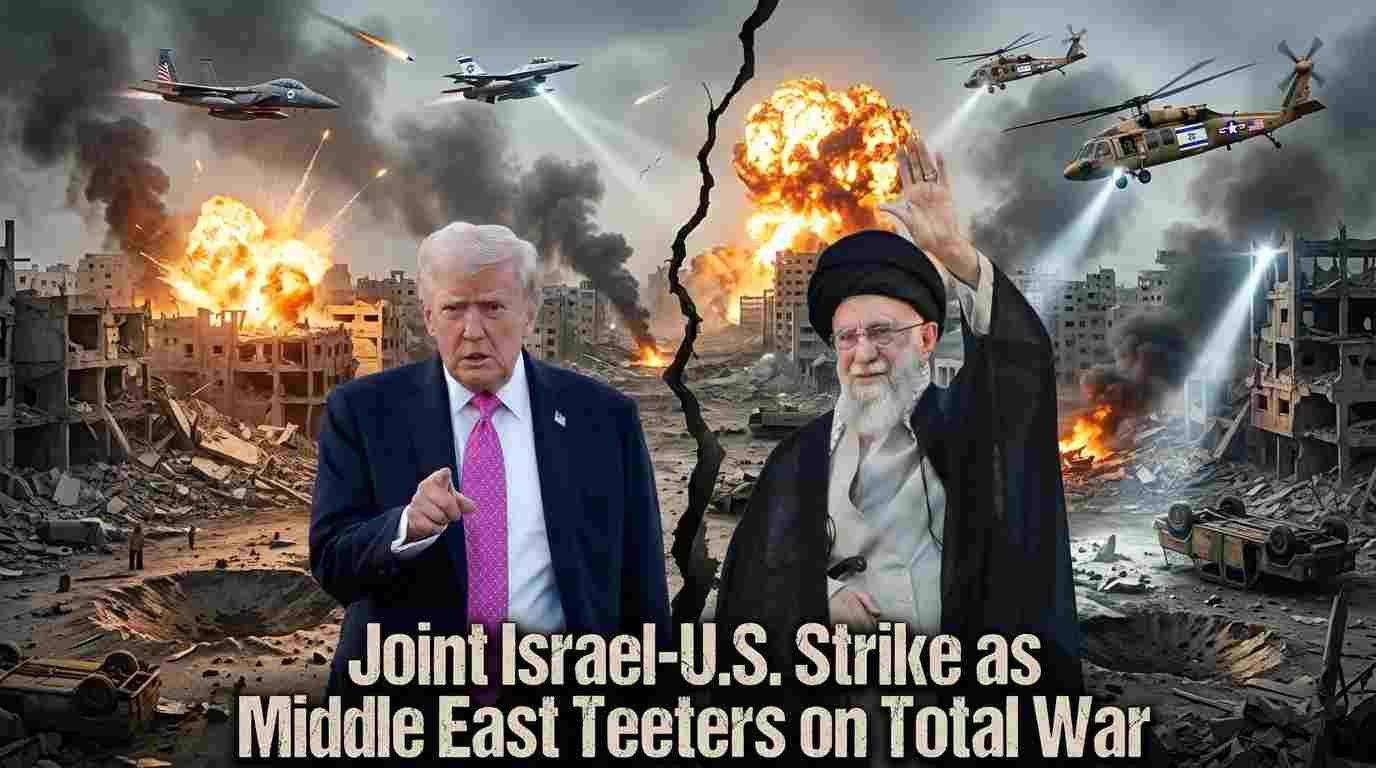
Israel-U.S. Joint attack on Iran: The modern history of the Middle East has reached a violent, era-defining inflection point. As of March 1, 2026, the Islamic Republic of Iran has confirmed the death of its Supreme Leader, Ayatollah Ali Khamenei, following a massive, coordinated aerial assault by Israeli and American forces. The assassination of the 86-year-old cleric—the most powerful figure in Iran for over three decades—has dismantled the “shadow war” and replaced it with an open, high-kinetic conflict that is currently engulfing the region.
Israel-U.S. Joint attack on Iran : Operation Lion’s Roar
The escalation peaked in the early hours of Sunday morning when the Israel Defense Forces (IDF), in tandem with U.S. Central Command, launched “Operation Lion’s Roar” (referred to as Operation Epic Fury by U.S. officials). This was not a mere skirmish; it was a decapitation strike.
Precision munitions leveled the Supreme Leader’s office and key administrative hubs in Tehran. Iranian state television broke into its regular programming with a somber announcement: “The Leader of the Revolution and the Islamic Republic of Iran, Sayyed Ali Khamenei, has been martyred in the cowardly U.S.-Israeli aggression.”
The carnage was extensive. Reports indicate that Khamenei was not the only target. Approximately 40 high-ranking officials, including Admiral Ali Shamkhani and elite commanders of the IRGC, were also killed.
The Blowback: Operation Truthful Promise 4
Iran’s response has been catastrophic for regional stability. Within hours, the IRGC launched Operation Truthful Promise 4, a retaliatory campaign involving hundreds of ballistic missiles and suicide drones targeting not just Israel, but U.S. assets across the Gulf.
The Toll on the Ground
- In Israel: While the Arrow and Iron Dome systems intercepted the majority of the swarm, a missile strike in central Tel Aviv resulted in at least one fatality and over 20 injuries. A state of emergency has been declared nationwide.
The Wider Gulf: In a stunning escalation, Iran struck U.S. military hubs and commercial centers in the UAE, Qatar, and Bahrain.
- Dubai: Shrapnel caused a fire on the facade of the Burj Al Arab and damaged a concourse at Dubai International Airport.
- Bahrain: The IRGC claimed a direct hit on the command center of the U.S. 5th Fleet.
- Iranian Casualties: The Iranian Red Crescent reports that initial strikes killed over 200 people across 24 provinces. A strike on a school in Minab has been cited by Tehran as a major civilian atrocity, further fueling the vow for “unlimited revenge.”
Global Fallout: Energy and Aviation
The world economy is already feeling the shockwaves. Global oil prices surged 15% in early trading as Tehran threatened to close the Strait of Hormuz.
In the skies, aviation has ground to a halt. Major carriers including Etihad, Emirates, and Qatar Airways have suspended departures, leaving thousands of travelers—including high-profile athletes like Indian shuttler PV Sindhu—stranded in regional hubs as airspace across the Middle East is shuttered.
What Comes Next?
As the IRGC enters the “third and fourth waves” of its retaliation, the question is no longer if a war will happen, but how far it will spread. With President Trump warning of “force never seen before” and Iran entering 40 days of official mourning, the “Lion’s Roar” may have silenced one leader, but it has awakened a regional firestorm that shows no sign of cooling.
Disclaimer: This information is based on various inputs from news agency.