
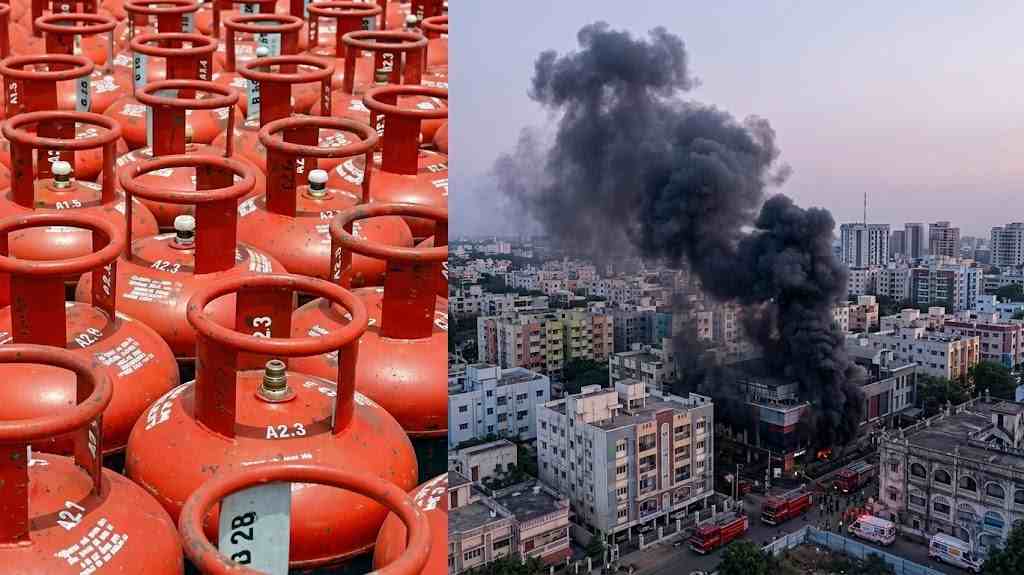
Crisis in the Kitchen: The aroma of freshly brewed filter coffee and sizzling dosa that typically defines the morning rush in India’s major metros is being replaced by a sense of growing panic. In a series of alarming developments, hotel and restaurant industry bodies across Bengaluru, Chennai, and Mumbai have sounded an SOS over a critical shortage of commercial LPG cylinders.
The shortage, triggered by intensifying geopolitical tensions in the Middle East and subsequent supply chain disruptions, has pushed the hospitality sector to the brink. With many establishments warning of imminent closure and the government scrambling to ramp up domestic production, the nation’s food service industry—a vital lifeline for millions—is staring at a historic energy crisis.
The Brewing Crisis: Why the Cylinders Stopped Flowing: Crisis in the Kitchen:
Bengaluru, Chennai, and Mumbai Hotels Warn of Massive Shutdowns Amid LPG Shortage: The current predicament is a direct fallout of the Iran-Israel-US conflict. As the war intensified earlier this month, key energy shipping routes in the Middle East—most notably the Strait of Hormuz—faced severe disruptions. For a country like India, which imports approximately 60% to 62% of its LPG requirements (largely from Persian Gulf nations like Saudi Arabia and Qatar), any tremor in the Middle East is felt immediately at the local burner.
Adding to the supply woes is a stinging price hike. Last Saturday, prices were revised upwards as global crude oil benchmarks surged past $100 per barrel.
- Household (Domestic) LPG: Increased by ₹60
- Commercial LPG: Increased by ₹115
While the price hike was a blow to the bottom line, the total “halt” in supply reported by distributors has proven to be the final straw for many restaurateurs..
Bengaluru: “Till the Last Drop”
Crisis in the Kitchen: Bengaluru, Chennai, and Mumbai Hotels Warn of Massive Shutdowns Amid LPG Shortage: In Bengaluru, the situation turned dire on Monday. The Bangalore Hotels Association issued a stark warning that operations across the city are likely to be paralyzed starting March 10. The association, representing over 3,000 establishments, noted that the sudden stoppage of gas supply is a “big blow,” especially after oil marketing companies (OMCs) had previously guaranteed an uninterrupted supply for 70 days.
“Since the gas supply has stopped, the hotels will be closed from tomorrow. Since the hotel industry is an essential service, common people, students, and medical professionals, who rely on the hotels for daily meals, will be affected.”
Bangalore Hotels Association Statement
PC Rao, the association’s president, later struck a more defiant but somber tone, telling reporters that hotels would continue to function “till the last drop” to serve the public, but admitted the industry faces extreme difficulties without government intervention.
Chennai: An SOS to the PMO
Chennai’s hospitality sector has also reached a breaking point. M Ravi, President of the Chennai Hotels Association, has written directly to Prime Minister Narendra Modi, describing the situation as “critical.”
The association highlighted that the food industry is not just about leisure; it is a 24/7 support system for:
- Hospitals: Providing timely meals for patients and staff.
- IT Parks & Corporate Hubs: Feeding the city’s massive workforce.
- Student Hostels: Serving thousands of students who do not have kitchens.
- Banquet Services: Many star hotels are struggling to fulfill pre-booked wedding and corporate commitments.
Mumbai: Menu Cuts and Reduced Hours
The “City of Dreams” is also waking up to a nightmare. In Mumbai, the Federation of Hotel and Restaurant Association of India (FHRAI) reported that nearly 20% of hotels and restaurants have already begun to suspend operations.
Iconic eateries in food hubs like Dadar, Andheri, and Matunga have taken desperate measures to stay afloat:
- Shortened Menus: Deleting labor-intensive, slow-cooked items like Dal Makhani or Rava Dosa that consume excessive gas.
- Restricted Hours: Closing early or opening late to conserve their dwindling remaining stocks.
Industry Bodies Demand Clarity
The FHRAI and the National Restaurant Association of India (NRAI) have both flagged a disconnect between government statements and the ground reality. While the Centre maintains there is no formal ban on commercial LPG, the FHRAI states that distributors are withholding supplies, citing a “government order dated March 5.”
Jaison Chacko, Secretary General of FHRAI, has called for a “clear mandate” to be issued to all OMCs to ensure seamless distribution. Similarly, the NRAI took to X (formerly Twitter) to urge urgent intervention, noting that the restaurant industry’s ability to serve as an essential service is being “severely impacted.”
The Government’s Response: Production and Panels
Faced with mounting pressure, the Ministry of Petroleum & Natural Gas has moved into damage control mode. The government’s strategy currently focuses on two fronts:
| Action Item | Details |
| Refinery Mandate | Orders issued to oil refineries to maximize LPG production. |
| Prioritization | Extra production is being funneled primarily for Domestic (Household) use. |
| Hoarding Checks | A 25-day inter-booking period has been introduced to stop black marketing. |
| Committee Review | A panel of three Executive Directors from OMCs will review requests from the hotel industry. |
Hardeep Singh Puri, the Union Minister for Petroleum and Natural Gas, attempted to calm the markets last week, stating that India is in a “comfortable position” and that energy requirements are being met through non-Hormuz routes. However, for the small restaurant owner in Bengaluru or Chennai who cannot get a cylinder delivered, those words offer little comfort.
Market Outlook: A Volatile Future
While oil prices saw a slight dip on Tuesday—with Brent crude falling to roughly $92.45—the market remains incredibly sensitive. Any further escalation in the West Asia conflict could send prices soaring back into the triple digits.
As of today, the hospitality industry remains on high alert. The next 48 to 72 hours will be crucial in determining whether India’s major cities will see a widespread “kitchen strike” or if the government’s promised production ramp-up will reach the distributors in time.