
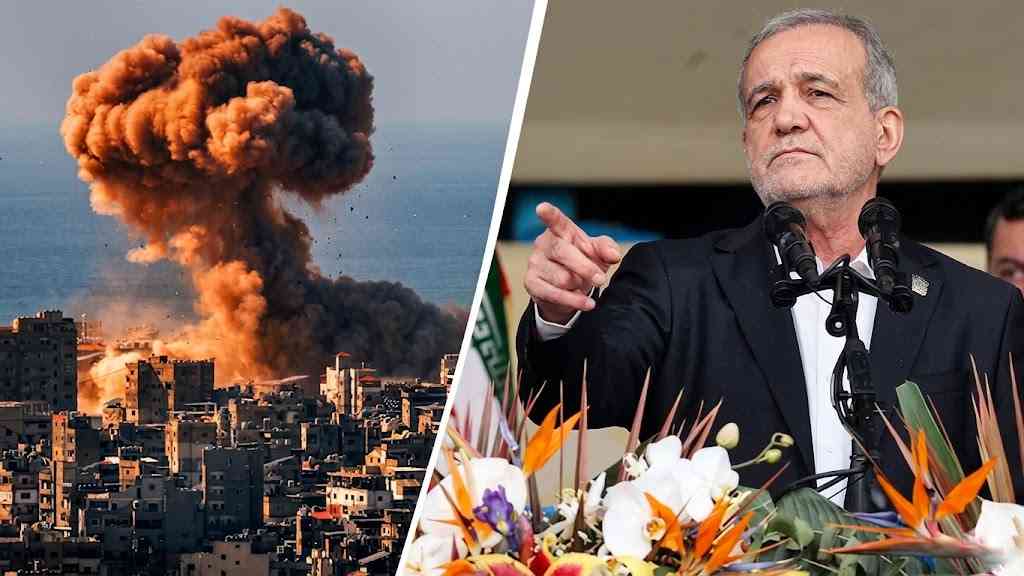
TEHRAN —Iran Outlines 3 Hardline Conditions :As the high-stakes military campaign between the United States, Israel, and Iran enters its third week of devastating intensity, Iranian President Masoud Pezeshkian has formally outlined three non-negotiable conditions to halt the hostilities.
In a statement that underscores the widening chasm between Tehran and the Western alliance, Pezeshkian declared that the conflict—which has already claimed the life of Iran’s Supreme Leader, Ayatollah Ali Khamenei—can only end through a framework of international guarantees and financial accountability.
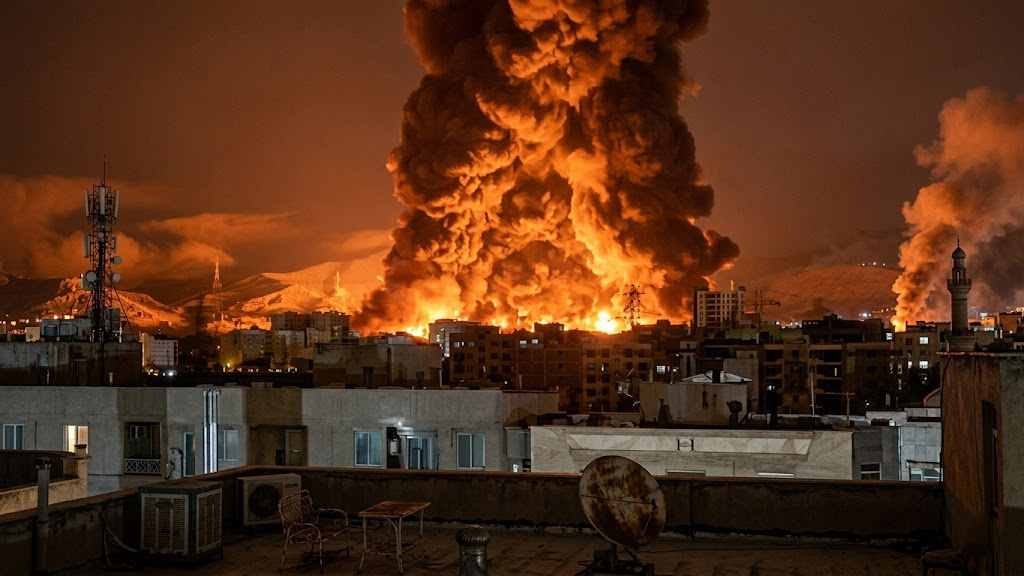
The Three Pillars of Tehran’s Ultimatum
Iran Outlines 3 Hardline Conditions to End War with US and Israel:
- Recognition of Legitimate Rights: Tehran demands that the international community and the US-Israel alliance officially acknowledge Iran’s “legitimate rights,” a term often used by Iranian officials to refer to their nuclear program and regional security interests.
- Payment of Reparations: Iran is seeking full financial compensation for the extensive damage to its infrastructure, ports, and public buildings caused by the US and Israeli bombardment.
- Firm International Guarantees: The President insisted on legally binding assurances from the global community to prevent any future “aggression” or preemptive strikes against Iranian soil.
“The only way to end this war—ignited by the Zionist regime and the US—is recognizing Iran’s legitimate rights, payment of reparations, and firm international guarantees against future aggression,” Pezeshkian wrote.
Escalation at Sea: The Threat to Global Energy
Iran Outlines 3 Hardline Conditions to End War with US and Israel: While the President spoke of peace conditions, the Iranian military rhetoric remains fiercely combative. Abolfazl Shekarchi, spokesperson for Iran’s armed forces, issued a chilling warning on state-run IRIB TV. He asserted that no economic center in the Persian Gulf would be safe if Washington followed through on threats to strike Iranian port facilities.
“If our ports and docks are threatened, all ports and docks in the region will be our legitimate targets,” Shekarchi warned. He also called on regional neighbors to “expel the Americans from their lands,” signaling Iran’s intent to turn the conflict into a broader regional struggle.
The impact on global markets has been immediate and severe. The Strait of Hormuz, a vital artery for 20% of the world’s oil supply, has become a virtual no-go zone.
- Oil Prices: Crude prices spiked to $120 a barrel earlier this week. While they briefly dipped to $90, renewed tensions have pushed them back above the $100 mark.
- Naval Losses: US Central Command reports that it has already destroyed at least 16 Iranian mine-laying vessels and a total of 58 naval ships since the war began on February 28.
The HumanitarianToll: A Region in Crisis
The cost of “finishing the job,” as US President Donald Trump recently put it, is being measured in human lives. The conflict has officially surpassed 2,000 deaths, with a disproportionate number of casualties reported within Iran and Lebanon.
UNICEF Findings
According to a catastrophic report from UNICEF, the war is taking a horrific toll on the youngest residents of the region:
- 1,100+ children have been killed or injured since February 28.
- Confirmed child fatalities include 200 in Iran and 91 in Lebanon.
- Over 3.2 million people have been internally displaced within Iran alone.
Israel and the US: No Signs of De-escalation
Despite the mounting humanitarian crisis and Iran’s proposed conditions, neither Washington nor Jerusalem appears ready to back down.
Israeli intelligence assessments suggest that while the bombardment has crippled Iran’s military leadership and “smashed” its air defenses, there is no immediate sign of a popular uprising or a collapse of the clerical government. Israeli officials have indicated they have a “long list of targets” remaining, including nuclear-related sites and ballistic missile manufacturing hubs.
Meanwhile, at a rally in Kentucky, President Trump signaled a resolve to continue the campaign. “We don’t want to leave early, do we? We got to finish the job,” he told supporters. He claimed the US military is currently “riding free range” over Iran, given the degradation of Iranian air defenses.
Economic Outlook: A $200 Barrel?
As the conflict reaches the two-week mark, analysts warn that the global economy is entering uncharted territory. Iran has warned that if the war persists and the Strait of Hormuz remains blocked, oil prices could skyrocket to $200 a barrel. Such a surge would likely trigger a global recession, adding further pressure on international leaders to mediate a solution before the “war of attrition” Iran is banking on becomes a reality.
The question remains whether the international community can provide the “firm guarantees” Pezeshkian demands, or if the region is destined for a protracted and even more violent phase of the 2026 Iran War.