
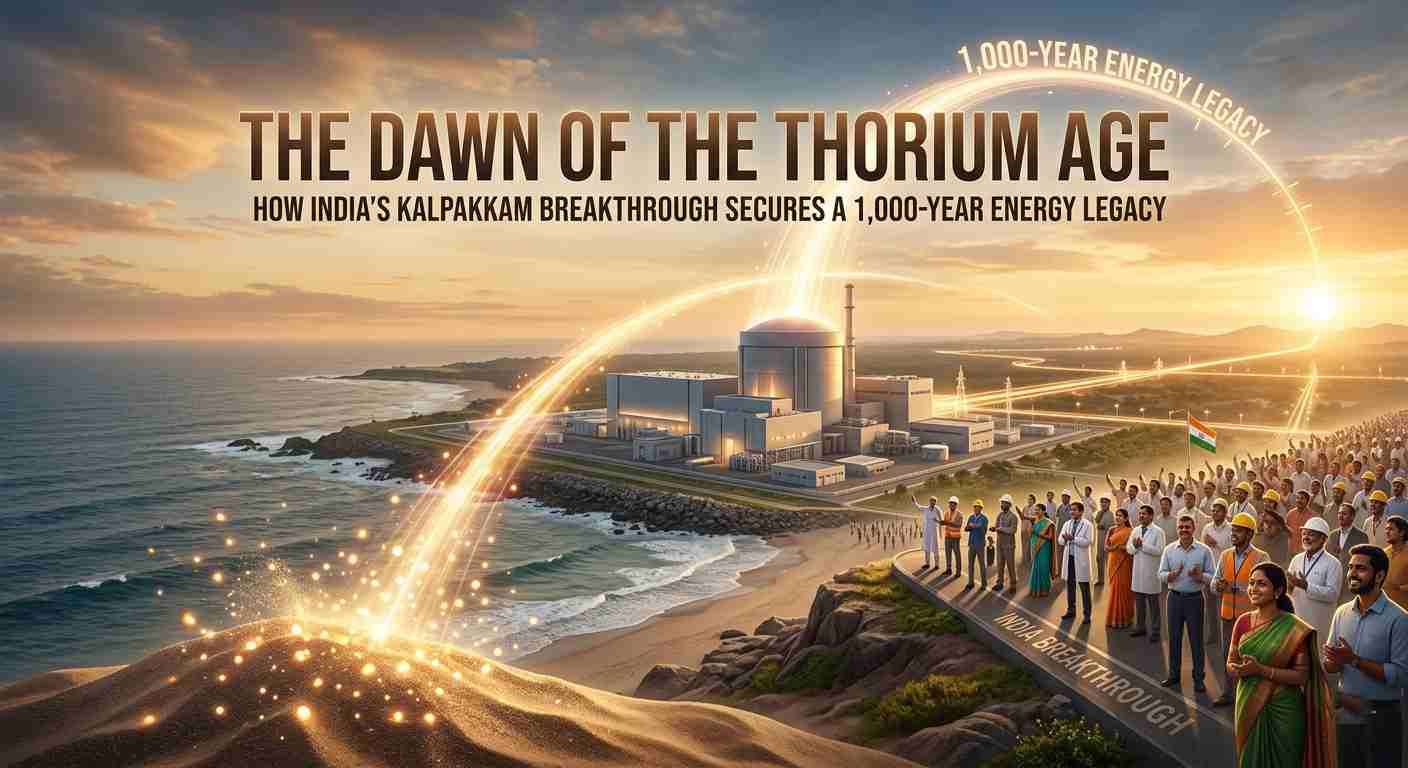
The Dawn of the Thorium Age: On a quiet Sunday in April 2026, history was written in the containment domes of the Coromandel Coast. Roughly 60 km south of Chennai, within the sprawling Kalpakkam nuclear complex, India’s 500 MWe Prototype Fast Breeder Reactor (PFBR) achieved its first criticality.
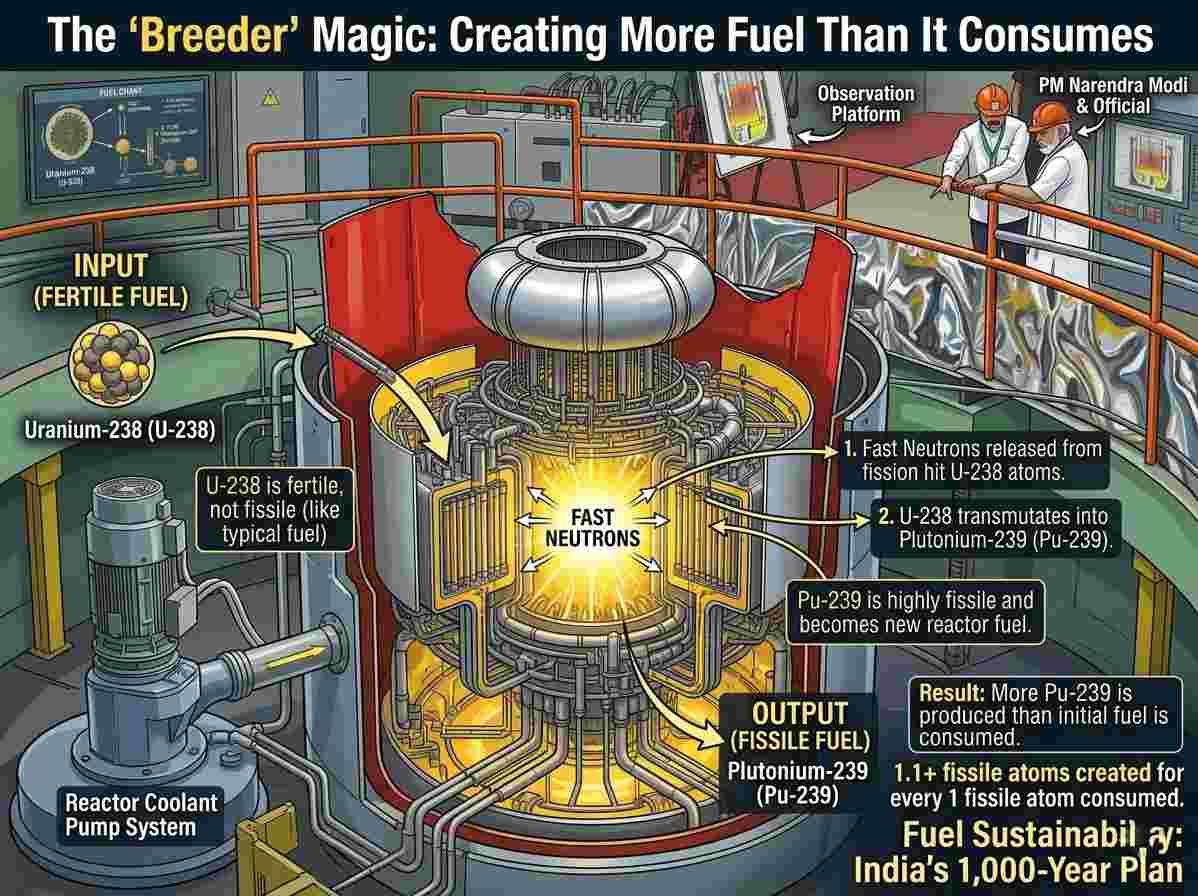
This wasn’t just a technical “on-switch”; it was the successful ignition of a self-sustaining nuclear chain reaction that signifies India’s entry into an elite global league. Described by Prime Minister Narendra Modi as a “defining step,” the PFBR is the linchpin of India’s Three-Stage Nuclear Power Programme—a strategy designed to move the nation from energy scarcity to a millennium of self-reliance.
The Dawn of the Thorium Age:Understanding the “Akshay Patra” of Energy
The term “Akshay Patra” refers to a mythical vessel that never runs out of food. In the context of nuclear physics, the PFBR at Kalpakkam earns this title because it is a Fast Breeder Reactor.
Unlike conventional Light Water Reactors (LWRs) that simply consume fuel, a breeder reactor “breeds” more fuel than it uses.
The Process: By using high-energy “fast” neutrons, the reactor converts fertile Uranium-238 (which cannot be used as fuel directly) into fissile Plutonium-239.
The Cycle: This Plutonium can then be recycled to fuel more reactors. This “closed fuel cycle” minimizes waste and extracts the maximum possible energy from every gram of nuclear material.
The Thorium Advantage: India’s Strategic Ace
While the world has long relied on Uranium, India has faced a geographic disadvantage, holding only about 1-2% of global Uranium reserves. This has historically forced the country to rely on expensive imports and navigate complex international geopolitics (like the NSG).
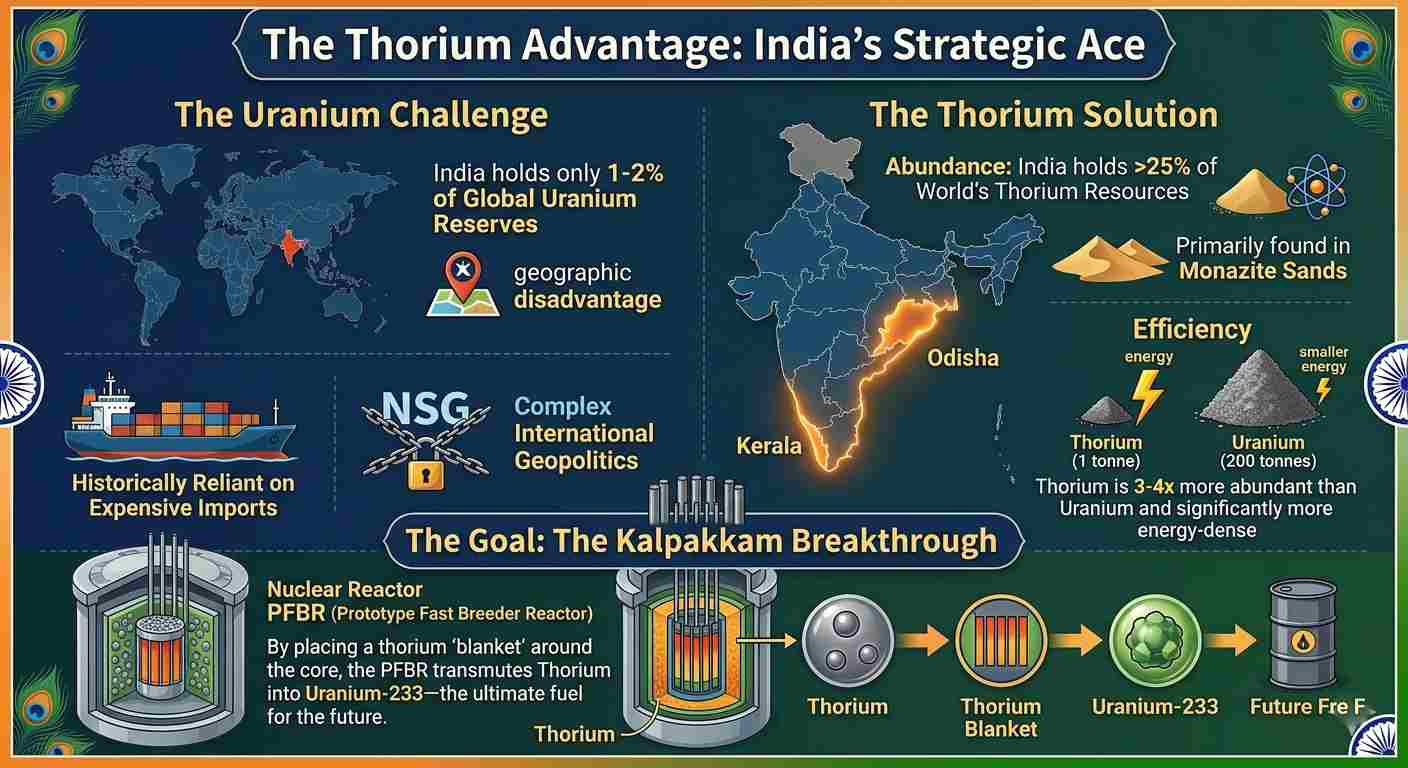
However, nature provided India with a different gift: Thorium.
Abundance: India holds over 25% of the world’s thorium resources, found primarily in the monazite sands of Kerala and Odisha.
Efficiency: Thorium is three to four times more abundant than uranium and significantly more energy-dense. One tonne of thorium can produce as much energy as 200 tonnes of uranium.
The Goal: The Kalpakkam breakthrough is the bridge to the Third Stage. By placing a thorium “blanket” around the core of the breeder reactor, the PFBR transmutes Thorium into Uranium-233—the ultimate fuel for the future.
A Triumph Over Global Technical Failures
India’s success is underscored by the failures of other global superpowers. For decades, the United States, France, and Japan attempted to master breeder technology, only to abandon their projects due to high costs, coolant leaks (specifically with liquid sodium), and political pressure.
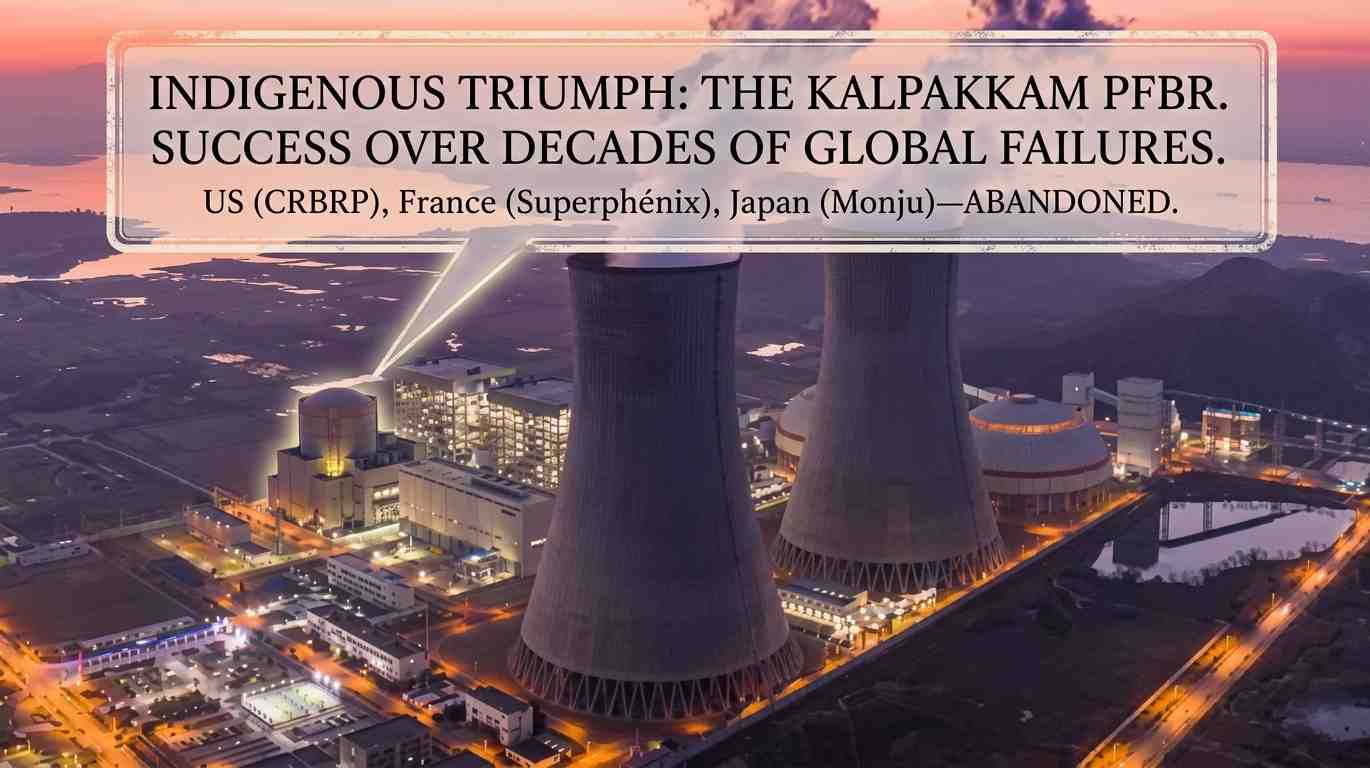
Currently, only Russia operates commercial-scale fast breeder reactors. With the Kalpakkam PFBR, India has proved that its indigenous engineering can solve the complex thermal and safety challenges of using liquid sodium as a coolant—a feat that has eluded the West for half a century.
The Path to 2047: 100 GW and Beyond
Nuclear energy currently contributes a modest 3% to India’s total energy mix. However, the government has set an ambitious target to scale from 8,180 MW in 2024 to 100 GW by 2047.
| Feature | Conventional Reactor | PFBR (Kalpakkam) |
| Fuel Utilization | Low (less than 1%) | High (closed fuel cycle) |
| Waste Production | Significant long-term waste | Minimal; recycles waste as fuel |
| Primary Resource | Imported Uranium | Indigenous Thorium |
| Energy Security | Dependent on foreign supply | Completely “Atmanirbhar” |
Economic and Environmental Impact
Beyond energy security, the PFBR is a cornerstone of India’s Net-Zero 2070 goals. As a carbon-neutral power source, nuclear energy provides “baseload” power—unlike solar or wind, which are intermittent.
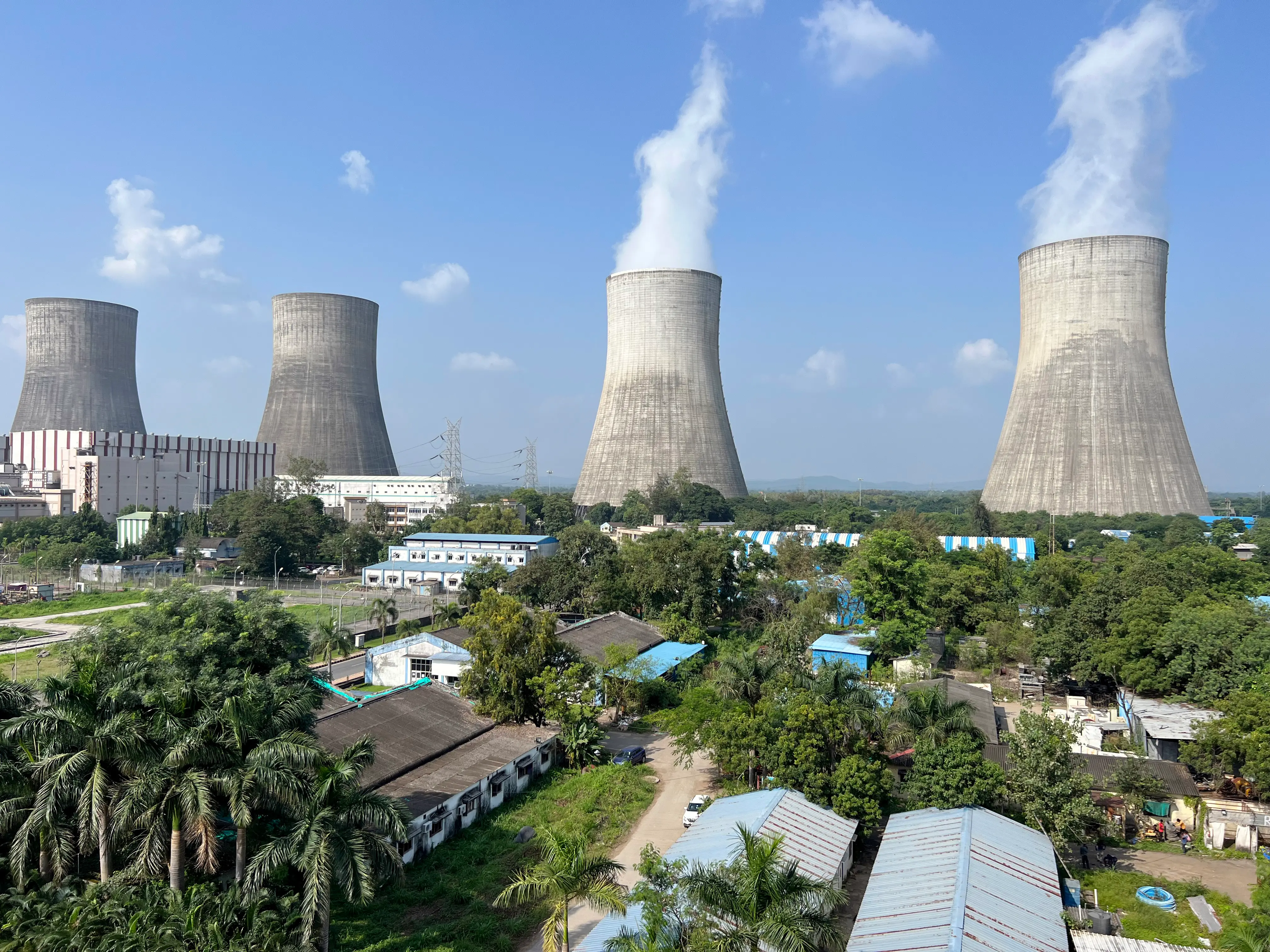
For investors, this breakthrough highlights a shift in focus toward the nuclear supply chain. Companies involved in heavy engineering, specialized metallurgy, and nuclear components are likely to see sustained interest as the government pivots toward the commercial rollout of these reactors, with the Kalpakkam unit expected to enter full commercial operations by September 2026.
Conclusion: A Millennium of Power
The mastery of the thorium cycle isn’t just about the next decade; it’s about the next thousand years. Experts suggest that once India fully implements the third stage of its nuclear programme, it could support 500 GW of electricity for over 400 years.
The criticality at Kalpakkam is the moment India stopped being a follower in global energy technology and became a leader. It is a testament to the vision of Dr. Homi J. Bhabha and the tireless work of the Department of Atomic Energy (DAE). India has finally unlocked the “Thorium Vault,” and the future looks bright, green, and incredibly powerful.