
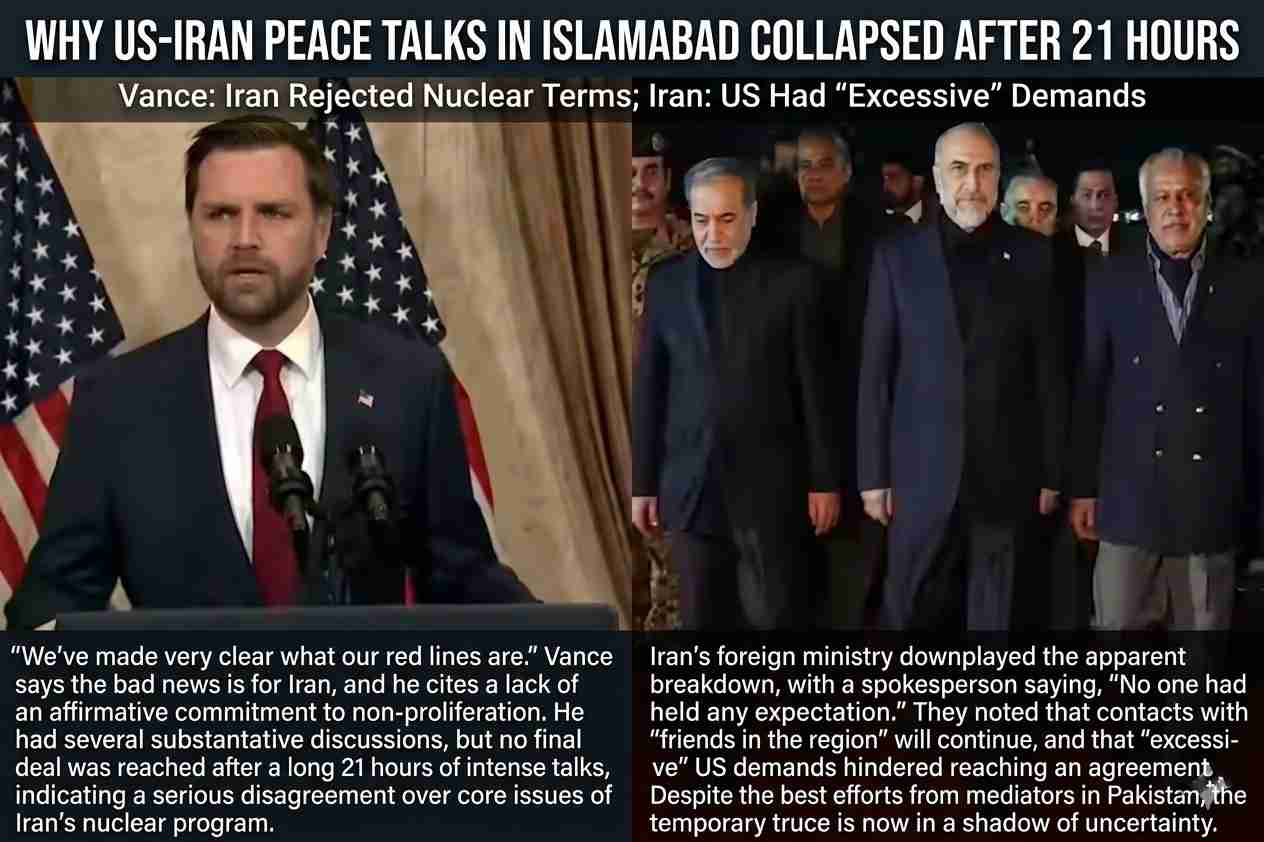
The world held its breath as high-stakes diplomacy unfolded in Pakistan, but the air has since turned cold. After a marathon 21-hour negotiation session in Islamabad, US Vice President JD Vance and the American delegation have departed without a deal, leaving the fragile 14-day ceasefire hanging by a thread. This historic meeting—the first direct high-level contact between Washington and Tehran since the 1979 Islamic Revolution—was meant to be a turning point. Instead, it has become a symbol of the deep-seated mistrust and “red lines” that continue to push the Middle East toward the brink of total escalation.
Here are the 7 Shocking Reasons why the US-Iran peace talks in Islamabad collapsed, summarized in short headlines:
1. The Nuclear Deadlock: Iran refused to provide an “affirmative commitment” to permanently scrap its nuclear weapons program.
2. Struggle for Strait of Hormuz: Disagreement over control and “transit fees” for the world’s most critical oil choke point.
3. Frozen Assets Dispute: Conflicting reports over the release of $6 billion in Iranian funds held in Qatar.
4. Demand for War Reparations: Tehran’s insistence on financial compensation for damages caused by U.S. and Israeli bombing.
5. The Lebanon Ceasefire Clash: Iran’s demand for a region-wide truce vs. Israel’s continued operations against Hezbollah.
6. Excessive U.S. Demands: Iran accused Washington of imposing “ambitious” and “unacceptable” conditions to save face.
7. Deep-Rooted Mistrust: Severe “mood swings” and high tension during the 21-hour session prevented any diplomatic breakthrough.
US-Iran Peace Talks The 21-Hour Deadlock: What Went Wrong?
The atmosphere in Islamabad was described by insiders as a “diplomatic pressure cooker.” For nearly a full day, the halls of the negotiating venue saw “mood swings” that mirrored the volatile nature of the conflict itself. While Pakistani mediators, led by Prime Minister Shehbaz Sharif and Army Chief Asim Munir, attempted to bridge the gap, the fundamental demands of both nations proved irreconcilable.
JD Vance, representing the Trump administration, was blunt in his assessment upon departure. He cited “shortcomings” in the talks, specifically pointing to Iran’s refusal to accept American terms regarding its nuclear capabilities.
“The bad news is that we have not reached an agreement, and I think that’s bad news for Iran much more than it’s bad news for the United States of America,” Vance told reporters. “We’ve made very clear what our red lines are.”
On the other side, Iran’s foreign ministry, through spokesperson Esmaeil Baqaei, attempted to manage expectations, stating that a single session was never likely to resolve decades of animosity. However, semi-official Iranian agencies like Tasnim were less diplomatic, blaming “excessive” US demands for the breakdown.
1. The Nuclear ‘Red Line’: The Ultimate Dealbreaker
At the heart of the failure was the ghost that has haunted US-Iran relations for years: the nuclear program. Despite Israeli Prime Minister Benjamin Netanyahu’s claims that recent military campaigns had “crushed” Iran’s nuclear infrastructure, the US is demanding more than just physical destruction; they want a psychological and legal surrender.
Vance emphasized that the core goal of President Donald Trump is an “affirmative commitment” that Tehran will not seek nuclear weapons or the tools to build them in the future.
The US Position: Washington wants a long-term guarantee, not just a two-year pause.
The Iranian Position: Tehran views its nuclear energy program as a matter of sovereignty and “peaceful energy,” accusing the US of trying to gain at the negotiating table what it couldn’t achieve through 40 days of intense bombing.
2. The Battle for the Strait of Hormuz
While the nuclear issue is a long-term concern, the Strait of Hormuz is a burning immediate crisis. With 20% of the world’s energy supply passing through this narrow waterway, the stakes couldn’t be higher. Iran has blocked the strait since the war began, causing global oil prices to skyrocket.
During the talks, the US military began “setting conditions” to clear mines and establish a safe passage. However, Iran’s state media issued a chilling warning: any US warship attempting to cross would be attacked within 30 minutes.
Iran’s Demand: Full control over the strait and the right to collect “transit fees.”
The US Demand: Immediate, unconditional reopening and free passage for global shipping.
3. The $6 Billion Discrepancy: Frozen Assets and Trust
Money is often the oil that greases the wheels of diplomacy, but in Islamabad, it only added friction. Reports surfaced that the US had agreed to release $6 billion in frozen Iranian assets currently held in Qatar.
The Iranian Claim: Sources told Reuters that the release of funds was a “done deal.”
The US Denial: American officials promptly shut down these reports, stating no such agreement was reached.
This public contradiction highlights the “mask-off” nature of these negotiations, where both sides are using the media to control the narrative and exert pressure.
4. Mourning and Symbols: The Emotional Weight of the War
The Iranian delegation, led by Parliamentary Speaker Mohammad Baqer Qalibaf and Foreign Minister Abbas Araqchi, arrived in Islamabad dressed in black. They weren’t just mourning the late Supreme Leader Ayatollah Ali Khamenei; they brought physical reminders of the human cost of the conflict.
The delegation reportedly carried shoes and bags belonging to students killed during a US bombing of a school. While the Pentagon claims the strike is under investigation, the presence of these items in the negotiating room served as a constant, somber reminder of the “temperature” of the talks. For Iran, these weren’t just technical discussions; they were seeking “war reparations” for what they term American aggression.
5. The Lebanon Factor and the Hezbollah Divide
Peace between the US and Iran is inseparable from the situation in Lebanon. Iran demanded a regional ceasefire that includes Lebanon, where Israeli forces continue to clash with Hezbollah.
Interestingly, while the US and Iran failed to reach a deal, the Lebanese government is reportedly moving toward direct talks with Israel in Washington. This has created a massive internal rift in Lebanon.
The Government: Prime Minister Nawaf Salam and the presidency seem open to US-sponsored negotiations.
Hezbollah: The pro-Iran group has staged massive rallies, waving flags and photos of the late Hassan Nasrallah, warning the government against “destabilizing” the country through a deal with Israel.
6. Pakistan’s New Role as a Global Mediator
One of the most remarkable outcomes of this summit is the transformation of Pakistan. Once a diplomatic outcast, Islamabad has successfully positioned itself as a bridge between the East and the West.
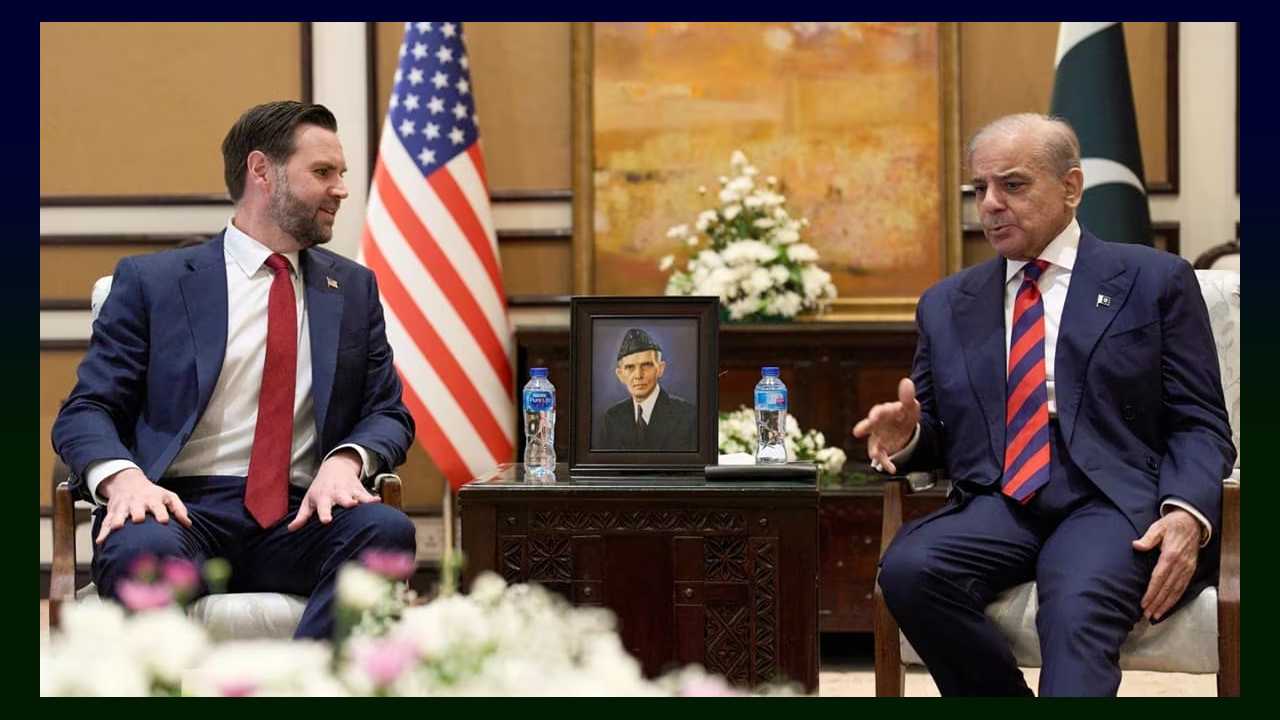
The presence of Army Chief Asim Munir and Prime Minister Shehbaz Sharif in the room signifies Pakistan’s “complete authority” and its strategic importance to the Trump administration. Despite the lack of a deal, Pakistan’s Foreign Minister Ishaq Dar remains optimistic, urging both sides to maintain the ceasefire and promising to facilitate new dialogues in the coming days.
7. What Happens When the 14-Day Ceasefire Ends?
The most terrifying question remains: What happens next? The current ceasefire is “fragile” and set to expire soon. Donald Trump has already issued a “never-before-seen” warning, threatening Tehran with overwhelming force if a final deal isn’t reached.
The US delegation, including Steve Witkoff and Jared Kushner, is heading back to Washington to brief the President. Meanwhile, Tehran has stated they have no plans for another round of talks in the near future.
| Key Issue | US Stance | Iran Stance |
| Nuclear Program | Total abandonment of enrichment | “Peaceful” energy rights |
| Strait of Hormuz | Free global passage | Iranian control & transit fees |
| Financials | No release without deal | Immediate access to frozen $6B |
| Military | Ready for “never-before-seen” attack | Prepared to strike ships in 30 mins |
The Economic Fallout: Why This Matters to You
If you think this is just a regional spat, check your local gas station. The blockade of the Strait of Hormuz has already sent oil prices soaring. If the ceasefire collapses and full-scale war resumes, the global economy could face a shock not seen since the 1970s. The “choke point” is no longer just a geographical term; it is a reality for every consumer worldwide.
Conclusion: A Failed Opportunity or a Necessary Pause?
The departure of JD Vance from Islamabad marks a “stalemate” in the truest sense. While the US believes it holds the dominant position, Iran feels it has nothing left to lose after the loss of its Supreme Leader and the destruction of its infrastructure.
Is this the end of diplomacy? Pakistan doesn’t think so. But as the 14-day clock ticks down, the “red lines” drawn in the sand of Islamabad look more like battle lines. The world waits to see if the next “marathon” will be another 21 hours of talking—or the start of a conflict that could reshape the 21st century.