
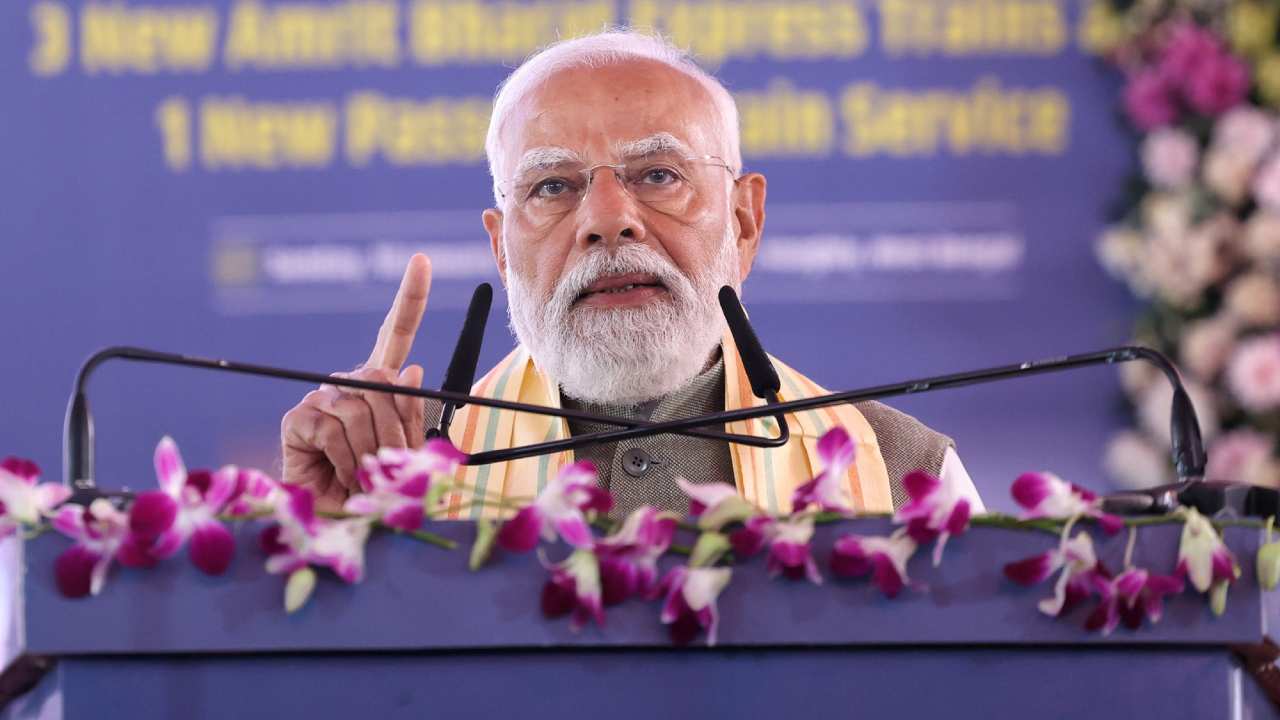
PM Modi Unveils ₹830-Crore Infrastructure Surge in West Bengal: A New Era for Rail and Waterways Singur, West Bengal — In a landmark move aimed at transforming the logistics and connectivity landscape of Eastern India, Prime Minister Narendra Modi has inaugurated and laid the foundation stones for development projects worth over ₹830 crore. During a high-profile event held in Singur, Hooghly district, the Prime Minister emphasized that the rapid development of West Bengal is a cornerstone of the “Viksit Bharat” (Developed India) vision.
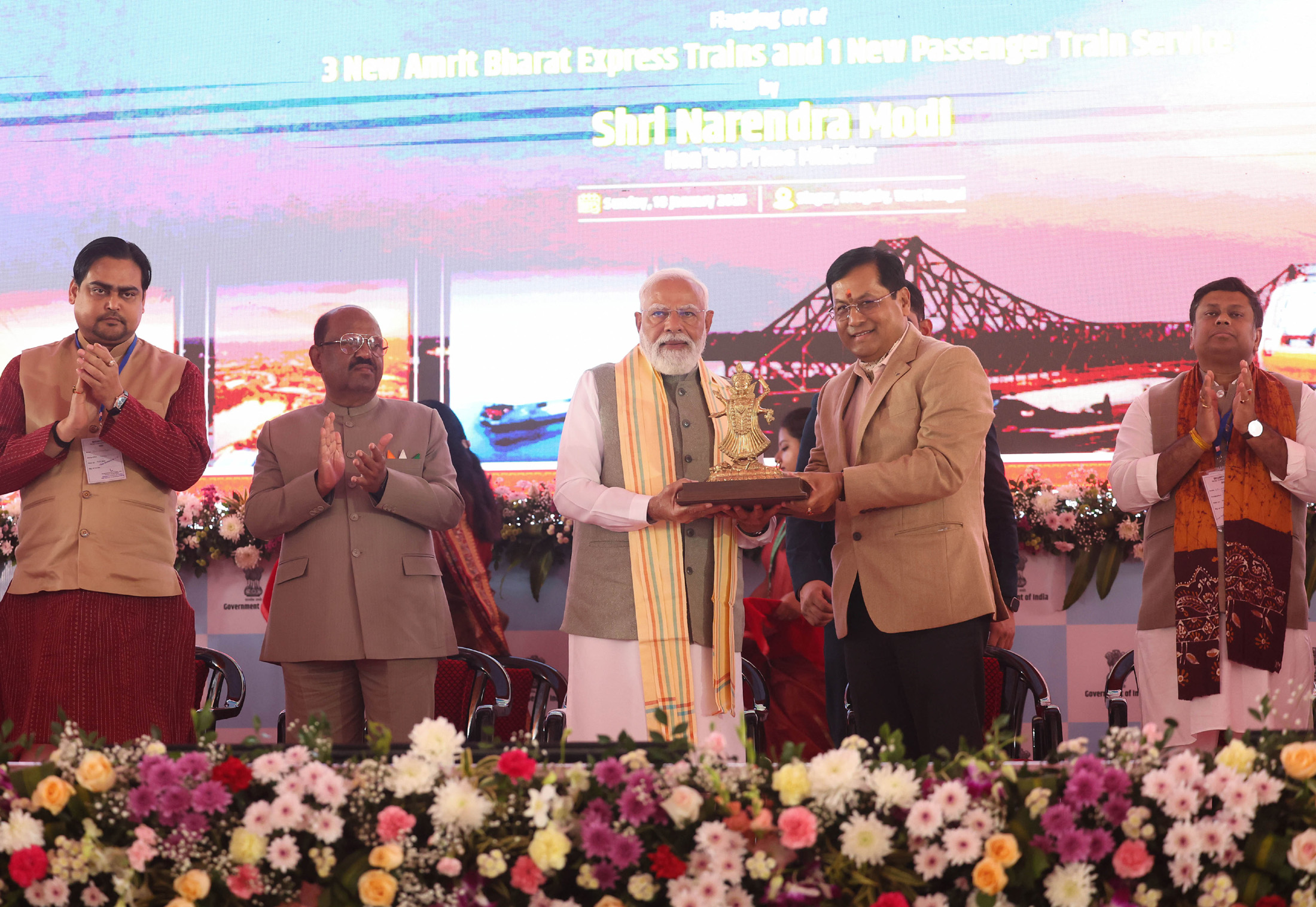
The multi-modal infrastructure push focuses on three primary pillars: high-speed rail travel, sustainable inland waterways, and last-mile connectivity for rural Bengal.
1. The Amrit Bharat Revolution: Connecting Kolkata to India’s Metros
A major highlight of the Prime Minister’s visit was the flagging off of three new Amrit Bharat Express trains. These trains are designed to provide a world-class travel experience to the common man, featuring improved interiors, better suspension, and faster travel times.
New Routes Launched:
Howrah – Anand Vihar (New Delhi) Terminal: Strengthening the link between the cultural capital and the national capital.
Sealdah – Banaras: Enhancing the religious and cultural corridor between Bengal and the holy city of Varanasi.
Santragachi – Tambaram (Chennai): Improving connectivity for students, professionals, and medical tourists traveling to Southern India.
The PM noted that these launches come on the heels of the country’s first Vande Bharat Sleeper Train being introduced from the state, marking a 24-hour period of “unprecedented progress” for the Eastern Railway.
2. Balagarh Strategic Terminal: Decongesting the Kolkata Port
A significant portion of the investment—approximately ₹552 crore—is being funneled into the maritime and waterways sector. The Syama Prasad Mookerjee Port Authority is spearheading the development of the Extended Port Gate System at Balagarh.
Key Features of the Balagarh Project:
Envisaged Capacity: The terminal is designed to handle 2.7 million tonnes per annum (MTPA) of cargo, specifically coal and containerized goods.
Decongestion: Located 45 nautical miles upstream from Kolkata, the terminal will allow cargo to be diverted away from the heavily congested urban corridors of Kolkata and Howrah.
Multi-modal Integration: The project includes a new Road Over Bridge (ROB) and dedicated rail connectivity to ensure seamless “last-mile” movement of goods from the river to the hinterland.
Dredging Infrastructure: Advanced dredging facilities will be installed to maintain the draft, ensuring that National Waterway-1 remains navigable year-round.
3. Green Transition: The Hybrid Electric Catamaran
Aligning with India’s “Net Zero” goals, the Prime Minister launched a state-of-the-art 50-passenger hybrid electric aluminium catamaran in Kolkata.
Cost: ₹12 Crore.
Technology: It utilizes advanced lithium-titanate battery technology, which offers faster charging and a longer life cycle.
Impact: This vessel serves as a pilot for future eco-friendly public transport on the Hooghly River, reducing the carbon footprint of daily commutes and protecting the river’s ecosystem.
4. Strengthening the Rural Rail Network: Jayrambati and Maynapur
Beyond the big-ticket express trains, the Prime Minister dedicated ₹280 crore to regional rail infrastructure. This includes the commissioning of the 15-km Jayrambati–Barogopinathpur–Maynapur section, part of the larger Tarakeswar–Bishnupur rail project.
This new line is expected to be a lifeline for the Bankura district, particularly for students and small-scale traders. By flagging off a new passenger train on this route, the government aims to integrate rural agricultural hubs with the main economic centers of the state.
5. The Strategic Vision: Eastern India as a Growth Engine
During his address at Singur—a location of immense political and industrial significance—PM Modi reiterated that the “development of Eastern India is crucial for the vision of a developed India.”
Union Minister of Ports, Shipping & Waterways, Sarbananda Sonowal, who was present at the event, echoed this sentiment. He stated that under the Prime Minister’s leadership, inland waterways have emerged as a “vital pillar” of India’s logistics network. By shifting heavy cargo from roads to waterways, the government expects to significantly reduce logistics costs, which currently remain higher than the global average.
Dignitaries in Attendance:
C V Ananda Bose, Governor of West Bengal.
Sarbananda Sonowal, Union Minister of Ports, Shipping & Waterways.
Shantanu Thakur, Union Minister of State for Ports, Shipping & Waterways.
Sukanta Majumdar, Union Minister of State.
6. Economic Implications for West Bengal
The influx of ₹830 crore into infrastructure is expected to trigger a multiplier effect on the local economy:
Employment Generation: The Balagarh terminal alone is expected to create thousands of direct and indirect jobs in logistics, warehousing, and maintenance.
Trade Efficiency: Faster turnaround times at the port and better rail connectivity will make West Bengal a more attractive destination for industrial investment.
Tourism Boost: Enhanced connectivity to religious sites like Jayrambati and Varanasi via the new Amrit Bharat trains will likely see a surge in domestic tourism.
Conclusion: A Gateway to the North-East
These projects reinforce West Bengal’s role as the primary gateway for trade between mainland India and the North-Eastern states. By combining modern rail systems with sustainable river-based logistics, the Union Government is positioning the state as a multimodal hub for South Asia.
As the Prime Minister concluded, “All central projects will accelerate the development of West Bengal.” With the foundation stones now laid and wheels set in motion, the people of Bengal look forward to a future of faster commutes, cleaner rivers, and a more robust economy.