
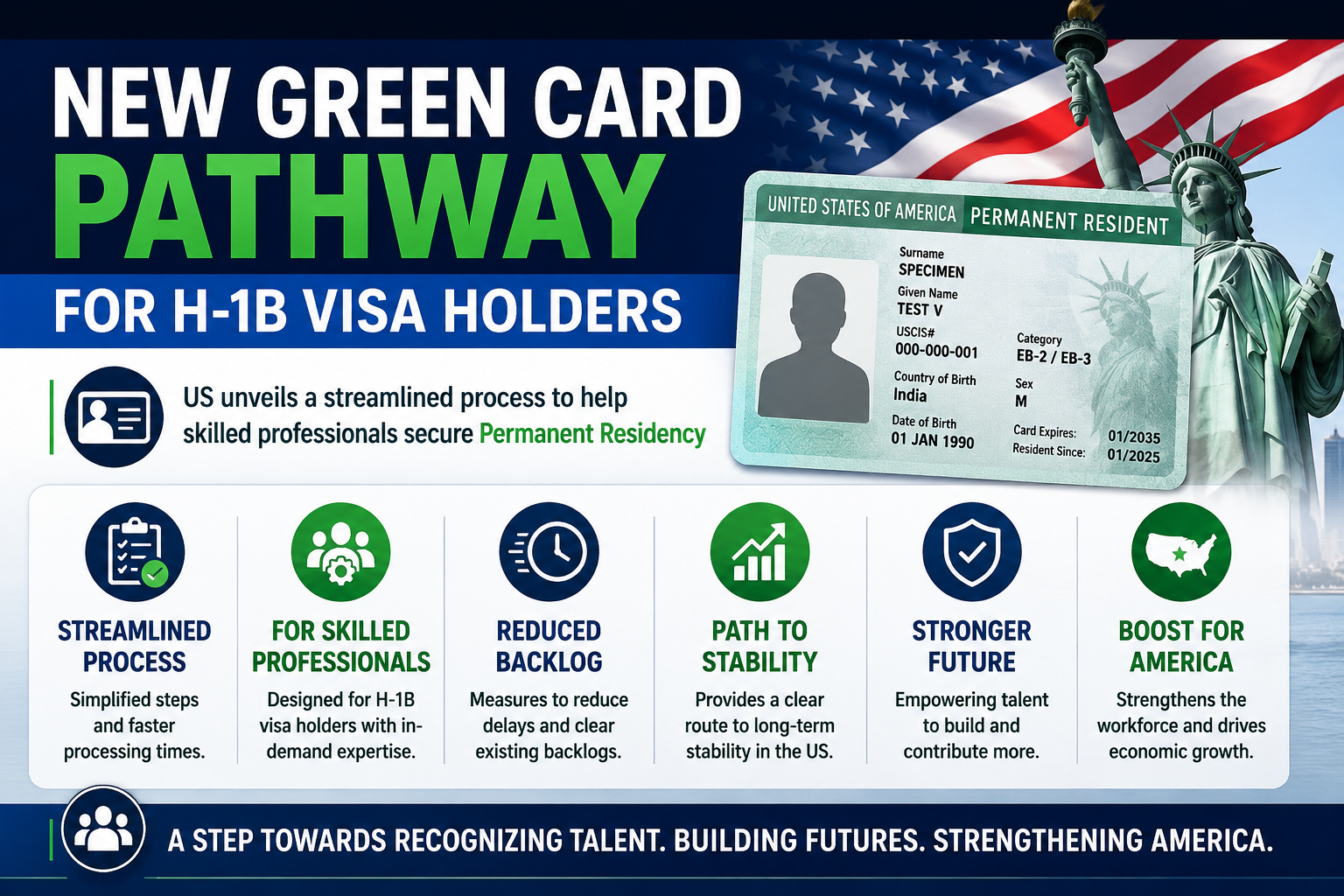
Discussions around a Green Card pathway for H-1B visa holders have flared up again in Capitol Hill, as lawmakers push to fix America’s long-broken immigration setup. For hundreds of thousands of foreign professionals—especially those from India—living on temp visas has turned into a never-ending waiting game. This fresh legislative push aims to finally break that deadlock, giving folks who’ve called the US home for seven years or more a clear and predictable route to lawful permanent status.
California Senator Alex Padilla, along with a group of key allies, has brought back the Renewing Immigration Provisions of the Immigration Act of 1929. If this bill actually crosses the finish line, it could completely transform life for over eight million long-term residents. It promises a massive sigh of relief for Dreamers, frontline workers, and skilled H-1B holders who have been stuck in administrative limbo for years.
What Is the Renewing Immigration Provisions Bill?
Stripped of all the legal jargon, this bill targets a little-known immigration safety valve called the “Registry” provision under Section 249 of the Immigration and Nationality Act.
Originally created back in 1929, the Registry gives the Department of Homeland Security the power to hand out Green Cards to immigrants who have lived in the US continuously and kept a clean record. The catch? Congress has always tied eligibility to a specific cutoff date.
The last time anyone actually touched this cutoff date was back in 1986 under Ronald Reagan, when lawmakers set it to January 1, 1972. Because no one has updated it in nearly 40 years, the rule has become totally useless for almost everyone today. In fact, official numbers show that between 2015 and 2019, a mere 305 people across the entire country were able to get a Green Card through this option.
Senator Padilla’s proposal wants to scrap that frozen cutoff date altogether and swap it for a rolling rule. Instead of waiting for Congress to pass new dates every few decades, anyone who has lived in the US continuously for seven years before applying would be eligible to file for permanent residency—as long as they pass standard background checks and meet basic legal criteria.
Why Indian H-1B Visa Holders Stand to Gain the Most
While this proposal covers a lot of ground—including people on Temporary Protected Status and kids growing up in visa-holder families—it is an absolute game-changer for high-skilled H-1B workers.
Indian techies, engineers, doctors, and researchers make up the lion’s share of the H-1B talent pool. But under current immigration rules, no single country is allowed to get more than 7% of the total employment Green Cards handed out each year.
Because India sends so much top talent to the US, this strict 7% country limit has created a massive bottleneck. Right now, Indian professionals make up roughly 80% of the entire employment-based Green Card line. In real life, that means qualified workers are stuck waiting anywhere from 15 years to multiple decades just to get their permanent papers.
If passed, this bill would basically bypass those country limits by replacing them with a flat seven-year residency rule. An Indian worker who has been living and working legally in the US for seven straight years could apply for a Green Card directly—finally giving them a way out of visa limbo.
Key Highlights of the Proposed Legislation :
To understand how this proposal works, it helps to examine its primary mechanics and scope:
Rolling 7-Year Residency Requirement: Replaces the rigid 1972 cutoff date with an ongoing seven-year continuous residence rule.
Implementation Timeline: The new registry rules would take effect 60 days following the bill’s formal enactment into law.
Broad Coverage: Applies to H-1B workers, Dreamers, TPS beneficiaries, essential workers, and dependents of long-term visa holders.
Strict Eligibility Checks: Applicants must pass background checks, prove good moral character, and meet standard legal requirements.
Elimination of Future Statutory Fixes: Because the seven-year requirement moves forward automatically each year, Congress would no longer need to pass periodic updates to fix cutoff dates.
Congressional Support and Political Challenges Ahead
Senate Whip Dick Durbin is leading this push right alongside Alex Padilla, and big names like Bernie Sanders, Elizabeth Warren, Cory Booker, Adam Schiff, and Tammy Duckworth are backing it too. Over in the House, California Rep. Zoe Lofgren is driving a twin version of the bill, supported by over 30 labor unions and rights groups.
Padilla’s point is basic: why keep millions of people who work here, pay taxes, and raise their kids in constant fear? They’ve built their lives in the US, but one shift in policy could turn everything upside down.
Still, even with the big Democratic names on board, this isn’t going to be an easy win. Republicans in the House and Senate are focused on shutting down borders and cutting back on legal immigration. With Congress split right down the middle, actually turning this bill into law is going to be a huge, messy fight.
What Long-Term Residents Should Watch Next
For now, this bill is just a draft making its way through the usual congressional debates, committee hearings, and votes. If you’re currently in the US on a long-term visa, keep an eye on official legal news, but don’t go making big career or life changes based on a proposal that hasn’t passed yet.
That said, if lawmakers actually come together and pass this update, it will be the biggest shake-up in US immigration policy in over 35 years—finally bringing ancient rules in line with how today’s workforce actually lives and works.