
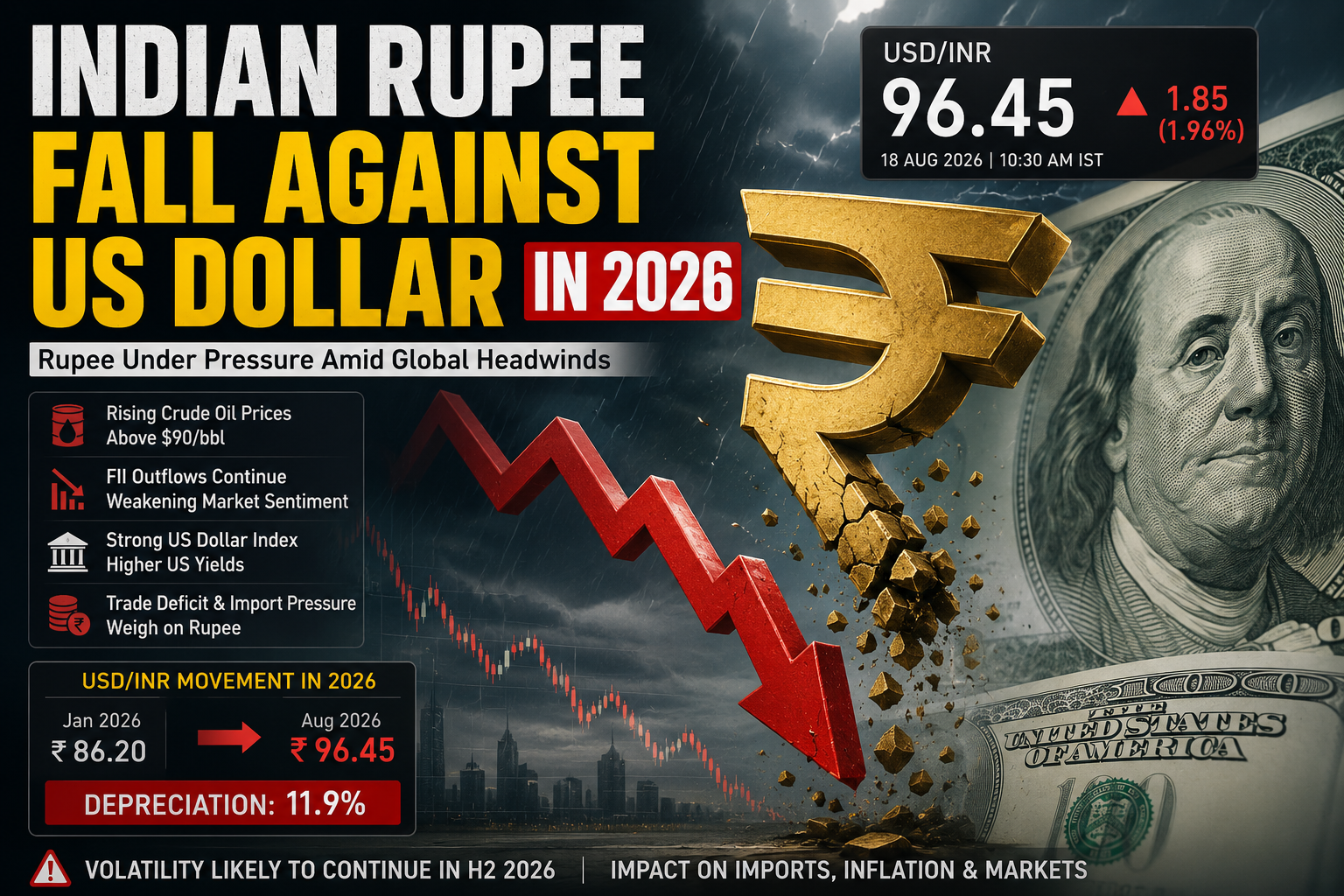
The Indian Rupee fall against US Dollar continued its downward momentum in early interbank trade on Tuesday, August 18, 2026, dropping 7 paise to trade at 95.68 against the greenback. This follows a 19 paise slide on Monday, when the domestic currency closed at 95.61.
Forex market participants cite elevated crude oil prices hovering near $91 per barrel and the Reserve Bank of India’s (RBI) earlier-than-expected closure of the concessional FCN(B) foreign-currency deposit swap facility as immediate triggers for the recent slide. The pair previously touched an all-time low for the rupee at 96.844 in May 2026, leaving the local currency among the weakest major Asian performers throughout the current year.
What Is Driving the Rupee’s Recent Downward Pressure?
A confluence of global macroeconomic shocks and domestic policy updates has combined to keep the Indian rupee on a defensive footing against the US dollar throughout 2026.
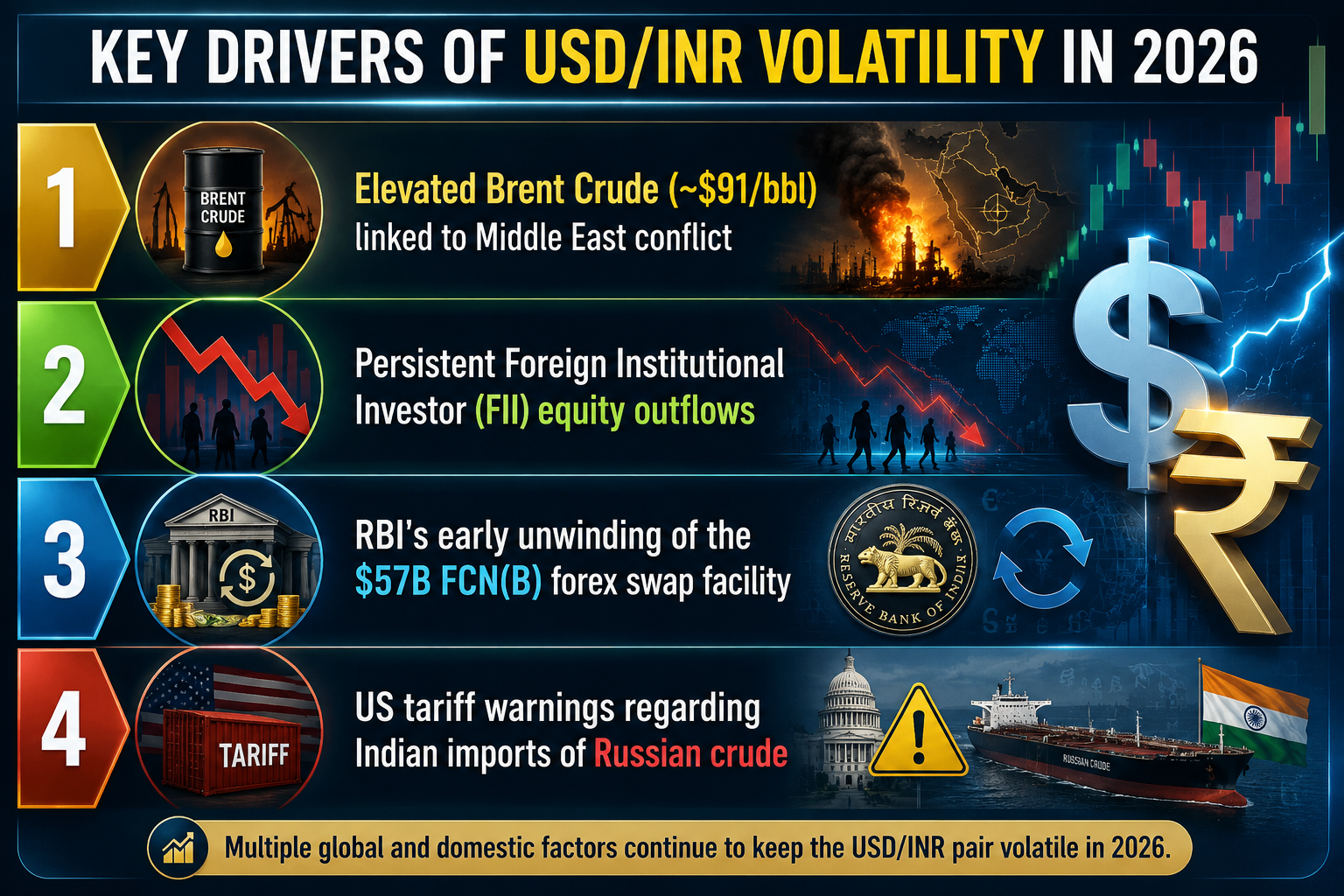
1. Elevated Crude Oil Import Bills
India imports over 80% of its crude oil requirements. With Brent crude trading near $91 per barrel amid ongoing geopolitical tensions in the Middle East, state-run oil refining companies have been forced to step up their dollar purchases. This sustained commercial demand creates immediate, structural downside pressure on the rupee.
2. Early Closure of the FCN(B) Swap Facility
The RBI recently brought its concessional Foreign Currency Non-Resident (Bank) swap facility to an early close after attracting nearly $57 billion in foreign currency inflows. While the tool served its initial purpose of building reserves, its conclusion raised immediate market concerns over slowing forward dollar inflows, prompting traders to reprice short-term FX demand.
3. Institutional Capital Outflows
Foreign Institutional Investors (FIIs) have maintained a steady pace of net sales in Indian equities through much of 2026. Global investment funds have reallocated capital toward safer assets or high-yielding US paper, generating continuous domestic currency supply in local markets.
4. Trade Friction and US Tariff Risks
Diplomatic and economic friction with Washington has resurfaced over India’s continued imports of discounted Russian crude oil. Repeated warnings regarding potential tariff hikes on Indian exports to the United States have introduced periodic volatility into FX market sentiment.
RBI Intervention Tactics: Smoothing, Not Defending Lines
Despite persistent pressure, the central bank’s approach in 2026 has focused on suppressing wild market moves rather than defending an arbitrary value threshold.
| Date / Period | Trigger / Context | RBI Action Strategy |
| January 2026 | Pair touched initial record high near 91.50 | First direct intervention of the year via state-run banks |
| May 20, 2026 | USD/INR hit peak record level of 96.844 | Large-scale dollar supply offered through public sector lenders |
| July 2026 | Oil spike amid Middle East escalation | Routine dollar sales to dampen one-way volatility |
| August 18, 2026 | Early trade slide to 95.68 level | State banks spotted supplying greenbacks around 95.40–95.60 |
Rather than issuing formal public statements, the RBI typically operates through large state-owned banks, offering dollars aggressively whenever USD/INR nears key psychological levels.
Currency analysts note that because broader US dollar strength has been somewhat moderated by cooling Federal Reserve rate expectations, current RBI interventions are designed to manage the speed of depreciation, ensuring foreign exchange markets remain orderly.
Market Outlook for USD/INR
While the rupee faces headwinds from energy prices and trade uncertainties, offsetting factors continue to limit a wider breakdown:
Federal Reserve Stance: Fading bets on further Fed rate hikes have capped aggressive dollar rallies globally.
FX Reserve Cushion: Despite drawdowns over successive intervention cycles, the RBI retains ample reserves to curb speculative trading runs.
In the short term, traders expect the USD/INR pair to range between 95.20 and 96.00, with central bank intervention acting as a active buffer against rapid sharp swings.