
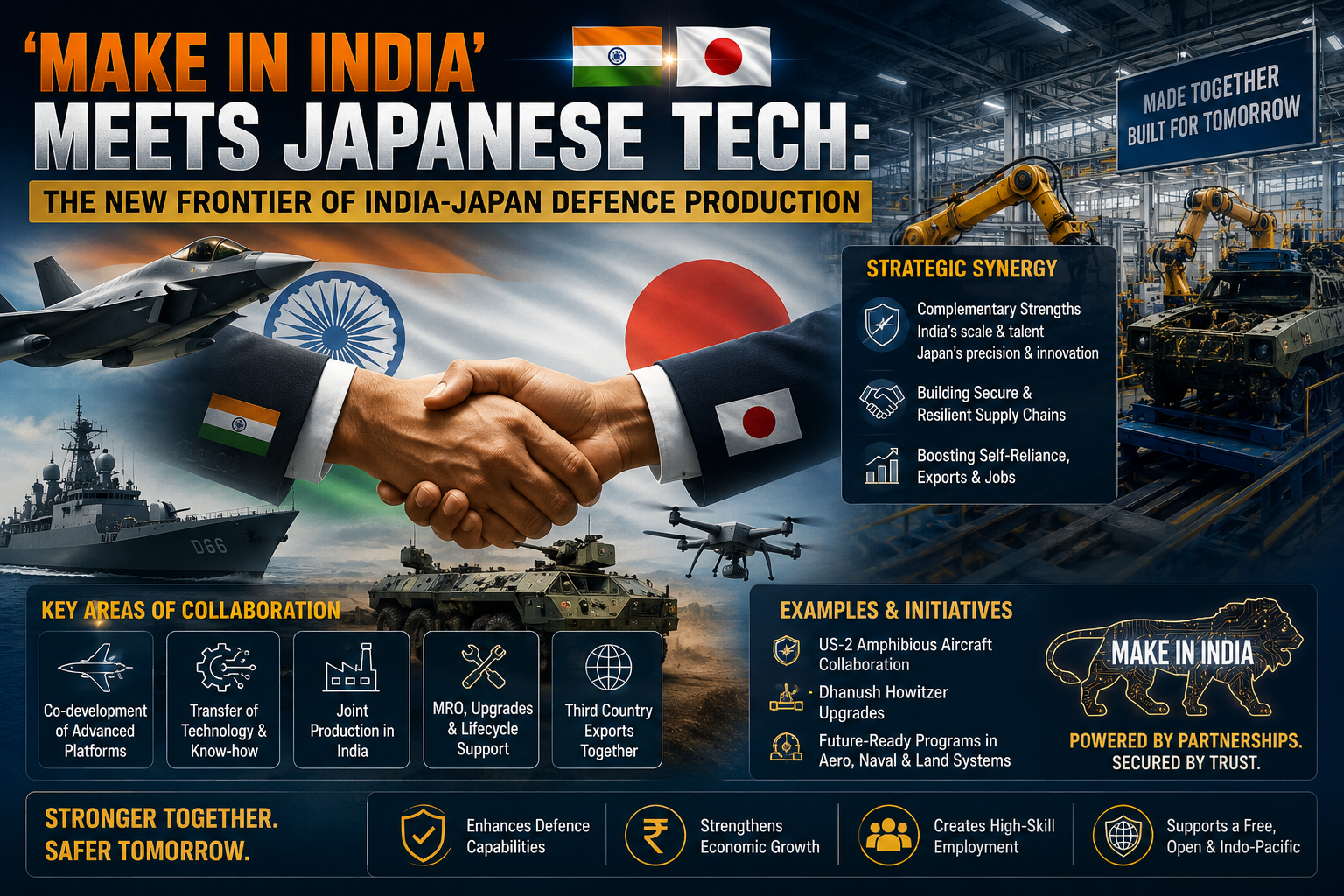
India-Japan defence ties reached a new stage this week when Japanese Defence Minister Shinjiro Koizumi visited New Delhi. During high-level discussions Prime Minister Narendra Modi and Defence Minister Rajnath Singh met with Koizumi to create a plan for regional stability joint military exercises and cooperation, in developing defence equipment.
As tensions rise across the Indo-Pacific both countries are showing that their Special Strategic and Global Partnership is not a paper agreement anymore. It has become a part of keeping the region safe and secure.
A Shared Strategic Plan in the Indo-Pacific
The two- talks began when Japanese Defence Minister Shinjiro Koizumi met with Prime Minister Narendra Modi. PM Modi talked about his discussions with Japanese Prime Minister Sanae Takaichi during her visit to India for the 16th India-Japan Annual Summit.
Both leaders said that keeping sea lanes open, safe and peaceful is very important. The message from the Prime Minister’s Office said there is a goal: increasing defence and security cooperation to make sure there is an open rules-based order, in the Indo-Pacific.
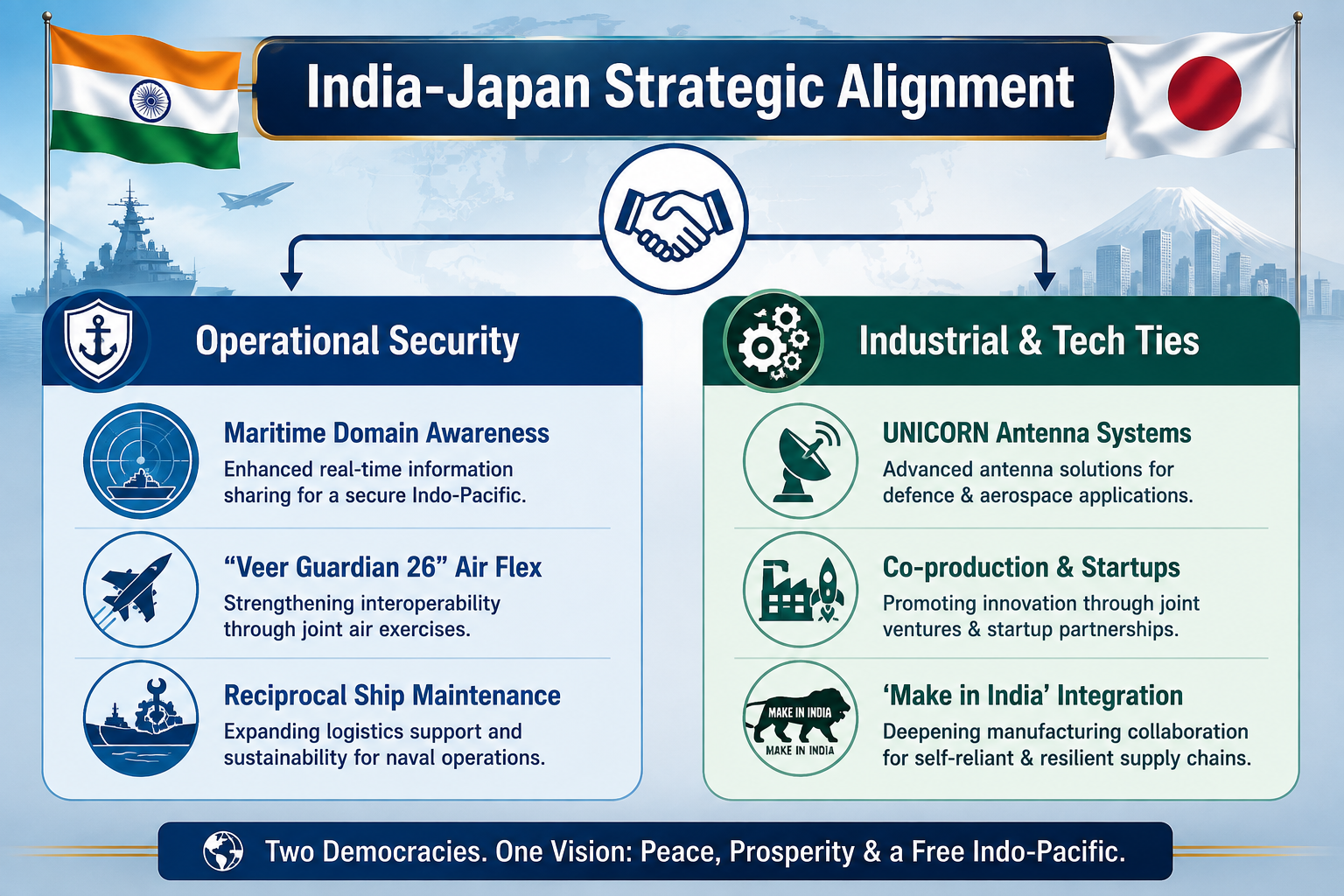
India-Japan: Details of key defense agreements
The operational meat of the visit took shape during the meeting between Indian Defence Minister Rajnath Singh and Japanese Defence Minister Shinjiro Koizumi. Both sides inked a new Memorandum of Arrangement targeting maritime domain awareness and logistics support.
| Strategic Focus | Action Item | Regional Impact |
| Maritime Domain Awareness | Real-time information sharing & search-and-rescue protocols | Secures critical trade corridors against unilateral coercion |
| Logistics & Ship Repair | Reciprocal access to ports, maintenance, and docking facilities | Enhances naval reach and operational longevity |
| Air Force Interoperability | Debut participation of Japanese fighters in Veer Guardian 26 | Builds tactical air synchronization in Indian airspace |
| Tech & Transfer | Deployment of the UNICORN stealth antenna system | Marks India’s first major defence equipment transfer from Japan |
Countering Pressure on Sea Lines of Communication
Without saying who is responsible the joint statement made it very clear about increasing aggressive behavior on the water in the South China Sea and the Indian Ocean. Both ministers said they strongly disagree with any use of force, threats or efforts to change things by themselves in waters.
To support this position with actions the Indian Navy and the Japan Maritime Self-Defence Force are increasing their efforts:
Regular visits to each others ports and meetings between units at important places on the water.
Joint exercises, for helping people and dealing with disasters together.
Agreements that allow naval ships to go into each others shipyards for repairs and maintenance.
Pushing Co-Production Under ‘Make in India’
One thing that really stood out from PM Modis speech was that he asked technology companies and new startups to work together with Indian defense manufacturers. The idea is not just to buy and sell things. To really work together to make new things under the Make in India plan.
The big project that is making this happen is the UNICORN system, which’s a special kind of antenna for naval ships that helps them avoid being seen on radar. Minister Rajnath Singh said that because Tokyo has recently changed its rules about sharing defense technology it will be easier for India and Japan to share technology in the future. The UNICORN system is an example of this and it is called Unified Complex Radio Antenna, which is a big name for a very useful piece of technology that India and Japan can work on together which is the Make, in India plan and the UNICORN system.
Looking Ahead: Exercise “Veer Guardian 26”
The upcoming air exercise called Veer Guardian 26 is a moment. For the time fighter jets from the Japan Air Self-Defence Force will go to India to take part in multi-domain combat scenarios. This move shows that the two armed forces trust each other more. It also means their military relationship is going beyond joint drills to more complicated training exercises.
By working on development sharing supplies and having regular military drills the new plan between Delhi and Tokyo shows that India-Japan defence ties are becoming a strong long-lasting security partnership, for the Indo-Pacific region.