
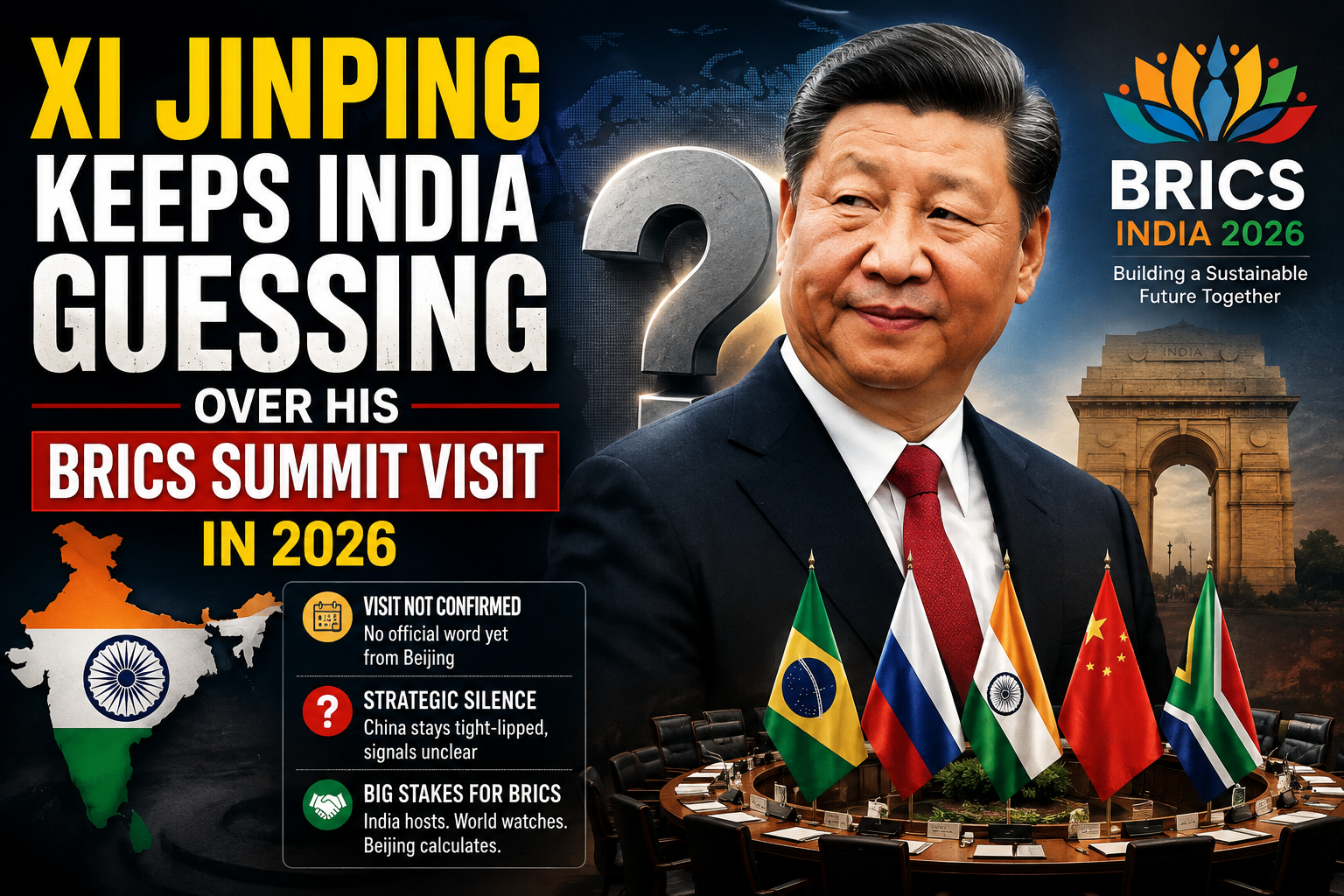
Why Xi Jinping keeps India guessing about his BRICS summit visit in 2026 has become the strategic question in South Asian diplomacy before the important meeting in New Delhi this September.
India is getting ready to host the BRICS summit on September 12–13. Diplomats in Washington, Beijing and New Delhi are watching closely as the Chinese leadership stays silent about President Xi Jinping’s travel plans.
Reuters says Beijing is arranging details, for a large 400‑member delegation.. China’s Ministry of Foreign Affairs has not issued an official statement, which fits a known pattern of strategic ambiguity. To understand why Xi Jinping keeps India guessing about his BRICS summit visit we must look at border tensions, calculations and geopolitical power.
1. Tactical Ambiguity: Holding Strategic Leverage
China’s foreign policy framework often uses statements before big meetings. By waiting to say for sure when President Xi will travel Beijing gets a benefits:
- I see how China controls the agenda. The delayed confirmation makes host countries think mainly about two‑way talks, security rules and small deals of the main meeting topics.
- I also notice how China manages expectations. When the trip is sure months early India loses a bit of power in talks. If the trip depends on how the talks feel Beijing can ask India to keep its words mild and not do moves that could break the meeting.
- China used the idea before the 2023 G20 Summit in New Delhi and the 2025 BRICS Summit in Brazil. Those examples show that China treats being at a meeting, as a tool that can help it.
2. Fresh Himalayan Friction: The Arunachal Pradesh Dispute
Despite the October 2024 disengagement pact that eased a four-year military standoff, systemic friction along the 3,800-kilometer Line of Actual Control (LAC) continues to test bilateral relations.
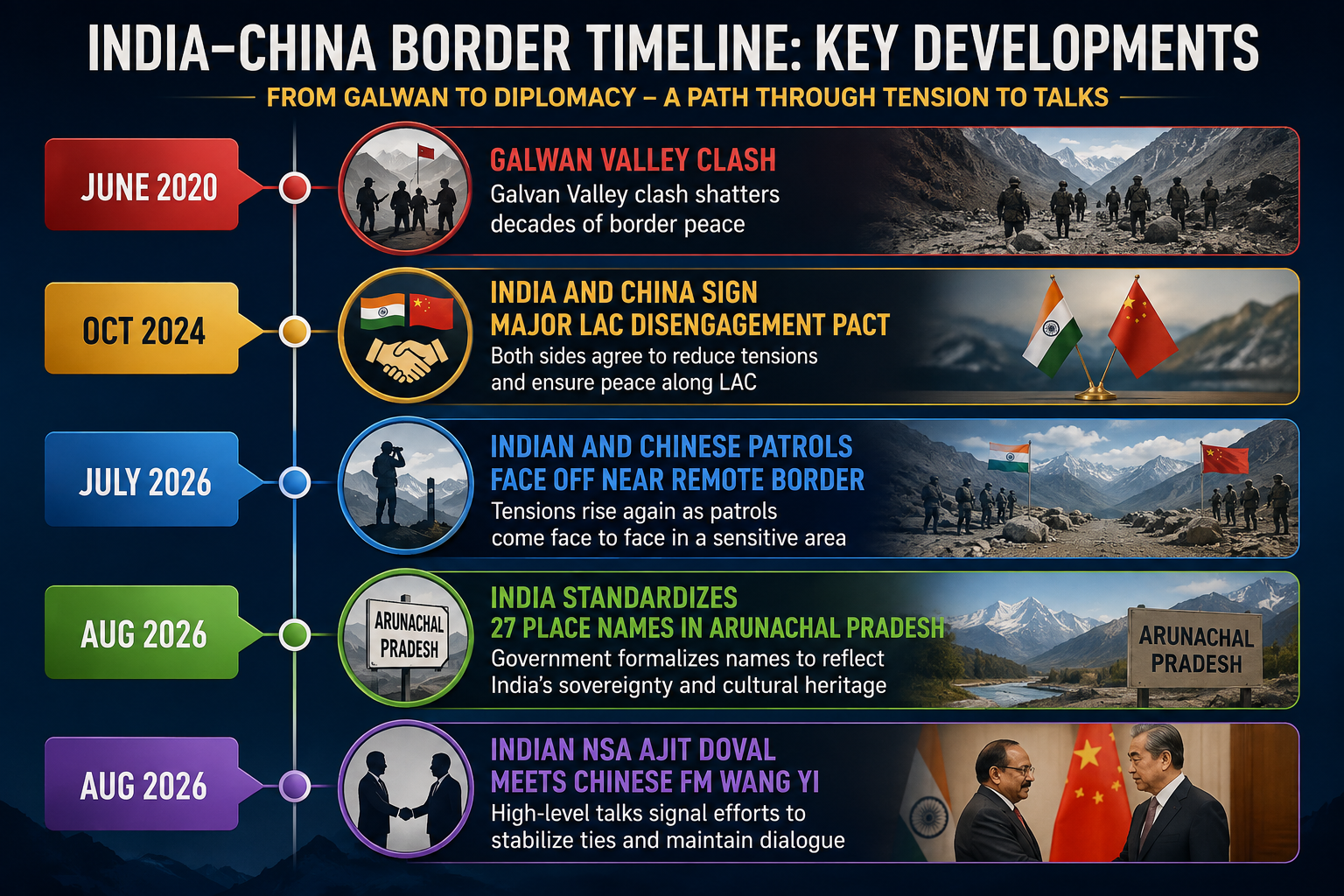
The recent diplomatic friction centers around key developments:
Toponymy Controversies: India’s announcement standardizing 27 official names of locations in Arunachal Pradesh drew sharp reactions from Chinese strategists. Senior fellows at Beijing-backed think tanks, such as the Shanghai Institute for International Studies (SIIS), characterized the move as an entrenched stance by New Delhi.
Patrol Encounters: Reports of Indian and Chinese troops coming face-to-face in late July near a remote Himalayan border segment served as a stark reminder that border stability remains fragile.
High-Level Talks: National Security Advisor Ajit Doval’s trip to Beijing to meet Chinese Foreign Minister Wang Yi highlights that both nations are actively attempting to manage disputes before making public commitments.
3. The 400-Member Entourage: Signals of Heavy Preparation
Despite official silence, advance preparations point toward potential high-level participation:
Logistical Footprint: Indian security and hospitality sources report that Chinese advance teams are securing hotel blocks and establishing security protocols in New Delhi.
Delegation Scale: Reports indicate an delegation of nearly 400 officials—double the size of Xi’s delegation during his last visit to India in 2019 for the Mamallapuram informal summit.
Economic Priorities: The size of the expected delegation indicates that Beijing wants substantial economic and ministerial representation on the ground, even as political leaders negotiate public announcements.
Xi Jinping’s Delegation Sizes to India
| Event | Delegation Size |
| 2019 | 200 Officials |
| 2026 | 400 Officials (Reported) |
4. Shared Convergence: U.S. Trade Policies and Global Alignment
Global economic shifts provide a counterweight to regional rivalries, pushing both nations toward shared interests:
Protectionist Pressures: U.S. President Donald Trump’s trade policies and tariff strategies have placed economic pressure on major exporters across Asia.
Multilateral Counterweight: BRICS provides a global platform where Beijing and New Delhi can advocate for multi-polar trade frameworks, reforming global financial institutions, and hedging against external economic pressures.
Stability as a Priority: Neither Beijing nor New Delhi wants external economic pressure to dictate their regional standing, giving both sides an incentive to show that BRICS can operate effectively despite internal differences.
5. Strategic Outcomes for the New Delhi Summit
As September 12 gets closer the possible visit from President Xi could change a lot for peace in the region:
- Bilateral Reset: A real summit visit along with a planned meeting between Prime Minister Narendra Modi and President Xi might help speed up border trust and trade talks.
- Last-Minute Delegation: If there is political fighting about border issues Beijing might choose to send Premier Li Qiang or another high-level leader instead just like they have done before.
- Continuity: No matter who shows up official messages say that China supports the leadership of India and cares about the main goal of BRICS.
The way people are not sure about the travel plans of President Xi shows a mix of talking to people, at home making moves and working through diplomacy. Even though everything seems to point toward a presence Beijing will probably wait until the very last minute to confirm the visit so that Beijing can keep its options open.