
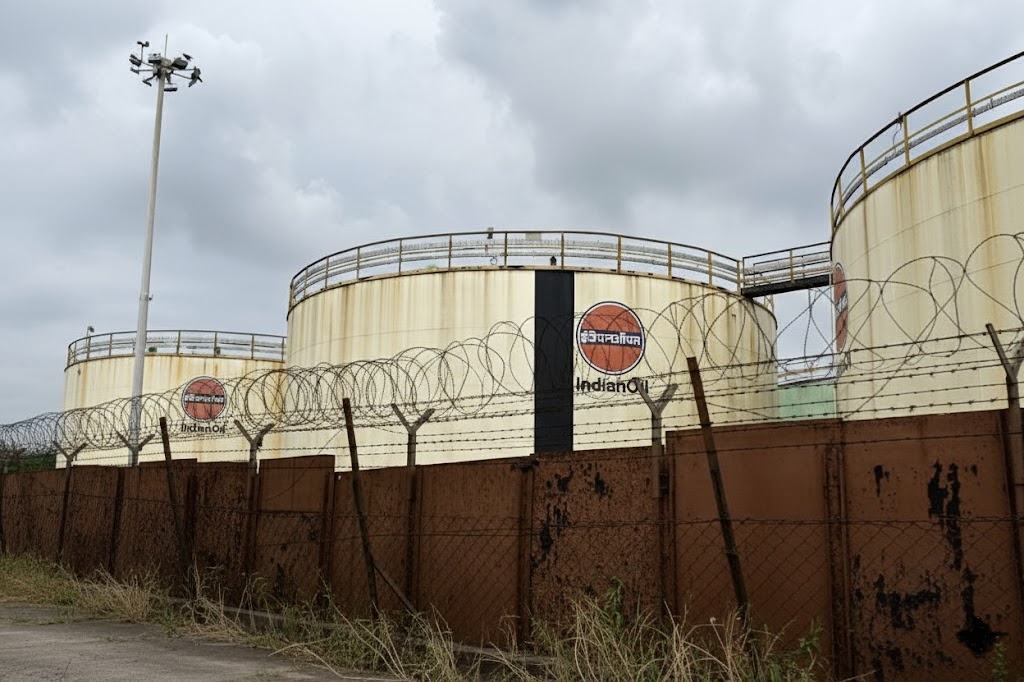
New Delhi, January 30, 2026 — Russia Forced to Dump Oil to India for as Little as $22 a Barrel Amid US Sanctions Blitz is now trading at fire-sale levels for Indian buyers, with some cargoes reportedly changing hands for as little as $22 a barrel. These steep discounts, appearing in late January 2026, expose how a fresh wave of sanctions and shipping risks have flipped the balance of power in Moscow’s most important remaining oil market.
For Russia, these prices barely cover the cost of extraction and transport. For India, the shift offers a massive windfall on energy imports but deepens a strategic entanglement with a supplier under mounting financial and logistical strain. Behind the headline price is a story of crude backing up at sea, refiners stepping away, and a sanctions regime that is finally biting into the Kremlin’s core revenues.
Sanctions Pressure Turns India into a Price Maker
The first thing that stands out in this reshaped market is how decisively sanctions have shifted bargaining power toward New Delhi. With Western buyers constrained by restrictions on shipping, insurance, and financial services, Russia has become heavily dependent on a handful of large importers. India has emerged as the most significant among them.
This dependence has given Indian refiners the leverage to demand unprecedented cuts. Reports on January 29, 2026, indicate that some deliveries cleared at $22 to $25 per barrel on a free-on-board (FOB) basis. When a seller accepts prices this low—levels not seen since 2003, excluding the pandemic crash—it is a clear sign that sanctions are doing more than just rerouting flows; they are eroding margins at the source.
The Trump Administration’s Strategic Squeeze
The “fire sale” is largely a response to a harder line taken by the administration of U.S. President Donald Trump. Stricter enforcement targeting Russia’s “shadow fleet” and major producers like Rosneft and Lukoil has caused many buyers to balk.
The threat is not just to the sellers. In August 2025, Washington imposed a 25% additional tariff on Indian goods linked to Russian oil purchases, which was later raised to 50%. By January 2026, the potential for “secondary sanctions” or even 500% tariffs under the Sanctioning Russia Act has forced private Indian giants like Reliance Industries to halt Russian deliveries entirely.
Prices Collapse Toward the Low Thirties
Even outside the extreme rock-bottom deals, the overall pricing pattern shows a structural decline.
- Early January: Average prices dropped to the $34–$36 range.
- Late January: A slight recovery to $36–$38 occurred, but this remains a massive gap compared to the global Brent benchmark.
- Structural Penalty: In December 2025, official data showed Urals crude averaging $39, the lowest since the pandemic.
These figures capture how far Russia has had to cut to keep volumes moving. When headline benchmarks trade significantly higher, these discounts represent a structural penalty imposed by the risk of handling “tainted” Russian barrels.
Crude Backing Up at Sea: The Logistical Squeeze
Price is only part of the story; the physical movement of oil tells a tale of logistical distress. As Indian refiners step back from spot purchases to avoid the “sanctions crossfire,” Russian crude has begun to pile up on tankers.
Detailed shipping analysis in mid-January 2026 describes “Russian Crude Piling Up at Sea,” with dozens of tankers idling near the west coast of India and China, effectively acting as floating storage. This congestion interacts with pricing: when oil is stuck on the water, the seller is paying in time and freight costs, compounding the headline discount.
A Fiscal Crisis in Moscow
For the Kremlin, the cumulative effect of these discounts is a sharp hit to fiscal capacity.
- Production Woes: Russia’s oil production in 2025 fell to 512 million tons, the lowest since 2009.
- Revenue Decline: Energy revenues decreased by approximately 20% in 2025 compared to the previous year.
- Refinery Stress: Ukrainian drone strikes on Russian infrastructure have reduced domestic refining capacity, forcing Moscow to export even more raw crude quickly—further saturating the market and driving prices down.
As Lukoil reportedly asks the Russian government for budget support, the “slow, cumulative squeeze” of sanctions is making it increasingly difficult for Moscow to maintain fiscal stability. For India, the dilemma remains: continue to capitalize on the $22 “fire sale” and risk a trade war with Washington, or pivot back to traditional, higher-priced Middle Eastern suppliers.
Disclaimer: This information is based on various inputs from news agency.