
India’s Geopolitical Budget 2026: Securing the Four Strategic Pillars of Power. Budgets are often dismissed as dry recitations of numbers and long-winded speeches. However, India’s Union Budget 2026, presented by Finance Minister Nirmala Sitharaman, tells a much more urgent story—one of geopolitics. We live in an era where supply chains are weaponized, technology determines sovereignty, and global trade has shifted from cooperation to “pressurization.”
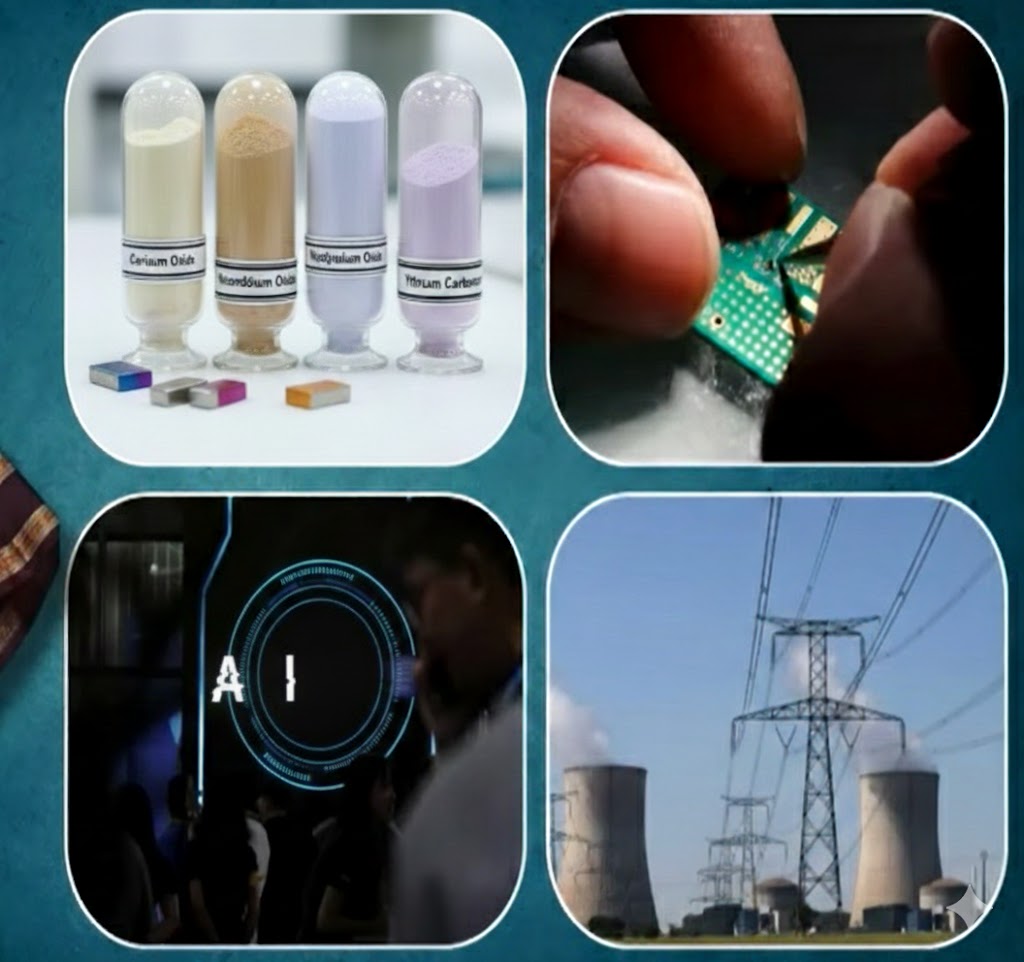
In this high-stakes environment, the 2026 Budget zeroes in on four strategic sectors: Rare Earths, Semiconductors, Artificial Intelligence, and Nuclear Power. This is a direct response to global power plays, aiming to reduce strategic dependence and secure India’s place in a divided world.
1.Rare Earths: Breaking the Dragon’s Grip
Rare earths are a group of 17 minerals essential for modern life. While they don’t feature in daily conversation, your life would collapse without them. They are the hidden “muscle” in everything from EV motors and wind turbines to missile guidance systems and AI servers.

The Challenge: China currently controls the processing of most of the world’s rare earth minerals. This dominance isn’t because others lack these resources, but because China built the ecosystem decades ago.
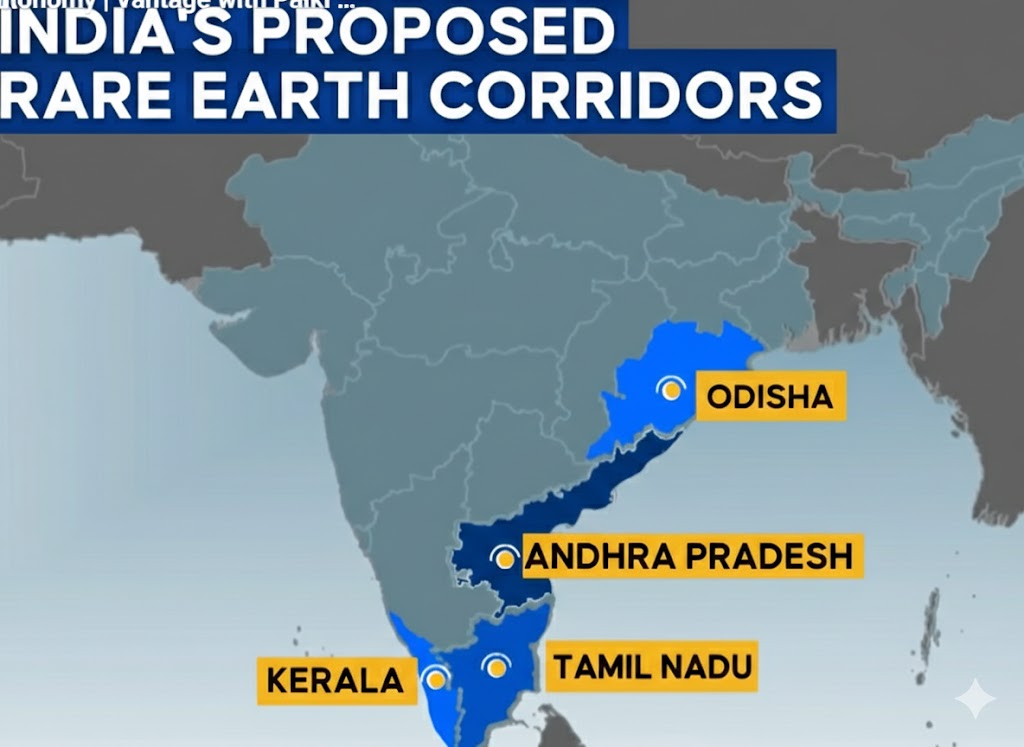
The Strategy: * Rare Earth Corridors: India will establish dedicated corridors in four states: Odisha, Kerala, Andhra Pradesh, and Tamil Nadu. * Integrated Value Chain: Building on the ₹7,280 crore Permanent Magnet Scheme launched in late 2025, these corridors will integrate mining, processing, and manufacturing.
- Processing Power: While India holds significant monazite sand reserves (6-8% of global reserves), it has historically lacked processing capability. By processing domestically, India aims to manufacture high-performance magnets at home for its defense and renewable sectors, neutralizing China’s leverage.
2.Semiconductors: The Brain of the New Economy
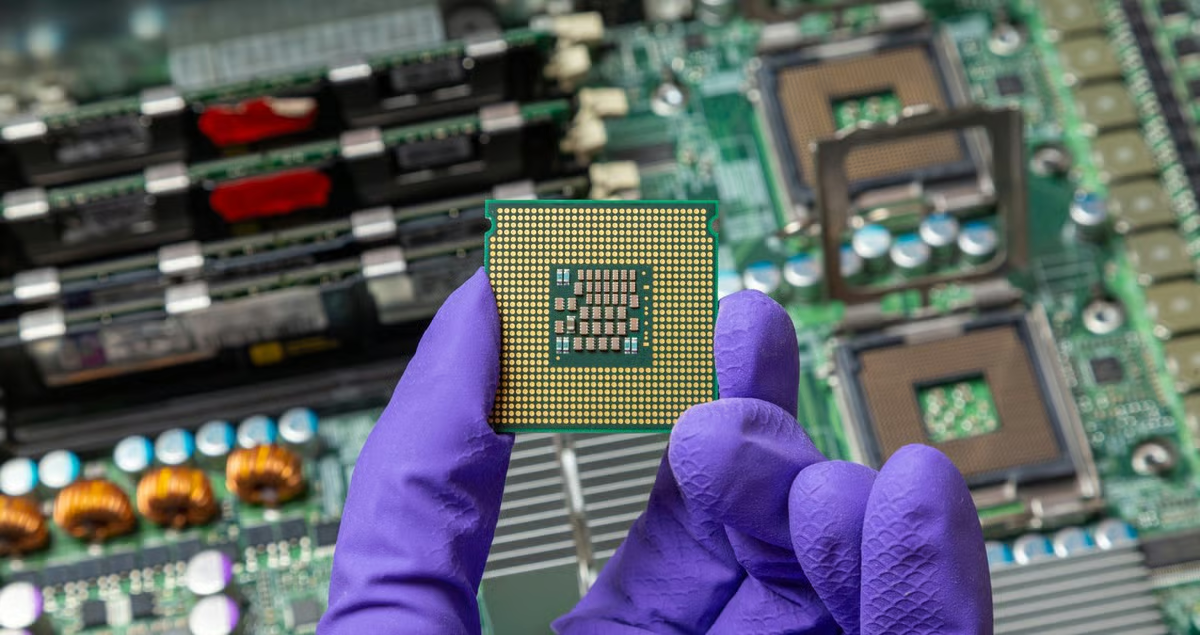
If rare earths are the muscle, semiconductors are the brain. Your phones, cars, and defense systems cannot function without these chips. The US has already “weaponized” chips in its ongoing tech-war with China, and India is racing to ensure its own “Silicon Sovereignty.”
The Strategy: ISM 2.0
- The Funding: The budget doubles down on the India Semiconductor Mission (ISM) 2.0, backed by a massive ₹40,000 crore push for electronics and component manufacturing.
- Deepening the Ecosystem: Unlike the first phase, which focused on assembly, ISM 2.0 prioritizes Indian-designed chips, indigenous equipment, and intellectual property (IP).
- The Goal: With India expected to account for 10% of global chip demand by 2030, the government’s target is to become one of the top four semiconductor manufacturing nations by 2032.


3.Artificial Intelligence: Sovereignty Over Intelligence
AI found a record 11 mentions in the 2026 Budget—the highest in Indian history. The philosophy is simple: if you don’t build AI domestically, you import intelligence and export control.
The Strategy:
- Tax Holiday till 2047: To attract global data center giants, a tax holiday is offered until 2047 for foreign cloud companies, provided they operate via Indian reseller entities.
- Bharat Vistar: A multilingual AI platform launched to provide agricultural and rural advisory services.
- Inclusive Tech: Investment in AI-integrated assistive devices for senior citizens and Divyangjan (persons with disabilities) through ALIMCO.
4.Nuclear Power: The 24/7 Energy Bet
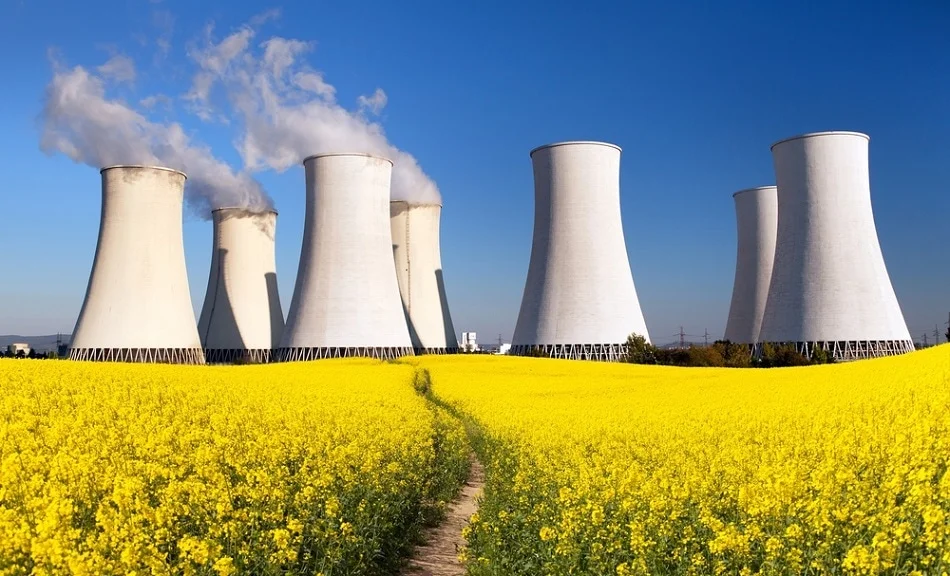
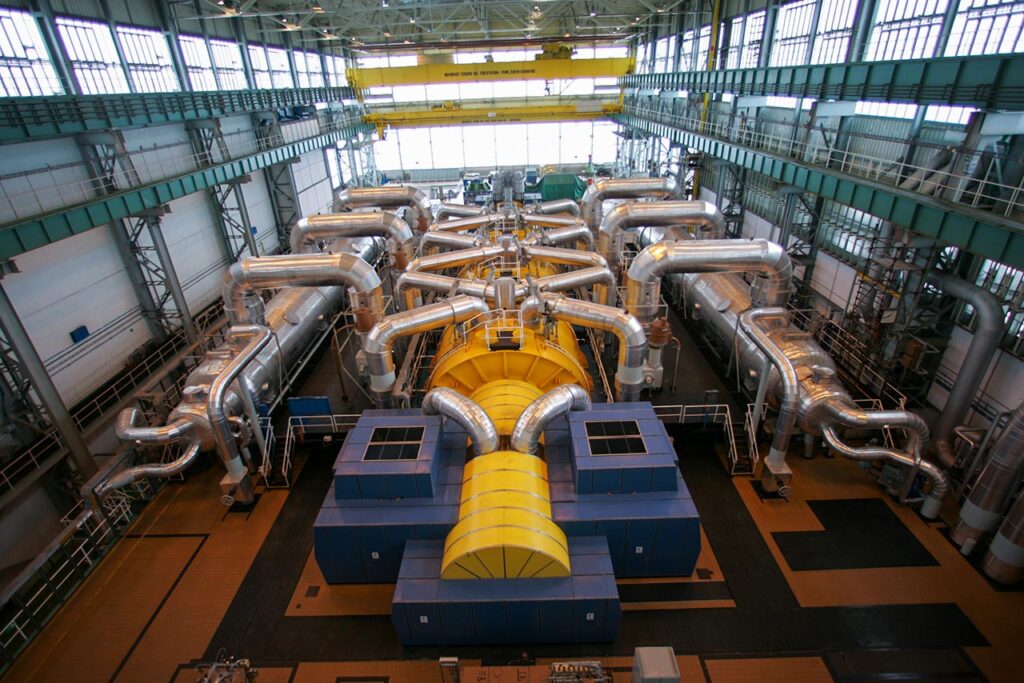
Solar and wind are vital, but they are intermittent. To power massive AI data centers and heavy industry around the clock, India is betting big on atomic energy.
The Strategy:
- Duty-Free Growth: Customs duty exemptions on nuclear project imports have been extended until 2035 to reduce capital costs and encourage private participation.
- The 100 GW Target: India’s current capacity is roughly 8.8 GW, providing only 3% of its power. The ambitious goal is to reach 100 GW by 2047.
- Scale of Ambition: To put this in perspective, 1 GW can power nearly 700,000 to 1 million homes. Scaling to 100 GW represents a massive shift in India’s energy landscape.
Customs Duty Reforms: Signaling Alignment
In a move that helps exporters hit by global tariff pressures, India has cut duties on raw materials needed for lithium-ion batteries, solar glass, and critical mineral processing.
Beyond economics, this has a “US angle.” As India negotiates a trade deal with Washington, lowering input costs and opening supply chains signals alignment with Western interests against a common economic rival.
The Verdict: The 2026 Budget proves that economic policy and geopolitics are now inseparable. India is no longer just budgeting for growth; it is budgeting for power. By securing minerals, silicon brains, digital intelligence, and nuclear energy, New Delhi is ensuring that in a divided world, it remains a self-reliant global leader.
Disclaimer: This information is based on various inputs from news agency.