

The “Vibe Coding” Revolution: Why Sam Altman’s “Uselessness” is a Turning Point for Software Engineering.In the rapidly evolving landscape of Silicon Valley, it isn’t often that a CEO’s personal crisis of confidence makes headlines. However, when that CEO is Sam Altman and the cause is his own creation, the world pays attention.
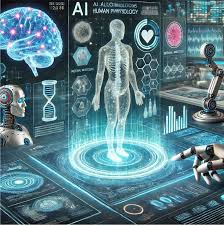
Following the release of the standalone Codex app for Mac, Altman shared a poignant reflection on social media that has since sent ripples through the tech community. While the app is being hailed as a “command center” for the future of development, it has also sparked a philosophical debate about the role of human creativity in an era where AI can out-think its makers.
The Launch of the Codex “Command Center”
OpenAI recently expanded its ecosystem by launching a dedicated desktop application for Codex, specifically for Apple computers. This move marks a strategic shift from simple chatbot interactions to an integrated development environment (IDE) style experience.
The app is designed around the concept of “vibe coding”—a term gaining traction in the developer community that refers to a high-level, intuitive approach to building software. Instead of getting bogged down in syntax and debugging, the developer provides the “vibe” or the vision, and the AI handles the heavy lifting.
Key Features of the Codex Mac App:
Parallel AI Agents: Unlike standard ChatGPT threads, Codex allows users to run multiple AI agents simultaneously. These agents can tackle different parts of a project in parallel.
Project-Based Threads: Organization is at the forefront. Agents operate in separate threads organized by project, allowing for easy review and collaboration.
Expanded Skill Library: Beyond just writing Python or JavaScript, these agents possess “skills” like image generation and complex data analysis, making them multi-modal collaborators.
Native Integration: Being a Mac-native app, it offers a smoother, lower-latency experience compared to web-based tools.
“I Felt a Little Useless”: The Altman Epiphany
Despite the technical triumph of the launch, Sam Altman’s personal takeaway was surprisingly somber. In a post on X, Altman described a late-night session where he used Codex to build an app from scratch.
“At least a couple of [the AI’s ideas] were better than I was thinking of. I felt a little useless and it was sad.” — Sam Altman
This admission is striking because it touches on the “Godfather of AI” dilemma: the moment the creator realizes the creation has surpassed them in specific domains of logic and creativity. For Altman, the speed at which Codex could iterate—and the quality of the features it suggested—rendered his own role as a “thinker” somewhat redundant.
The Paradox of Excitement and Melancholy
Altman also noted that he had been “staying up late at night with excitement” using the tool. This duality—being thrilled by the power of the tool while simultaneously feeling diminished by its capability—is a sentiment shared by many early adopters of AI. If the CEO of the world’s leading AI company feels “useless,” what does that mean for the junior developer or the mid-career engineer?
Competition in the Coding Space: Anthropic vs. Cursor vs. OpenAI
The timing of the Codex app launch is no accident. The market for AI-assisted coding has become a primary battleground for tech supremacy.
Cursor: This AI-native code editor has gained a cult following for its deep integration and seamless “Tab-to-complete” features.
Anthropic: With the release of “Artifacts” and Claude 3.5 Sonnet, Anthropic has set a high bar for coding logic and UI generation.
GitHub Copilot: The incumbent giant continues to dominate through its integration with VS Code.
OpenAI’s decision to make Codex a standalone app is a direct attempt to win back market share. By offering it to Free users and those on the “Go” tier for a limited time, and doubling rate limits for paid subscribers, OpenAI is aggressively lowering the barrier to entry to ensure Codex remains the “most loved internal product” globally, not just within their own office.
The Rise of the AI Agent
The core of the new Codex app is the AI Agent. Unlike a standard LLM (Large Language Model) that responds to a prompt and then waits, an agent is proactive.
In the Codex environment, an agent can:
Self-Correct: Run code, see an error, and fix it without human intervention.
Collaborate: Work alongside other agents. For example, one agent could be writing the backend API while another designs the frontend CSS.
Manage Long-Running Tasks: You can set an agent to a task, walk away, and return to find a finished module.
This shift from “Chat” to “Agent” is the most significant leap in productivity since the invention of the compiler. As Altman noted, “As fast as I can type in new ideas, that is the limit of what can get built.”
What This Means for the Future of Work
Altman’s feeling of “uselessness” may be a precursor to a broader shift in the human labor market. If the “ideation” phase of software development—the part we previously thought was uniquely human—is being optimized by AI, the human role transitions from Creator to Curator.
1. The Death of the “Syntax” Developer
The need to memorize obscure library functions or spend hours on Stack Overflow is rapidly vanishing. “Vibe coding” means that the person who understands what to build will become more valuable than the person who only knows how to type the code.
2. The Democratization of Software
The Codex app makes it possible for a non-technical founder to build a functional prototype in a weekend. By providing access to Free and lower-tier users, OpenAI is effectively giving everyone a team of junior engineers for the price of a monthly subscription (or less).
3. The Psychological Impact
We must address the “sadness” Altman mentioned. Human fulfillment is often tied to the struggle of creation. If the struggle is removed, we must find new ways to derive meaning from our work.
Conclusion: A New Chapter for Apple Users
The Codex app for Mac is currently the most advanced “command center” available for developers who want to harness the power of multiple agents. While it may leave us feeling “a little useless” as our ideas are outshined by silicon, it also unlocks a level of productivity that was previously unimaginable.
As we move into 2026, the question is no longer whether AI will write our code, but rather: How will we spend the time that AI has given back to us?
Quick Summary Table
| Feature | Codex for Mac (New) | Standard ChatGPT |
| Interface | Standalone Desktop App | Web/Mobile |
| Concurrency | Multiple agents in parallel | Single thread interaction |
| Target User | Developers / “Vibe Coders” | General Purpose |
| Availability | Mac (Limited time for Free/Go) | All platforms |
| Key Strength | Project-based agent threads | Versatile conversation |
Disclaimer: This information is based on various inputs from news agency.