
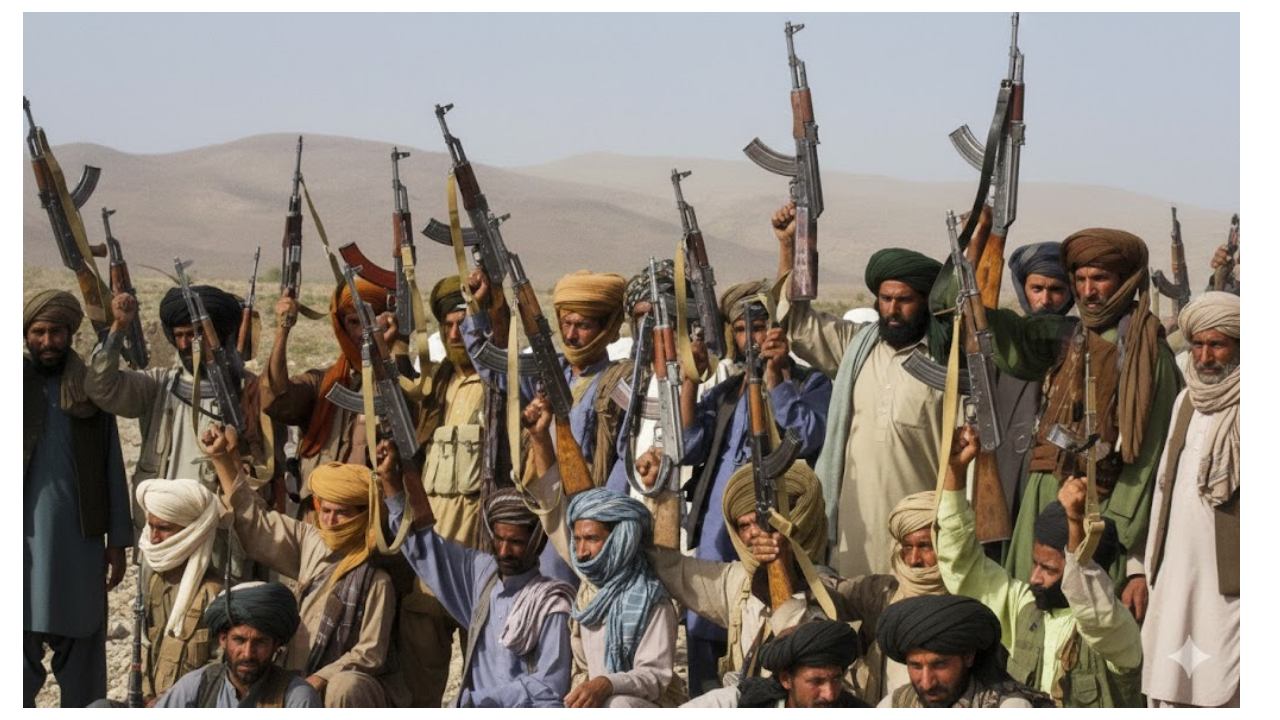
ISLAMABAD —Overstretched and Under-Fire: Why Khwaja Asif’s Admission of a ‘Handicapped’ Army is Shaking Pakistan. While the world’s elite gathered in the snowy heights of Davos, a different kind of fire was consuming the rugged terrain of Balochistan. Over the weekend of January 31, 2026, the province witnessed a level of coordinated carnage that has left the Pakistani military establishment reeling and its political leadership scrambling for excuses.
Baloch militants, under the banner of “Operation Herof 2.0,” launched a massive, synchronized assault across 14 cities, striking 48 targets simultaneously. From Quetta to the strategic port of Gwadar, the scale was unprecedented. High-security prisons were stormed, police stations torched, and security convoys ambushed. When the smoke cleared, dozens of security personnel and civilians lay dead, and the myth of the “unbeatable” Pakistani army was once again punctured.
The “Geography” Excuse
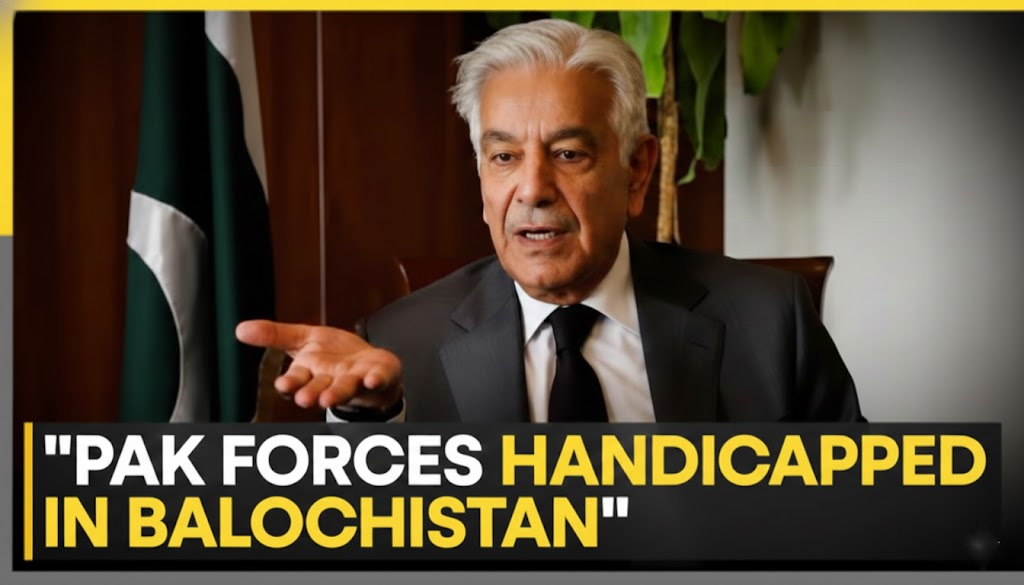
The response from Islamabad was as predictable as it was pathetic. When the usual finger-pointing at India failed to gain international traction, Pakistan’s Defence Minister, Khwaja Asif, turned to a new villain: the map.
Speaking on the floor of the National Assembly, Asif made a remarkable admission:
“Balochistan constitutes over 40% of Pakistan geographically. To control it is much more difficult than a populated city. It needs massive troop deployment. Our forces are in action, but they are physically handicapped by guarding such a large area.”
It is an extraordinary confession of incompetence. By blaming the sheer size of the province, the Defence Minister essentially admitted that the Pakistani military—the most powerful and well-funded institution in the country—lacks the capacity to secure nearly half of its own territory.
A History of Betrayal and Exploitation
The problem in Balochistan isn’t the terrain; it’s the treatment. This is a province sitting on a literal goldmine—billions of dollars worth of gas, copper, and coal. Yet, it remains the poorest corner of Pakistan.
The roots of this fire go back to 1947. The largest Baloch kingdom sought independence, and while Islamabad initially agreed, it later forced an accession that many Baloch still view as an illegal occupation. Today, that resentment is fueled by the China-Pakistan Economic Corridor (CPEC). The Baloch people see their land mined and their ports militarized, while the profits flow to the elites in Rawalpindi and Beijing. To them, the army isn’t a protector; it’s a security guard for foreign interests.
Munir’s Davos Dilemma
As Balochistan burned, Army Chief Field Marshal Asim Munir was 3,000 miles away at the World Economic Forum in Davos. In a rare and controversial appearance for a serving army chief, Munir spent his week courting investors and posing as a statesman, even as his own house was on fire.
The irony has not been lost on the Pakistani public. While Munir was busy meeting world leaders, the militants were proving that his “iron-fisted” internal security policy is a paper tiger.
The Tariff Tussle: A Slap from Washington
Adding insult to injury is the recent India–US trade deal. Munir had invested heavily in “Trump-proofing” Pakistan’s relations—spending millions on lobbyists and promising mining rights to US firms.
The result?
- India secured a reduced reciprocal tariff of 18%.
- Pakistan was slapped with a 19% tariff.
The digital streets of Pakistan are currently mocking this “1% gap” as a symbol of Munir’s failed diplomacy. In the eyes of the current US administration, Pakistan remains a state that exports “requests for aid” rather than value.
An Army Overstretched
The reality is that the Pakistani military is fighting on too many fronts with too little focus.
- To the North: A hostile Afghan Taliban (once their protégés).
- To the West: The burning insurgency in Balochistan.
- To the East: The perceived threat from India.
- At Home: An economy in freefall and a population mocking the leadership.
One army cannot manage all of this—especially when its leadership is more interested in crypto deals and Davos photo-ops than the security of its own borders. Blaming the mountains of Balochistan won’t make the militants go away, and it certainly won’t heal the political wounds of a province that has had enough.
Disclaimer: This information is based on various inputs from news agency.