

A New Era in Indo-US Ties: The 2026 Trade Breakthrough Reshapes Global Tech and Trade Landscape. In a move that has sent ripples through global markets and sparked a historic rally on the Indian bourses, U.S. President Donald Trump and Prime Minister Narendra Modi have officially sealed a high-stakes trade agreement. Announced on Monday, February 2, 2026, the deal marks a dramatic pivot in bilateral relations, following a year of bruising trade tensions and punitive tariff regimes. This comprehensive agreement effectively dismantles a barrier that had seen duties on Indian goods climb as high as 50%, slashing reciprocal tariffs to a more manageable 18% and crucially removing penalties linked to energy imports. The deal strategically positions India as a preferred trade partner in the Indo-Pacific region, with profound implications for everything from textiles to the very smartphones in our pockets.
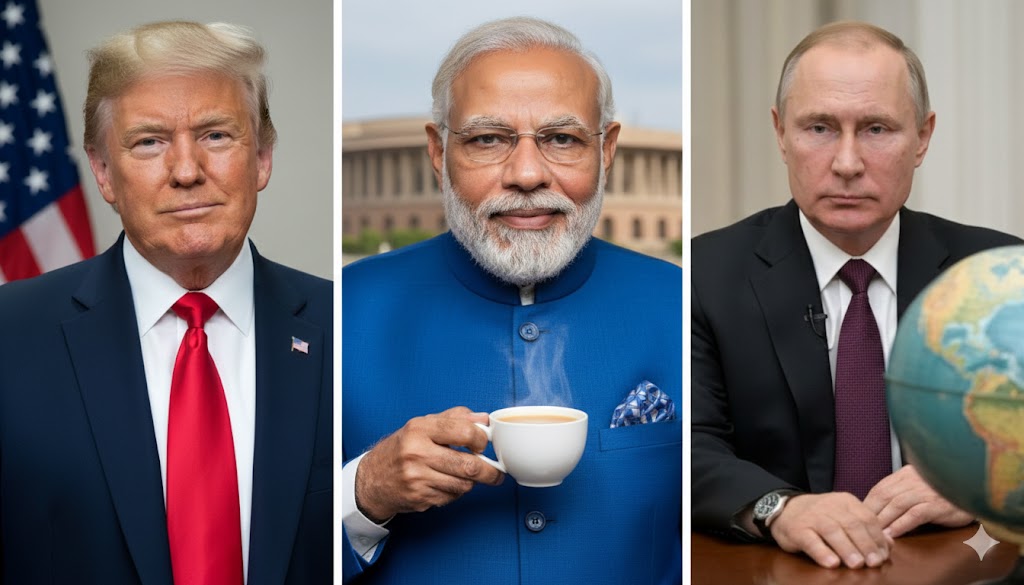
The Deal at a Glance: Slashing the “50% Wall”
For much of 2025, Indian exporters faced a “double-whammy” of tariffs: a 25% reciprocal tariff under Trump’s “Liberation Day” measures and an additional 25% penal tariff imposed in August 2025 due to India’s continued purchase of Russian crude oil. This punitive regime had created significant headwinds for Indian businesses, causing turnovers to plunge by as much as 50% in key sectors. The new agreement streamlines this complex tariff structure:
| Feature | Previous Rate | New Agreed Rate |
| Reciprocal Tariff | 25% | 18% |
| Russian Oil Penalty | 25% | 0% (Rescinded) |
| Effective Total | 50% | 18% |
President Trump, in his signature style, took to Truth Social to break the news, describing the move as a gesture of “friendship and respect” for Prime Minister Modi. He noted that the decision would be effective immediately, bringing much-needed relief to sectors like textiles, gems and jewelry, and leather—industries that had been particularly hard-hit during the peak of the trade war.
The Energy Pivot: Russian Oil vs. American Ambition
Perhaps the most significant—and controversial—aspect of the deal is the definitive shift in India’s energy policy. President Trump claimed that PM Modi has committed to stop buying Russian oil, which currently accounts for roughly one-third of India’s imports (approximately 1.5 million barrels per day).
“He agreed to stop buying Russian Oil, and to buy much more from the United States and, potentially, Venezuela,” Trump posted. “This will help END THE WAR in Ukraine!”
While the White House frames this as a strategic victory to starve the Russian “war machine” of revenue, New Delhi has been more measured in its public statements. In his post on X, PM Modi praised the 18% tariff reduction but refrained from explicitly mentioning the Russian oil halt, focusing instead on the tangible benefits for “Made in India” products. However, the unequivocal removal of the 25% penal tariff, which was directly linked to Russian oil purchases, strongly suggests a private understanding has been reached. To fill the significant gap left by the cessation of Russian oil imports, India is expected to:
· Dramatically scale up imports of U.S. Crude and Liquefied Natural Gas (LNG).
· Explore renewed oil ties with Venezuela, potentially diversifying its energy sources further.
· Operationalize the SHANTI Bill (2025), a crucial legislative move that opens India’s tightly regulated nuclear sector to private U.S. participation, signaling a deeper strategic energy collaboration.
India’s Regional Advantage: A Game-Changer for Supply Chains
The drop in U.S. tariffs to 18% isn’t just a bilateral win; it is a regional game-changer that reconfigures the competitive landscape for Asian exporters. For the first time in years, India now enjoys a significant tariff edge over many of its closest export competitors:
· India: 18%
· Pakistan: 19%
· Vietnam: 20%
· Bangladesh: 20%
· China: ~34% (Effective rate)
This “favored nation” status is expected to trigger a massive shift in global supply chains. The immediate reaction from the Indian markets was telling: textile and leather stocks surged by up to 20% following the news, and the Sensex witnessed a record opening jump of over 3,600 points on Tuesday morning. This signals strong investor confidence in the renewed competitiveness of Indian goods.
Sector Spotlight: The Winners of the 2026 Trade Deal
The reduction to 18% is a critical lifeline for several Indian industries that were on the brink of crisis, and it heralds a new era of opportunity.
1. Textiles and Apparel: The Resurgence of a Giant
The textile industry, a colossal employer in India, was arguably the hardest hit by the trade war, with the U.S. accounting for nearly 28% of India’s total textile exports. The previous 50% tariff wall had forced many factories to operate at half capacity.
- The Advantage: At 18%, Indian garments are now unequivocally cheaper and more attractive than those from key competitors like Vietnam (20%) and Bangladesh (20%).
- Impact: Analysts predict a swift migration of orders back to Indian manufacturing hubs like Tirupur and Noida as U.S. retailers, seeking better margins and supply chain diversification, prioritize India.
2. Gems and Jewelry: Reclaiming the Sparkle
This sector saw a staggering 76% drop in exports to the U.S. in late 2025. For the vibrant diamond cutting and polishing hubs of Surat and Mumbai, the 18% rate is a massive relief.
- The Shift: Under the prohibitive 50% tariff, Indian cut and polished diamonds were effectively priced out of the American luxury market.
- Outlook: The reduction is expected to quickly restore the confidence of major American jewelry giants (such as Tiffany & Co. and Signet) in Indian suppliers, reinvigorating this crucial export segment.
3. Auto Components and Engineering: Precision and Competitiveness
India is a major global hub for precision engineering and auto parts. The trade deal reinforces India’s position as a cost-efficient and reliable alternative to China.
- Key Players: Leading auto component manufacturers like Bharat Forge and Sona BLW (which has significant U.S. exposure) are expected to see immediate margin expansion and increased order books.
- Strategic Gain: As U.S. automakers (Ford, GM) actively look to reduce reliance on Chinese supply chains (currently facing effective tariffs of around 37%), India’s 18% rate makes it the most attractive manufacturing partner in Asia, fostering deeper integration into global automotive value chains.
4. Seafood and Marine Products: Smooth Sailing Ahead
The U.S. is the single largest consumer of Indian frozen shrimp and other marine products.
- The Relief: Previous tariffs included complex anti-dumping duties that pushed effective rates past 50%. The new deal stabilizes these costs significantly, directly benefiting companies like Avanti Feeds and Apex Frozen Foods and bolstering India’s position in the global seafood market.
Semiconductors and the High-Tech Ecosystem: Shaping the Future
Beyond traditional manufacturing, the deal carries immense strategic weight for the high-tech sector, promising to reshape the dynamics of the global electronics and semiconductor ecosystem, and potentially make your next smartphone a little cheaper. Rajeev Singh, Managing Director, BenQ India & South Asia, emphasized the opportunity: “The reported reduction of US tariffs on Indian goods as part of evolving trade discussions presents a meaningful opportunity for India’s technology sector to expand its global reach and competitiveness, particularly in electronics and adjacent hardware manufacturing.” He added that lower tariff barriers would lead to “more predictable market access, improved cost structures, and foster deeper collaboration with international partners.”
Boost for Smartphone Manufacturing
India’s smartphone exports to the United States have already surged dramatically, tripling to $12.54 billion between April and November FY26 from $4.1 billion a year earlier. The tariff relief is expected to accelerate this trend further, reinforcing India’s status as a rising electronics manufacturing powerhouse. Electronics manufacturing relies heavily on tightly integrated global supply chains. By lowering friction across these routes, the new tariff framework helps manufacturers cut costs and improve efficiency, which could eventually translate into more competitive pricing for smartphones in both the US and India. Companies such as Apple and its primary contract manufacturer, Foxconn, are already well-positioned to benefit, with multiple iPhone models now produced in India largely for export markets.
Semiconductor Cooperation and Advanced Tech
Beyond smartphones, the deal explicitly links broader India–US cooperation under the TRUST and iCET initiatives. These aim to align critical-mineral access, trusted chip manufacturing, and advanced packaging between the two countries. Singh noted, “This comes at an opportune time as India reinforces its semiconductor and electronics ecosystem through measures such as the enhanced India Semiconductor Mission 2.0 in the Union Budget 2026, which strengthens domestic manufacturing and innovation.”
While Washington will continue to maintain selective restrictions on sensitive semiconductor products for national security reasons, the overall easing of trade barriers significantly improves the business case for locating chip design, testing, and even fabrication activities in India. These efforts are particularly relevant for next-generation technologies like 5G, 6G, and data center applications, all critical growth areas for both economies. Sector watchers believe Indian telecom and electronics firms stand to gain most where they move up the value chain into specialized domains such as Open RAN subsystems, secure network equipment, and advanced chip packaging. The tariff reforms, in this context, are less about immediate cost savings and more about building long-term trust, supply-chain resilience, and strategic technological alignment.
The Road Ahead: “Limitless Potential”
In an exclusive conversation with NDTV, U.S. Ambassador to India Sergio Gor highlighted that this deal “unlocks the next chapter” of the relationship. He confirmed that while some technical details are still being finalized over the next few days, the “deal is done.” Ambassador Gor also teased a possible visit by President Trump to India in the coming months, noting that “the next three years will define the relationship for several decades to come.” With India committing to purchase over $500 billion in American energy, technology, and agricultural products, the economic interdependence between the two giants has reached an all-time high.
As the dust settles, the world watches with keen interest to see how New Delhi skillfully balances this new “limitless” partnership with Washington against its long-standing strategic autonomy. This deal is not merely about tariffs; it is a foundational reset that could redefine global trade patterns, energy geopolitics, and technological leadership for decades to come, ushering in an era of unprecedented collaboration and competition.
Disclaimer: This information is based on various inputs from news agency.