
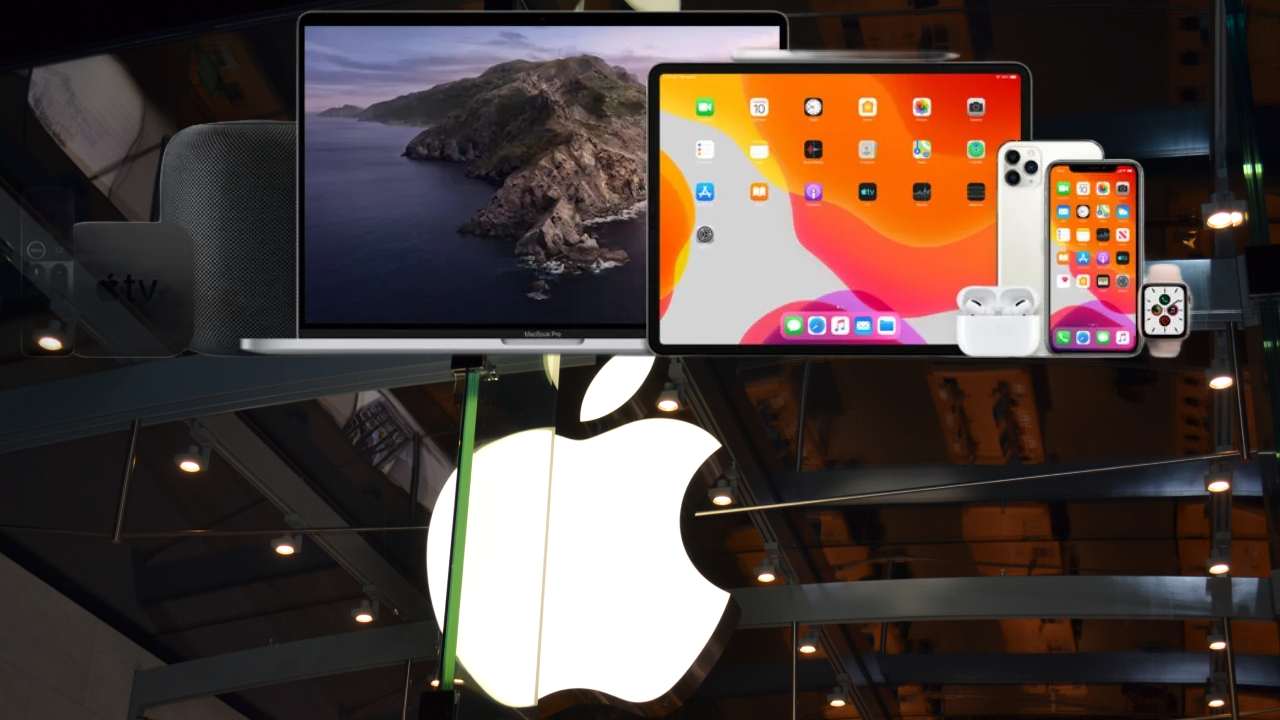
“Apple’s India Surge: Record Revenue and Doubled Installed Base as First-Time Buyers Fuel Growth”. Apple has officially solidified its position as the leading force in India’s premium electronics market. In a landmark financial report released this Thursday, the Cupertino-based giant announced record-breaking quarterly revenue for its fiscal 2026 first quarter (ending December 27, 2025), with India emerging as a primary engine of this global success.
Globally, Apple reported a staggering quarterly revenue of $143.8 billion, a 16% increase compared to the same period last year. This performance blew past market expectations, largely driven by the unprecedented demand for the iPhone 17 family.
While total global revenue was the headline, the specifics of the product categories revealed a shifting landscape:
- iPhone: $85.26 billion (23% YoY growth)
- Services: $30.01 billion (14% YoY growth)
- Mac: $8.4 billion (~7% decline)
- Wearables & Accessories: $11.5 billion (~2% decline)
- iPad: $8.6 billion (Positive YoY growth)
CEO Tim Cook highlighted that the “iPhone had its best-ever quarter,” while the active installed base has now surpassed 2.5 billion devices worldwide.
India: The New Frontier for First-Time Users
For the Indian subcontinent, the results were nothing short of “terrific,” according to Cook. Apple registered an all-time revenue record in India, characterized by strong double-digit growth. Perhaps the most significant insight shared by Apple CFO Kevan Parekh was that the installed base of Apple devices in India has doubled.
Crucially, this growth isn’t just coming from existing fans upgrading; it is being driven by first-time buyers.
“The majority of customers that are buying iPhone and Mac and iPad and Watch [in India] are all new to that product,” said Tim Cook. “It speaks very well to the opportunity there.”
Despite this rapid growth, Apple still holds a “modest share” in what is currently the world’s second-largest smartphone market and fourth-largest PC market, suggesting that the ceiling for growth remains high.
Retail Expansion and Local Resilience
The quarter also marked a significant physical expansion for the brand. In the latter half of 2025, Apple opened three new fully-owned retail stores: Apple Hebbal (Bengaluru), Apple Koregaon Park (Pune), and Apple Noida (Uttar Pradesh).
Looking ahead, the company is set to open its sixth Indian store—a second location in Mumbai—by the end of the first half of 2026. This aggressive retail push is aimed at capturing the “premiumization” trend, where Indian consumers are increasingly opting for high-end devices via attractive EMI and exchange programs.
Outperforming the Competition
Data from Greyhound Research suggests that Apple has remained largely insulated from the macroeconomic pressures affecting other “Big Tech” players like Google and Meta. While the digital ad market faced headwinds in FY25, Apple’s focus on hardware localization and a high-margin services layer has kept its profit engine running.
Analyst Sanchit Vir Gogia noted that Apple’s strategy in India is “increasingly premium and upper-mid.” In a year where mass-market consumers became cautious, the premium segment remained resilient, allowing Apple to top the revenue and profit charts among tech giants in India.
Key Takeaways for 2026
| Segment | Performance Note |
| iPhone 16/17 | Best-selling handsets by volume and value in India. |
| Services | All-time high revenue, tracking the doubled installed base. |
| Mac/Wearables | Slight declines due to supply constraints (e.g., AirPods Pro 3). |
| Strategy | Shift toward high-end foldable models expected later in 2026. |
As Apple prepares for the rest of 2026, the focus remains clear: convert India’s massive user base into long-term ecosystem loyalists through both retail experiences and localized services.
Apple’s market share in India compares specifically to Samsung and Vivo based on the latest 2025-26 data
In 2025 and entering 2026, the Indian smartphone market has witnessed a historic pivot. While Vivo continues to lead in total volume (number of phones sold), Apple has seized the crown for market value, fundamentally changing how success is measured in the region.
Here is how the “Big Three” compare based on the latest data for 2025–26:
- Apple: The Value King
Apple has achieved its highest-ever presence in India, moving from a niche luxury player to a top-tier volume contender.
- Market Share: Roughly 9% by volume, but a dominant 28-30% by value.
- Key Achievement: The iPhone 16 was India’s best-selling smartphone model by volume in 2025—the first time a premium flagship has ever beaten budget models for the #1 spot.
- Driver: Massive adoption of EMI plans (60% of premium sales) and a surge in “first-time” buyers entering the ecosystem.
- Vivo: The Volume Leader
Vivo remains the most resilient Android brand in India, consistently holding the top spot for total shipments.
- Market Share: Approximately 18-20% by volume.
- Strategy: Success is driven by the Y-series and V-series, which dominate the offline retail market. Vivo has also successfully pushed into the “premium” segment with its X-series, maintaining its lead for six consecutive quarters.
- Key Achievement: Leading the 5G smartphone market in India with a focused portfolio of affordable 5G devices.
- Samsung: The All-Rounder
Samsung finds itself in a challenging “sandwich” position—battling Vivo in the mid-range and Apple in the super-premium segment.
- Market Share: Roughly 14-15% by volume and 23% by value.
- Performance: While Samsung briefly overtook Apple in the “super-premium” ($800+) segment in early 2025, it ended the year in second place by value.
- Highlight: The Galaxy A16 5G remains the best-selling Android phone in India, while the Galaxy S25 Ultra and Z Fold 7 drive their high-end revenue.
Comparative Snapshot (2025 Full Year)
| Brand | Volume Rank | Value Rank | Primary Growth Driver |
| Vivo | #1 | #3 | Strong offline retail & affordable 5G (Y-series). |
| Samsung | #2 | #2 | Diverse portfolio (Foldables & Galaxy A-series). |
| Apple | #5 / #6 | #1 | iPhone 16/17 demand & aggressive EMI options. |
Outlook for 2026
Analysts predict that 2026 will be a “premium-first” year. While the overall market volume may contract slightly due to rising component costs, the value share of Apple is expected to grow further. The upcoming iPhone 17e (Slim/Air) is being watched by experts as a potential “local hit” that could propel Apple into the top three for volume for the first time in history.