
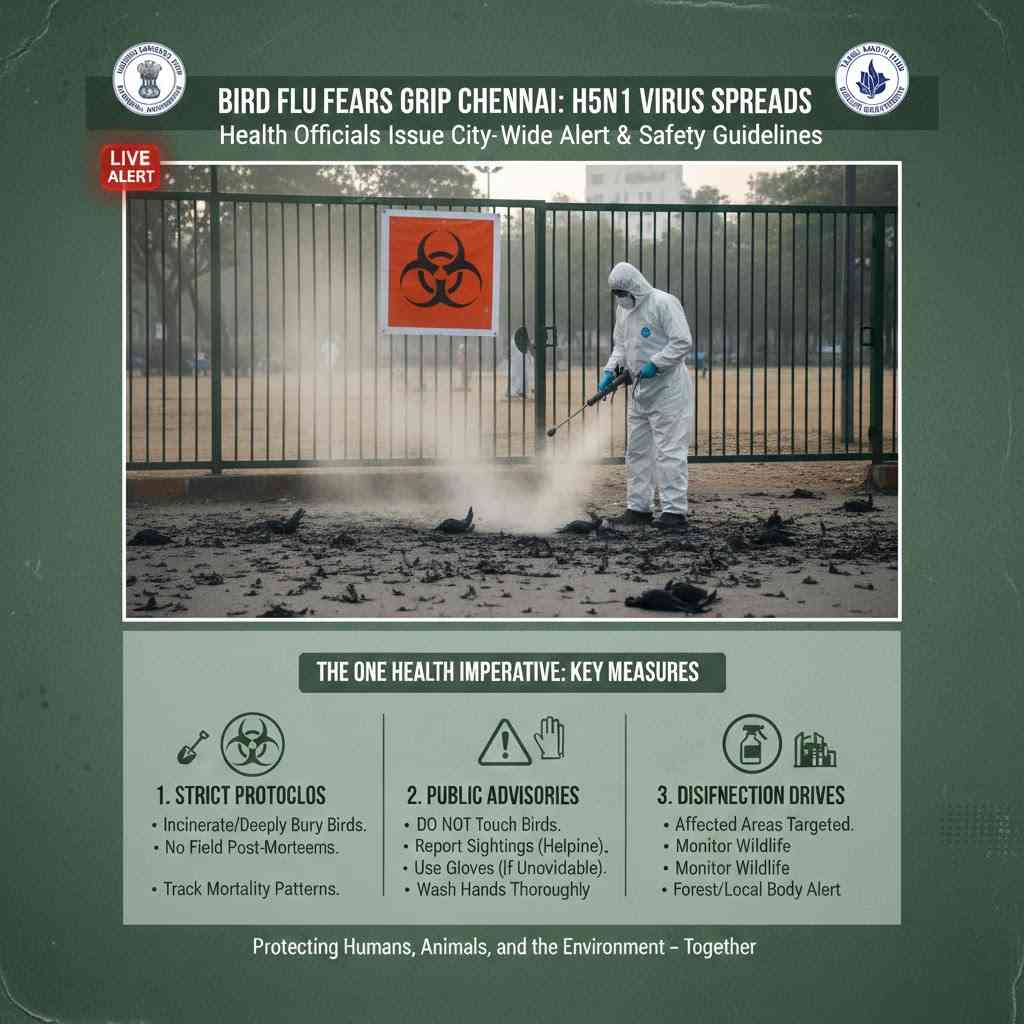
February 7, 2026 – Chennai on High Alert: H5N1 Bird Flu Outbreak Confirmed After Mass Crow DeathsAn unsettling silence has fallen over several neighborhoods in East Chennai, as residents awaken to a grim landscape of black feathers scattered across roads, pavements, and parks. The discovery of hundreds of dead crows has triggered alarm, leading authorities to confirm an outbreak of the highly pathogenic H5N1 avian influenza virus, commonly known as bird flu.
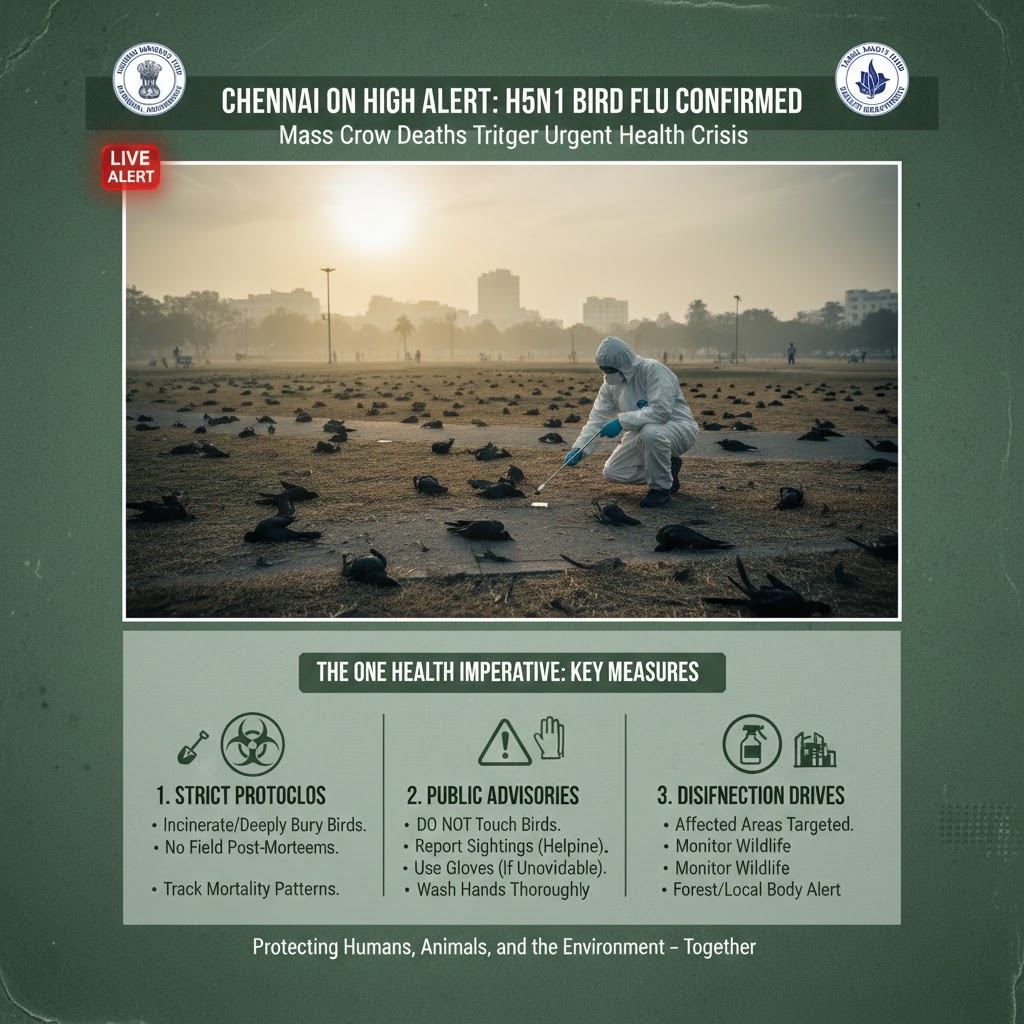
Laboratory tests conducted on samples collected by officials have definitively identified the deadly virus, prompting the Union Ministry of Animal Husbandry to issue an urgent directive to the Tamil Nadu government. The directive calls for immediate surveillance and stringent containment measures to mitigate the significant risks posed to both animal and, potentially, human health.
What is H5N1 and Why the Concern?
Chennai on High Alert: H5N1 Bird Flu Outbreak Confirmed After Mass Crow Deaths. H5N1 is a particularly dangerous strain of Influenza A virus that primarily affects wild birds and poultry. It is notorious for its ability to spread rapidly among avian populations, causing high mortality rates in infected flocks. While human infections are rare, when they do occur, they can be exceptionally severe. Patients often develop serious respiratory illnesses like pneumonia, and the fatality rates are significantly higher than those associated with seasonal flu.
Currently, there are no confirmed human cases of H5N1 in Tamil Nadu. However, health agencies are treating the outbreak with utmost seriousness due to the virus’s notorious capacity to occasionally “jump species” after close exposure.
Doctors are urging the public to seek immediate medical attention if they experience flu-like symptoms—such as fever, coughing, sore throat, or breathing difficulties—especially after any contact with birds or in areas where dead birds have been sighted.
Crows: The Unsettling Early Warning System
The widespread deaths of crows are particularly worrying for epidemiologists and public health officials. These intelligent birds often serve as an early warning system for environmental health threats. Their foraging habits—moving frequently between garbage dumps, water bodies, and human settlements—make them ideal indicators of pathogen circulation in the broader environment.
Their sudden demise, therefore, is a stark signal that the H5N1 virus is actively circulating and poses a threat of wider transmission. Officials fear that the infection could easily spill over into several vulnerable populations:
- Backyard poultry: A common feature in many urban and semi-urban Indian households.
- Commercial farms: Leading to devastating economic losses and further spread.
- Other animal species: Including domestic pets and livestock.
- Humans: Through direct contact with infected birds or contaminated environments.
Adding to the state’s concerns, recent bird flu detections in Bihar highlight the national nature of this threat and underscore the need for a coordinated, robust response.
The “One Health” Imperative: A Multi-Layered Response
In response to the confirmed outbreak, the Tamil Nadu government, urged by the Union Ministry, has launched a multi-layered, multi-sectoral response strategy, emphasizing the “One Health” approach. This integrated strategy recognizes that the health of humans, animals, and the environment are interconnected, requiring collaborative efforts across various sectors, including human health, animal husbandry, and wildlife management.
Key measures being implemented across Tamil Nadu include:
1. Strict Disposal and Surveillance Protocols:
- Carcass Management: Dead birds must be incinerated or deeply buried to prevent further contamination.
- No Field Post-Mortems: All carcasses must be sent to designated disease testing laboratories for analysis.
- Tracking Mortality: Officials are actively tracking unusual mortality patterns in all avian species to identify new clusters of infection.
2. Public Health Advisories and Awareness:
The government has issued several critical public advisories for residents in affected and surrounding areas:
- Do Not Touch Birds: Avoid any direct contact with dead or sick birds.
- Report Sightings: Immediately report any sightings of dead birds to local authorities or designated helplines.
- Use Protection: If unavoidable contact is necessary (e.g., for reporting or safe disposal), use gloves and other protective gear.
- Hand Hygiene: Wash hands thoroughly with soap and water after any potential exposure.
- Public Awareness Campaigns: Extensive campaigns are underway to educate the public about symptoms, prevention, and reporting protocols.
3. Disinfection Drives:
- Affected Areas: Thorough disinfection drives have been launched in neighborhoods where bird deaths have occurred, focusing on public spaces, garbage dumps, and water bodies.
- Forest and Local Bodies: Forest officials and local administrative bodies have been instructed to monitor wildlife and immediately report any unusual bird deaths.
A Silent Warning from the City’s Shared Spaces
For now, Chennai’s H5N1 outbreak is primarily an animal health crisis. However, it serves as a stark reminder of the ever-present threat of zoonotic diseases. Bird flu, unlike human-centric epidemics, often begins quietly—in the trees, by lakesides, on rooftops, and in the streets, among the creatures that share our cities long before humans take notice.
The sudden absence of crows, often taken for granted in the bustling urban landscape, is a powerful and unsettling omen. It underscores the delicate balance of the One Health ecosystem and the urgent need for continuous vigilance. The ultimate goal is clear: stop the virus before it reaches farms or, more critically, people. The quiet mornings without crows are not just an unusual sight; they are a critical warning that cannot be ignored.
Symptoms of H5N1 bird flu This video provides a clear overview of the symptoms of H5N1 bird flu in humans, which is helpful for awareness given the current outbreak.