
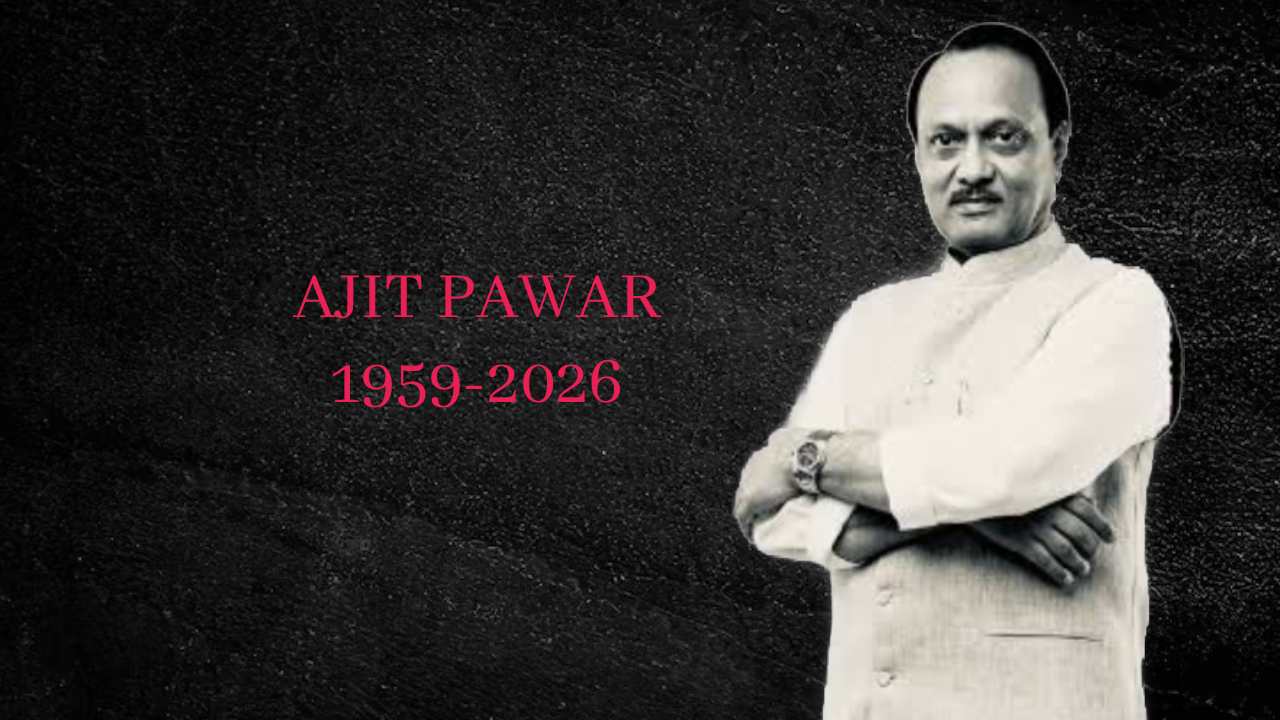
BARAMATI, MAHARASHTRA — Farewell, Ajit ‘Dada’: The End of an Era in Maharashtra Politics. The sun hung heavy over the Vidya Pratishthan ground in Baramati this Thursday as Maharashtra bid a final, tearful farewell to one of its most formidable and charismatic political titans, Ajit Pawar. The Deputy Chief Minister, known affectionately across the state as “Dada,” was cremated with full state honors following a tragic plane crash that has sent shockwaves through the Indian political landscape.
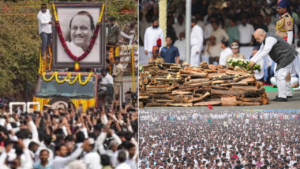
In a scene marked by profound grief and political solidarity, the mortal remains of the 66-year-old leader were consigned to the flames by his sons, Parth and Jay Pawar, as a 21-gun salute echoed through the air. The ceremony marked the conclusion of a career that spanned over four decades, leaving behind a legacy defined by administrative grit, political rebellion, and an unbreakable bond with the soil of Baramati.
A Tragic Morning: The Final Flight
The tragedy unfolded on the morning of Wednesday, January 28, 2026. Ajit Pawar had boarded a chartered Bombardier Learjet 45 from Mumbai, headed for his stronghold in Baramati. He was scheduled to address four major rallies ahead of the crucial Zilla Parishad elections on February 5.
At approximately 8:45 AM, as the aircraft prepared for its final approach to the Baramati airport, disaster struck. Preliminary reports suggest poor visibility and technical issues during landing caused the plane to crash into an open field near the runway. Witnesses described a harrowing scene of the aircraft bursting into flames followed by several explosions.
The crash claimed the lives of all five on board:
Ajit Pawar, Deputy Chief Minister of Maharashtra.
Vidyap Jadhav, Pawar’s personal security officer.
Sumit Kapur, Pilot-in-Command.
Shambhavi Pathak, Second-in-Command.
Pinky Mali, Flight Attendant.
The Maharashtra government immediately declared three days of state mourning, with the national flag flying at half-mast across all government buildings.
The Last Journey: A Sea of Supporters
The final journey of Ajit Pawar began early Thursday morning from his residence in Katewadi. Draped in the Tricolour, his mortal remains were carried in a flower-decked truck. As the procession wound through the 6-kilometer route toward the Vidya Pratishthan ground, the streets of Baramati became a sea of humanity.
Thousands of supporters—farmers, party workers, and local residents—arrived on bikes, tractors, and buses. Chants of “Ajit Dada Amar Rahe” (Long live Ajit Dada) filled the air. Many were seen weeping openly, reflecting the deep personal connection Pawar maintained with his constituency.
“He wasn’t just a leader; he was the person we went to when the water ran dry or the crop prices fell. Baramati has lost its father figure today,” said a local farmer who had traveled 50 kilometers to attend the funeral.
State Honors and Political Unity
The funeral ceremony at the Vidya Pratishthan ground saw an unprecedented gathering of leaders from across the political spectrum, temporarily setting aside the fierce rivalries that define Maharashtra politics.
Key Figures in Attendance:
Sharad Pawar: The veteran patriarch and Ajit’s uncle, who appeared visibly shaken, stood by the family throughout the rituals.
Amit Shah: The Union Home Minister arrived from Delhi to pay his respects, signifying Pawar’s importance in the national political alliance.
Devendra Fadnavis & Eknath Shinde: The Chief Minister and Deputy Chief Minister stood solemnly as they laid wreaths on the mortal remains of their colleague.
Supriya Sule: Ajit’s cousin, who was seen consoling Sunetra Pawar during the final moments.
The Last Rites
The rituals were deeply emotional. Sunetra Pawar, Ajit’s wife, performed the traditional ‘Ganga-snan’ (sprinkling of holy Ganges water) on her husband’s mortal remains, a final act of devotion. As the bugles sounded the ‘Last Post,’ the national flag was folded and handed over to his son, Jay Pawar.
At 12:10 PM, Parth and Jay Pawar lit the funeral pyre. The sight of the two sons standing with folded hands before the crowd after the cremation became the defining image of the day—a family united in a moment of extreme personal and political loss.
The Legacy of “Dada”: 40 Years of Power
Ajit Pawar was not just a politician; he was an institution in Maharashtra.Born on July 22, 1959, he entered the political arena under the tutelage of his uncle, Sharad Pawar, but soon carved out his own distinct identity. Known for his “straight-talking” nature and a strict 7:00 AM office schedule, he earned a reputation as a leader who delivered results.
1. The Administrative Workhorse
Pawar was widely regarded as one of the most efficient administrators in Maharashtra’s history. Known for his “straight-talk” and “early-bird” office hours, he was the man who got things done. Whether it was the expansion of the state’s electricity grid or the management of the cooperative sugar sector, his fingerprints were everywhere.
2. The Record-Breaking Deputy CM
He held the post of Deputy Chief Minister a record six times. His ability to navigate different coalitions—from the Maha Vikas Aghadi (MVA) to the Mahayuti—made him an indispensable figure for any party wishing to govern Maharashtra.
3. The Great Rebellion
In 2023, Ajit Pawar made the boldest move of his career, leading a vertical split in the Nationalist Congress Party (NCP) to join the BJP-Sena government. This move redefined the state’s political landscape and showcased his individual strength, as a majority of the party’s MLAs chose to follow him over the senior Pawar.
A Void in the Sugar Belt
For the “Sugar Belt” of Western Maharashtra, Ajit Pawar was the ultimate gatekeeper. His influence over the district banks and cooperative societies was the bedrock of his power. With his sudden demise, the region faces a leadership vacuum that may lead to significant shifts in the upcoming local body and state elections.
The Aircraft Accident Investigation Bureau (AAIB) and the DGCA have already begun a forensic probe into the crash. While the investigation continues, the focus remains on the mourning family and a state that feels suddenly leaderless.
What Lies Ahead?
The political implications of this tragedy are immense.
NCP (Ajit Pawar Faction): The party now faces the daunting task of finding a successor who can match Ajit’s grassroots connect.
Family Reconciliation: Observers are watching closely to see if this tragedy brings the fractured Pawar family back together under the leadership of Sharad Pawar.
Zilla Parishad Elections: The elections scheduled for February 5 have been shadowed by this loss, with several parties cancelling their campaign events as a mark of respect.
As the embers of the funeral pyre cool in Baramati, the echoes of Ajit Pawar’s “straightforward” politics will likely resonate for years to come. He was a leader who was loved, feared, and respected—but never ignored.
Alvida Dada” — You have merged into the five elements, but your footprints on the red soil of Maharashtra will remain foreve