
Headline Diplomacy in the Fast Lane: Inside UAE President’s High-Stakes Whirlwind Visit to New Delhi .In a display of “clockwork diplomacy,” UAE President Sheikh Mohamed bin Zayed Al Nahyan arrived in India this Monday, January 19, 2026, for a high-impact, two-hour working visit. Despite the brevity of the trip, the meeting with Prime Minister Narendra Modi was heavy with geopolitical significance, occurring against a backdrop of escalating Middle East instability and a shared vision for a $200 billion trade future.
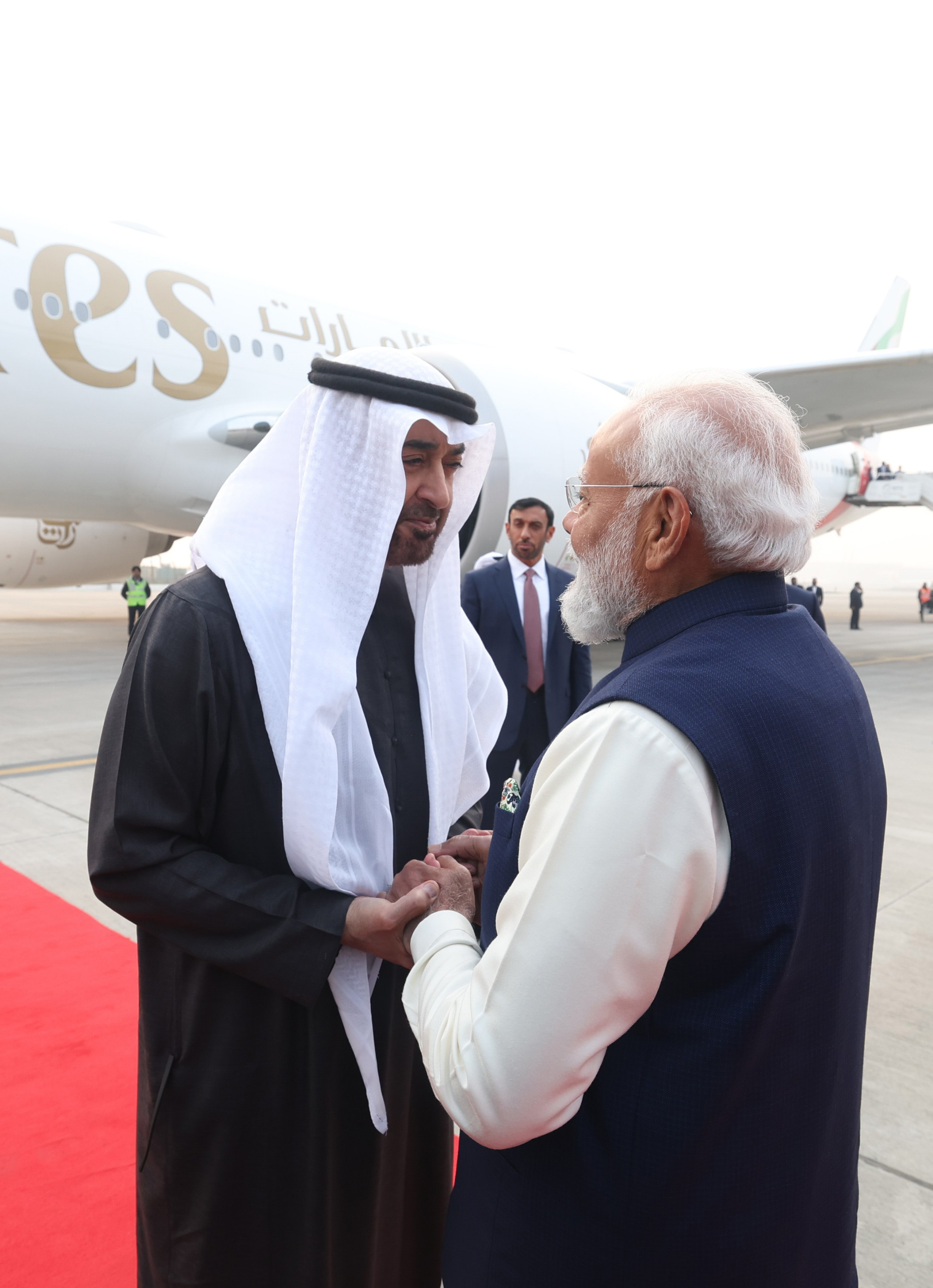
From the moment the President’s aircraft touched down at 4:20 PM to his departure shortly after 6:00 PM, every minute was utilized to reinforce what the Ministry of External Affairs (MEA) describes as a “multi-faceted and unbreakable” bond.
A Tightly Choreographed Strategic Dialogue
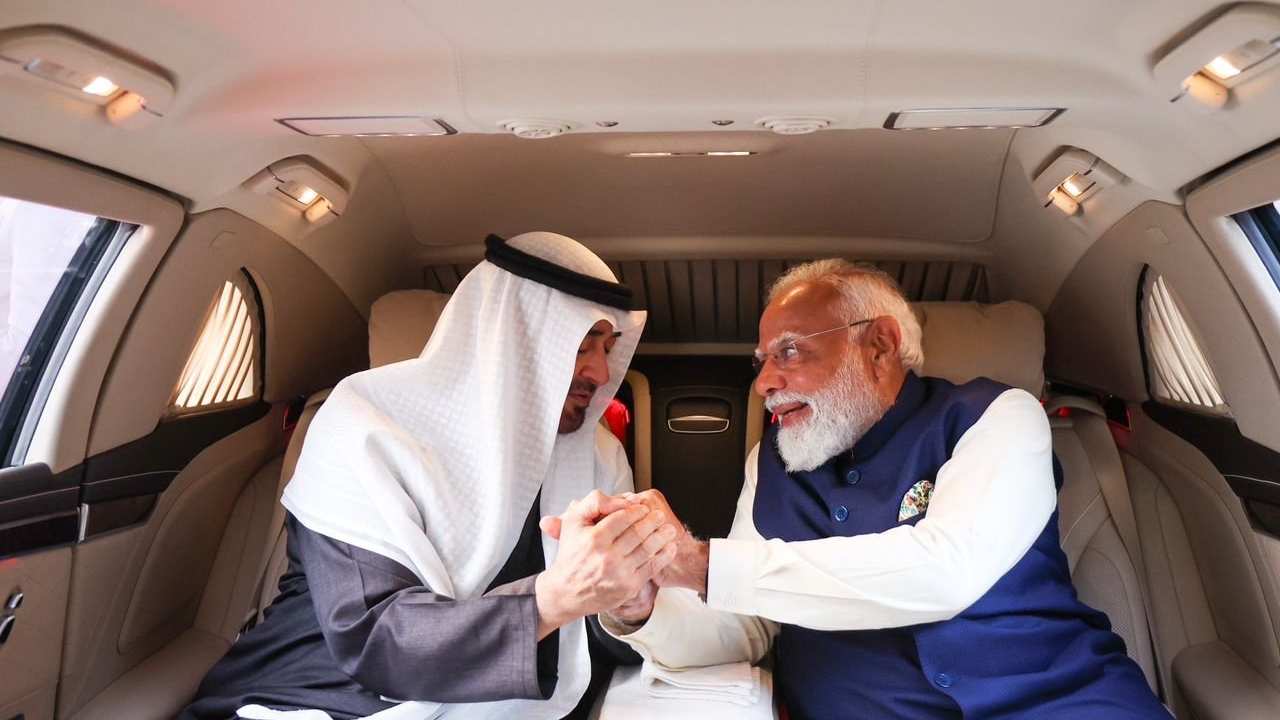
The visit was characterized by intense, focused discussions at the Prime Minister’s residence. Landing at Palam Air Base, the UAE President was personally received by PM Modi—a gesture reserved for India’s closest partners—before the two leaders traveled together to Lok Kalyan Marg.
The agenda was dominated by three critical pillars:
1. Regional Stability: Both leaders exchanged views on the volatile situation in West Asia. With tensions simmering between the US and Iran, and the ongoing humanitarian crises in Gaza and Yemen, the convergence of India and the UAE’s regional policies has never been more vital.
2. Defense & Space: Moving beyond traditional buyer-seller relationships, the two nations explored “new frontiers” in defense industry cooperation and space infrastructure development.
3. The $200 Billion Roadmap: Building on the success of the 2022 Comprehensive Economic Partnership Agreement (CEPA), which saw bilateral trade cross $100 billion this past fiscal year, the leaders set an ambitious new target: doubling that figure to $200 billion by 2032.
Soft Power & The ‘Year of Family’
While the official talks focused on hardware and high finance, the personal gifts exchanged between the leaders spoke volumes about their cultural alignment. PM Modi presented the UAE President with a Royal Carved Wooden Jhula (swing) from Gujarat. In Indian tradition, the jhula is the center of the home—a symbol of togetherness, intergenerational dialogue, and the strength of the family unit.
This gift was meticulously chosen to resonate with the UAE’s national declaration of 2026 as the ‘Year of Family’. Under the theme “Growing in Unity,” the UAE has dedicated this year to nurturing family cohesion, making the Gujarati swing a perfect metaphor for the “family-like” ties between the two nations.
Other notable gifts included:
- For the President: A hand-spun Kashmiri Pashmina shawl, housed in an ornate silver box handcrafted in Telangana.
- For Sheikha Fatima bint Mubarak Al Ketbi: A matching Pashmina shawl and a silver box containing premium Kashmiri Saffron, celebrated globally for its aroma and deep crimson hue.
Economic Powerhouse: The CEPA Legacy:
The visit served as a victory lap for the 2022 CEPA, which has fundamentally transformed the economic landscape. The integration of a Local Currency Settlement (LCS) system—allowing trade in Rupees and Dirhams—alongside the Bilateral Investment Treaty, has made the UAE India’s second-largest export destination.
Energy security also saw a major boost during the talks. A significant 10-year LNG supply agreement was finalized between Hindustan Petroleum Corporation Limited (HPCL) and Abu Dhabi National Oil Company (ADNOC), ensuring that the UAE remains a bedrock of India’s energy future.
Charting New Frontiers
As Sheikh Al Nahyan departed New Delhi tonight, the message was clear: the India-UAE relationship has moved past a “transactional” phase into a “transformational” one. Whether it is through joint military drills like Exercise Desert Cyclone-II or the operationalization of India’s UPI and RuPay systems in the Emirates, the synergy is palpable.
This visit, though short, provided the necessary momentum to navigate 2026’s global uncertainties. By aligning their economic goals with cultural values, PM Modi and Sheikh Mohamed bin Zayed have ensured that their “Comprehensive Strategic Partnership” remains the gold standard for bilateral diplomacy in the 21st century.
Disclaimer: This information is based on various inputs from news agency