
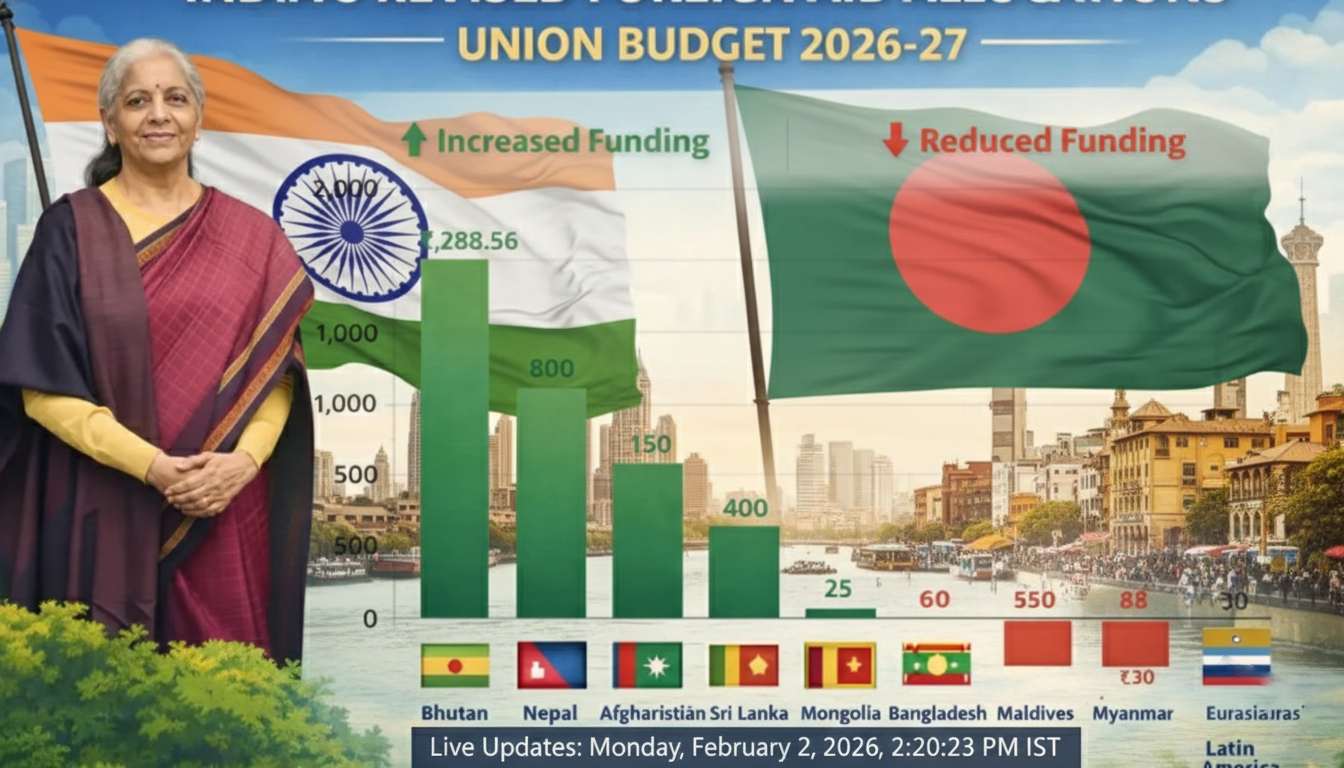
New Delhi —India Halves Aid to Bangladesh, Boosts Support for Afghanistan and Sri Lanka in Union Budget 2026. In a significant recalibration of its regional foreign policy, the Government of India has sharply reduced its development assistance to Bangladesh while simultaneously ramping up support for other neighboring nations. The Union Budget 2026-27, presented by Finance Minister Nirmala Sitharaman on Sunday, February 1, 2026, earmarks ₹22,118.97 crore for the Ministry of External Affairs (MEA), reflecting a strategic shift in India’s ‘Neighbourhood First’ priorities.
The Bangladesh Downturn: Diplomatic Ties at a Freeze
The most striking figure in this year’s allocation is the 50% cut in aid to Bangladesh. India has slashed the grant to just ₹60 crore for FY27, down from the ₹120 crore allocated in the previous year’s budget.
This financial withdrawal follows a year of heightened diplomatic tension after the ouster of former Prime Minister Sheikh Hasina in August 2024. Relations have remained frosty as New Delhi navigates extradition requests from Dhaka and expresses deep concerns over the safety of minorities, particularly the Hindu community.
“We remain committed to the best interests of the people of Bangladesh… and will continue to engage constructively with all stakeholders,” stated MEA spokesperson Randhir Jaiswal, even as the budget signaled a “cautious engagement” strategy.
Recalibrating Regional Ties: Afghanistan and Nepal
While ties with Dhaka cooled, India signaled a warmer approach toward Kabul. Aid to Afghanistan was increased to ₹150 crore, a ₹50 crore jump from the previous year. This move comes as New Delhi gradually reopens diplomatic channels with the Taliban-led administration, including the recent reopening of the Indian Embassy in Kabul and high-level talks between Foreign Minister S. Jaishankar and Afghan officials.
Nepal also saw its allocation rise to ₹800 crore, reflecting a ₹100 crore increase. India continues to view Nepal as a cornerstone of regional stability, with funds prioritized for infrastructure and reconstruction projects.
Overview of Foreign Aid Allocations (FY 2026-27)
| Country/Region | Allocation (₹ Crore) | Change from Previous BE |
| Bhutan | ₹2,288.55 | + ₹138.55 |
| Nepal | ₹800.00 | + ₹100.00 |
| Maldives | ₹550.00 | – ₹50.00 |
| Mauritius | ₹550.00 | + ₹50.00 |
| Sri Lanka | ₹400.00 | + ₹100.00 |
| Myanmar | ₹300.00 | – ₹50.00 |
| Afghanistan | ₹150.00 | + ₹50.00 |
| Bangladesh | ₹60.00 | – ₹60.00 |
| Mongolia | ₹25.00 | + ₹20.00 |
Strategic Partners: Bhutan and Sri Lanka
Bhutan remains the single largest recipient of Indian aid, receiving ₹2,288 crore. This reflects India’s deep investment in Bhutan’s energy sector, specifically the commissioning of the ₹4,000-crore Punatsangchhu-II hydroelectric project and new cross-border railway links connecting West Bengal and Assam to Bhutan.
Sri Lanka’s aid rose to ₹400 crore, as India continues to support the island nation’s economic stabilization and recent disaster recovery efforts following Cyclone Ditwah.
The Chabahar Omission and Global Shifts
In a notable departure, the 2026 Budget made zero allocation for the Chabahar Port in Iran. This project, once a strategic priority for accessing Central Asia, has been sidelined amid renewed US sanctions and the threat of 25% tariffs from the Trump administration on countries trading with Tehran.
- Maldives & Myanmar: Both nations saw cuts of ₹50 crore each, attributed to shifting political alignments in Male and implementation challenges amid Myanmar’s ongoing internal instability.
- Latin America: In a rare boost for non-immediate neighbors, aid to Latin American countries doubled to ₹120 crore, signaling India’s intent to expand its footprint in the Global South.
Conclusion: A Budget of “Strategic Prudence”
The 2026 Union Budget reveals a government that is no longer distributing aid based on legacy ties alone. Instead, India is shifting its financial weight toward reliable strategic partners like Bhutan and “cautious” opportunities in Afghanistan, while pulling back from neighbors where diplomatic interests have diverged.
Disclaimer: This information is based on various inputs from news agency.