
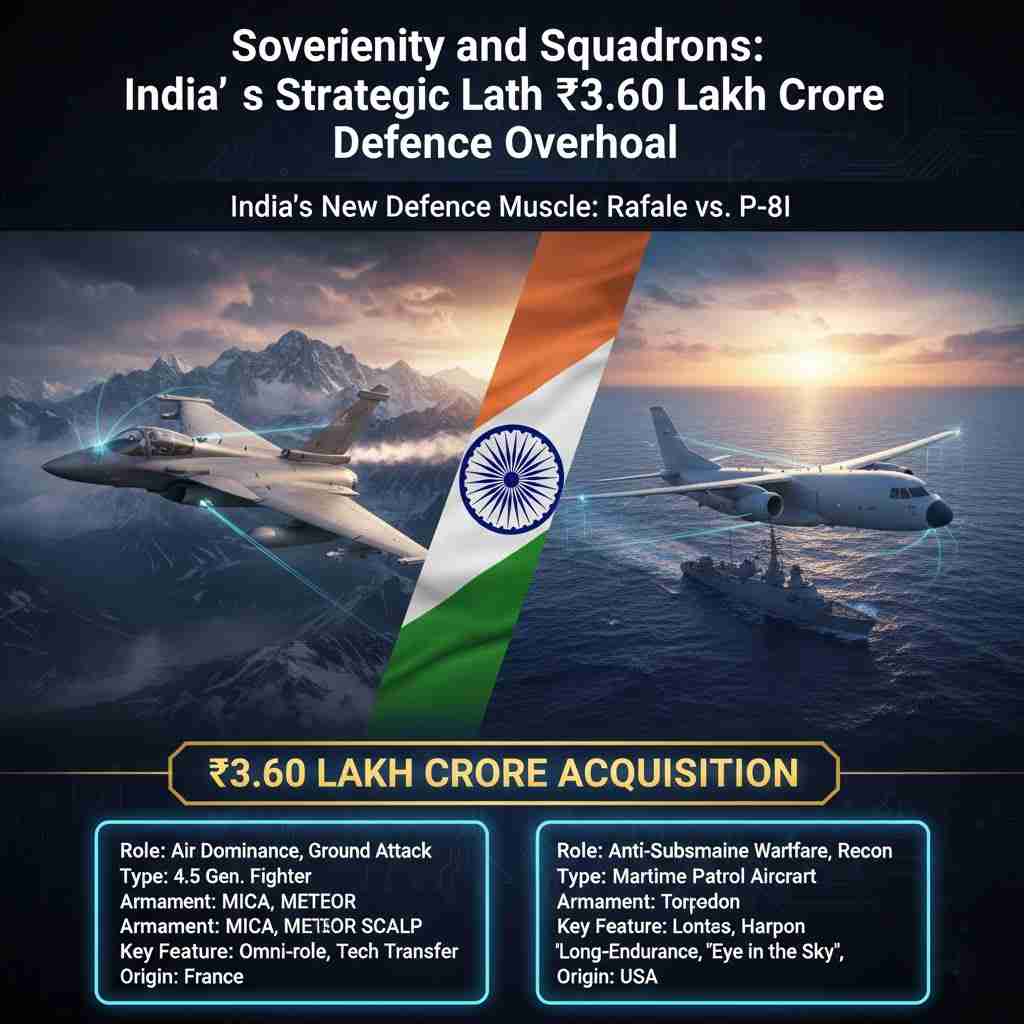
New Delhi | February 13, 2026 — India to Induct 114 Rafale: A historic move that signals India’s transition into a global military powerhouse, the Defence Acquisition Council (DAC) has cleared a colossal ₹3.60 lakh crore procurement package. At the heart of this massive expenditure is the long-awaited approval for 114 Rafale fighter jets, a deal valued at approximately ₹3.25 lakh crore, marking the largest single defence acquisition in the nation’s history.
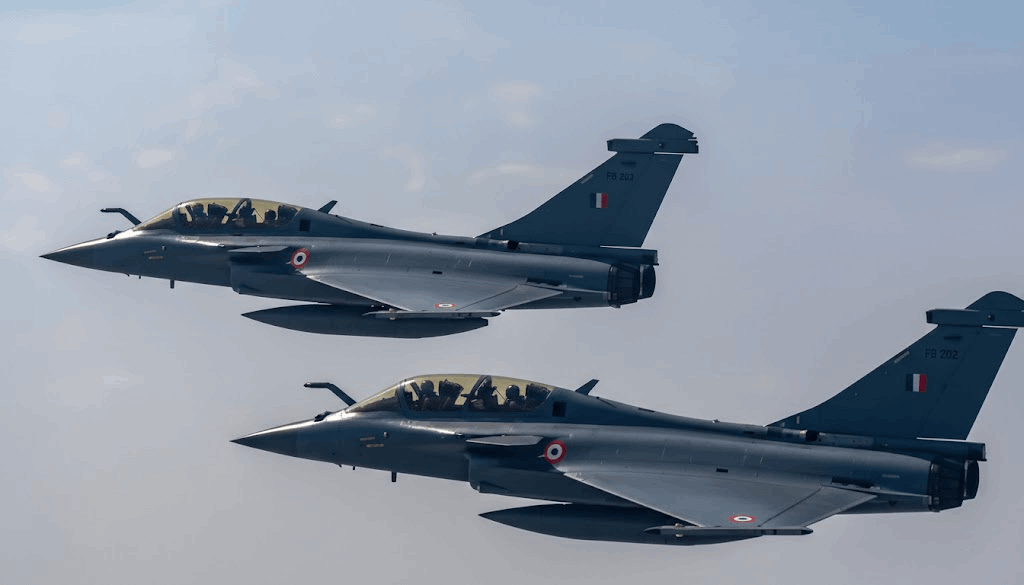
The clearance, granted today by the DAC under the chairmanship of Defence Minister Rajnath Singh, comes at a critical juncture for the Indian Air Force (IAF), which has seen its fighter squadron strength dwindle to just 29—far below the sanctioned 42 required to manage a two-front threat.
India to Induct 114 Rafale:”Make in India” Roadmap
The new agreement for 114 Multi-Role Fighter Aircraft (MRFA) is structured to fundamentally transform India’s aerospace ecosystem. Unlike the previous emergency procurement of 36 jets, this “mega-deal” prioritizes self-reliance:
- The Split: Only 18 jets will be delivered in “fly-away” condition directly from Dassault Aviation in France. The remaining 96 aircraft will be manufactured domestically in India.
- Indigenous Content: Official sources indicate that the local manufacturing process will aim for 50% to 60% indigenous content, involving a strategic partnership between Dassault and Indian private sector giants.
- Technology Transfer: The deal includes the transfer of critical fighter jet technologies, allowing India to integrate its own indigenous weapons and sensor suites into the Rafale platform.
This approval acts as a precursor to French President Emmanuel Macron’s official visit to India, scheduled for February 17-19, 2026, where the two nations are expected to further solidify their “Horizon 2047” strategic roadmap.
A Multi-Domain Force Multiplier
While the Rafale jets dominate the headlines, the DAC’s approvals cover a vast spectrum of military needs designed to modernize the Army, Navy, and Coast Guard.
For the Indian Navy: Dominating the Seas
The DAC cleared the procurement of six additional Boeing P-8I Long Range Maritime Reconnaissance aircraft from the United States. These “submarine hunters” are essential for maintaining a persistent gaze over the Indian Ocean Region (IOR). Additionally, approval was granted for 4 MW Marine Gas Turbine-based Electric Power Generators, to be inducted under the ‘Make-I’ category to reduce dependency on foreign OEMs.
For the Indian Army: Obstacles and Overhauls
To counter mechanized threats on the borders, the council approved the procurement of Vibhav Anti-Tank Mines, an indigenous obstacle system. Furthermore, a massive overhaul program was cleared for the Army’s armored backbone, including T-72 tanks, Armoured Recovery Vehicles (ARVs), and BMP-II Infantry Combat Vehicles, significantly extending their operational life.
For the IAF: Beyond the Jets
Beyond the 114 Rafales, the IAF will receive Combat Missiles for high-accuracy deep-strike capabilities and Air-Ship Based High Altitude Pseudo Satellites (AS-HAPS). These pseudo-satellites will provide persistent intelligence, surveillance, and telecommunications, bridging the gap between drones and traditional satellites.
The Global Geopolitical Context
The timing of these approvals is not accidental. The ₹3.60 lakh crore package serves as a strategic signal during a week of high-stakes diplomacy.
On February 7, 2026, Prime Minister Narendra Modi and U.S. President Donald Trump announced a historic interim trade deal. Under this framework, India “intends to purchase” over $500 billion in U.S. energy and technology products over the next five years. The procurement of the American P-8I aircraft is seen as a tangible step in realizing this “reciprocal trade” commitment, which has already resulted in the U.S. lowering tariffs on Indian goods from 25% to 18%.
Summary of Major Approvals
| Equipment | Service | Key Feature |
| 114 Rafale Jets | IAF | 96 to be built in India; ₹3.25 Lakh Crore |
| 6 P-8I Aircraft | Navy | Long-range anti-submarine warfare |
| Vibhav Mines | Army | Indigenous anti-tank obstacle system |
| AS-HAPS | IAF | Persistent high-altitude surveillance |
| Marine Gas Turbines | Navy | 4 MW self-reliance in power generation |
As the proposal moves toward the final hurdle—the Cabinet Committee on Security (CCS) chaired by the Prime Minister—India stands on the verge of its most significant military upgrade, balancing “Make in India” ambitions with urgent operational requirements.
Disclaimer: This information is based on various inputs from news agency.