
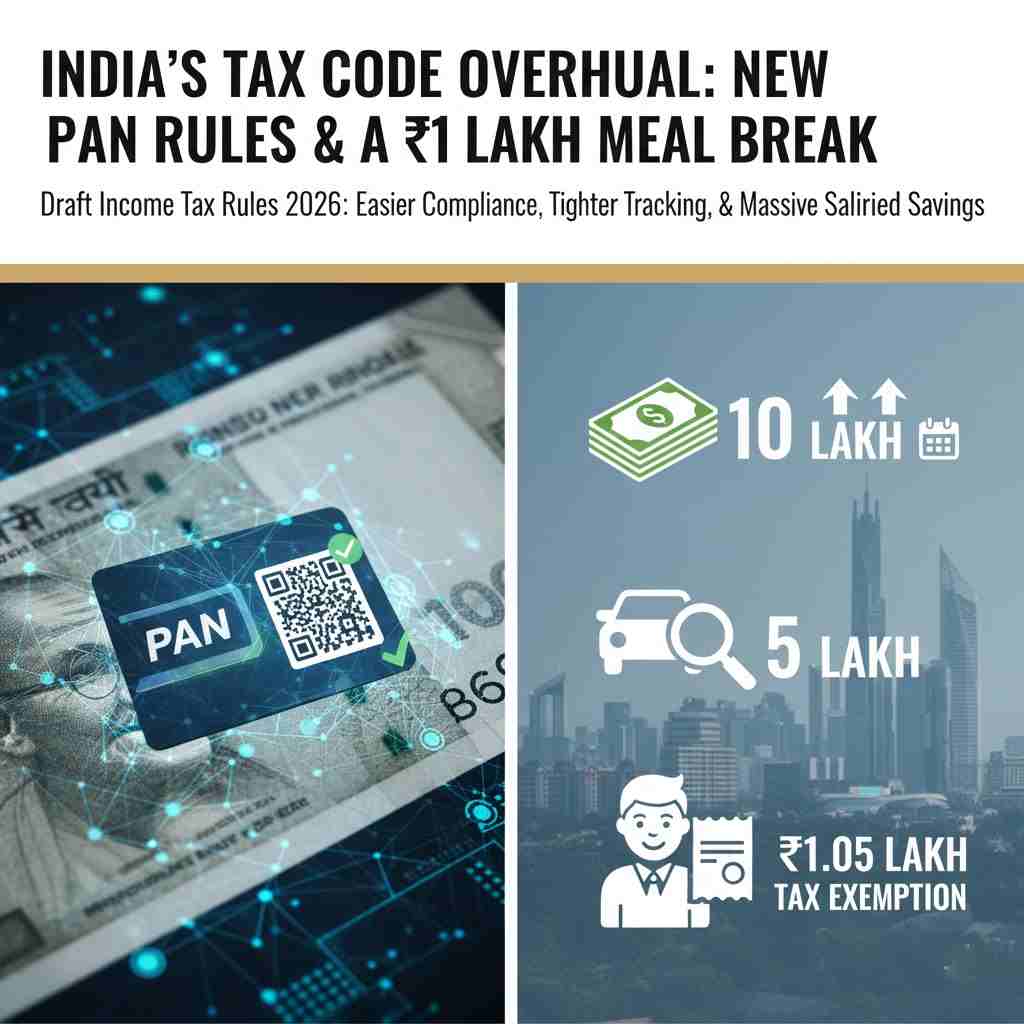
New Income Tax Rules 2026: India is standing on the cusp of a major financial transformation. The government has released the Draft Income Tax Rules, 2026, a comprehensive set of proposals designed to replace the aging 1962 framework. Aimed at modernizing tax tracking to reflect today’s digital and high-value economy, these rules are scheduled to take effect on April 1, 2026.
The overhaul seeks a delicate balance: simplifying compliance for small, everyday transactions while tightening the net around high-value financial activities. From PAN card mandates to expanded HRA benefits and massive tax breaks on employee perks, here is a deep dive into the changes that will reshape your financial life.
New Income Tax Rules 2026: PAN Card Pivot, new Thresholds and Aggregates
The Permanent Account Number (PAN) remains the linchpin of the tax system, but the rules for quoting it are seeing a significant shift. The goal is to reduce the “paperwork burden” on the common man while improving data collection on significant wealth movements.
1. Banking: From Daily Limits to Annual Aggregates
Currently, you are required to provide your PAN for cash deposits exceeding ₹50,000 in a single day. The draft rules propose a fundamental change: PAN will only be mandatory if your total cash deposits or withdrawals cross ₹10 lakh in a financial year. This shift to a yearly aggregate means routine banking becomes easier for small depositors, but those moving large volumes of cash throughout the year will face closer scrutiny.
2. Property and Vehicles: Reflecting Market Realities
The threshold for quoting PAN during immovable property transactions is proposed to double, rising from ₹10 lakh to ₹20 lakh. This change acknowledges the steep rise in property values across Indian cities over the last decade.
Similarly, motor vehicle purchases will see new limits. While currently required for almost all vehicle sales, the new rule sets a threshold of ₹5 lakh. Notably, this now brings high-value motorcycles into the mandatory PAN net, ensuring that luxury two-wheeler purchases are tracked.
3. Hospitality and Events
Planning a major wedding or event? The threshold for quoting PAN for payments to hotels, restaurants, and event managers is proposed to increase from ₹50,000 to ₹1 lakh.
4. Stricter Rules for Insurance
While many limits are being raised, the insurance sector is getting tighter. PAN may become mandatory for opening any account-based relationship with an insurance company. Previously, it was only required if annual premiums crossed a specific limit.
A Massive Boost for Salaried Employees: The ₹1.05 Lakh Meal Exemption
Perhaps the most talked-about change for the salaried class is the proposed hike in the tax-exempt limit for meal vouchers (such as Sodexo/Pluxee).
Currently, the tax exemption is capped at ₹50 per meal, which roughly totals an exemption of ₹26,400 per year. The Draft Rules 2026 propose increasing this to ₹200 per meal. For an employee receiving two subsidized meals a day, the potential tax-free benefit skyrockets to ₹1,05,600 per year.
The Math of Savings:
- ₹200 × 2 meals = ₹400 per day
- ₹400 × 22 working days = ₹8,800 per month
- ₹8,800 × 12 months = ₹1,05,600 per year
Tax experts suggest that an employee in the 30% tax bracket could save approximately ₹24,710 in taxes annually through this single change.
Expanding the “Metro” Map: Higher HRA for 4 New Cities
For years, only employees in Delhi, Mumbai, Kolkata, and Chennai could claim an HRA exemption of up to 50% of their salary. All other cities were capped at 40%.
Recognizing the rising cost of living in tech and industrial hubs, the draft rules expand the “Category 1” metro list to include:
- Bengaluru
- Pune
- Ahmedabad
- Hyderabad
Employees in these cities can now look forward to significantly higher HRA exemptions, providing much-needed relief against high urban rentals.
Corporate Shake-ups: Cloud, Crypto, and “Viksit Bharat”
The draft rules also align with the vision for a developed India by 2047. One of the boldest proposals is a tax holiday until 2047 for foreign companies that provide global cloud services using Indian data centers. This move aims to turn India into a global digital infrastructure hub.
Key Digital Reforms:
- Crypto Transparency: Crypto exchanges will face expanded reporting requirements, needing to share transaction data with authorities to improve traceability.
- Digital Rupee: The Central Bank Digital Currency (CBDC) is being formally recognized as a valid payment method within the rules.
- Streamlined Forms: The total number of tax rules and forms is being drastically reduced—from over 500 rules to 333, and nearly 400 forms down to just 190.
The Road Ahead
The Central Board of Direct Taxes (CBDT) has opened these draft rules for public feedback until February 22, 2026. Following consultations, the final rules are expected to be notified in early March, paving the way for a simplified, more transparent tax regime starting this April.
While smaller transactions will enjoy a reduction in paperwork, the infrastructure for tracking high-value wealth is becoming more sophisticated. As the government states, the goal is “reform over rhetoric”—creating a system that reflects the realities of a modern, digital India.
PAN Card and Aadhaar link update for 2026 This video provides a comprehensive report on the upcoming income tax reforms and the specific changes to PAN card requirements mentioned in the 2026 draft rules.
Disclaimer: This information is based on various inputs from news agency