
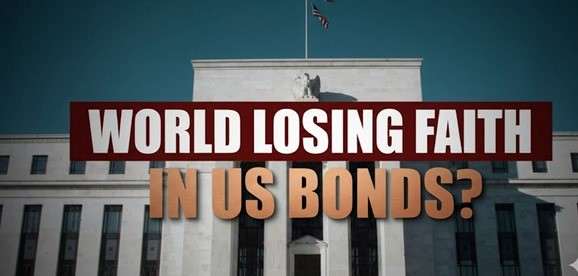
Why India Is Reducing US Treasury Holdings—and What It Signals for the Global Financial Order. A quiet meeting between the US Ambassador to India and the Governor of the Reserve Bank of India (RBI) may not have attracted much public attention, but its timing has sparked fresh debate among financial observers. The interaction took place at a moment when India has significantly reduced its exposure to US Treasury bonds, raising questions about shifting global reserve strategies and the future of dollar dominance.
Over the past year, India has cut more than $50 billion worth of US Treasuries from its foreign exchange reserves—a sharp 21 per cent reduction. This marks the first annual decline in India’s US bond holdings in four years, breaking a long trend of accumulation or stability.
A Quiet Meeting That Raised Questions
While no official details were disclosed, the timing of the US Ambassador’s meeting with the RBI Governor has drawn attention in financial and diplomatic circles. Such interactions are routine, but they acquire added significance when viewed against the backdrop of India’s recent moves in reserve management.
The reduction in US Treasury holdings suggests a deliberate recalibration rather than a short-term market adjustment.
What Are US Treasuries and Why Do They Matter?
US Treasuries are debt securities issued by the American government to finance public spending. When foreign governments and central banks purchase these bonds, they are effectively lending money to the United States in return for interest payments.
For decades, Treasuries were considered the safest asset globally—often referred to as “risk-free.” Central banks parked their reserves in them, commercial banks used them as top-tier collateral, and global markets relied on their stability.
That long-standing confidence is now facing new tests.
Rising US Debt and Volatile Interest Rates
The United States’ public debt has expanded to historic levels, while interest rates have turned increasingly volatile. As rates rise, the market value of existing bonds declines, reducing their appeal to long-term holders such as central banks.
At the same time, higher borrowing costs and political gridlock in Washington have raised concerns about fiscal discipline. While the US economy remains resilient, the margin of certainty has narrowed.

India and China Are Both Cutting Exposure
India’s move is part of a broader global trend. China, once the largest foreign holder of US Treasuries, has been steadily reducing its holdings for several years. Other emerging and developed economies are also rebalancing their reserves.
This does not indicate an imminent collapse of confidence in the dollar, but it does reflect a desire to reduce concentration risk.

Gold Makes a Strategic Comeback
One of the most visible outcomes of this shift is the resurgence of gold.
India’s gold reserves have climbed to nearly 880 tonnes, with gold now accounting for over 16.2 per cent of its foreign exchange reserves—the highest level in more than two decades. For central banks, gold offers a unique advantage: it is free from default, counterparty, and sanction risks.
In an era where financial assets can be frozen or restricted, physical gold has regained strategic importance.


Lessons From Sanctions and Geopolitics
The sanctions imposed on Russia after the Ukraine conflict marked a turning point in global finance. They demonstrated that dollar-denominated assets could be frozen and that international payment systems could be weaponised.
For many countries, this was a sobering lesson that reshaped how they think about reserve security and monetary sovereignty.

Is De-Dollarisation Really Underway?
Despite these developments, the world is not abandoning the overnight. The dollar continues to dominate global trade, finance, and commodity pricing. US Treasuries remain among the most liquid and trusted instruments in the market.

What has changed is not dominance, but dependence. Countries are no longer willing to place all their faith in a single currency or financial system.
BRICS and the Push for Alternative Settlement Systems
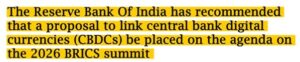
Multilateral groupings such as BRICS are exploring trade settlement mechanisms based on local currencies. In this context, the Reserve Bank of India has proposed an interoperable digital currency network to facilitate cross-border transactions among BRICS nations.
Such initiatives aim to complement—not replace—the existing global financial architecture.

India’s Strategy: Diversification, Not Defiance
India’s reduction in US Treasury holdings should not be viewed as an anti-US gesture. Rather, it reflects a pro-stability, risk-aware strategy aligned with India’s growing economic confidence.
By diversifying across assets, currencies, and gold, India is building resilience against global uncertainty. The goal is balance, not confrontation.
A Multipolar Financial World in the Making
As volatility becomes the new normal, countries are adapting. The era of unquestioned faith in any single asset or nation may be fading. In its place, a more cautious, diversified, and multipolar financial system is taking shape.
India’s actions suggest it is preparing not for disruption—but for durability.
Disclaimer: This information is based on various inputs from news agency.