
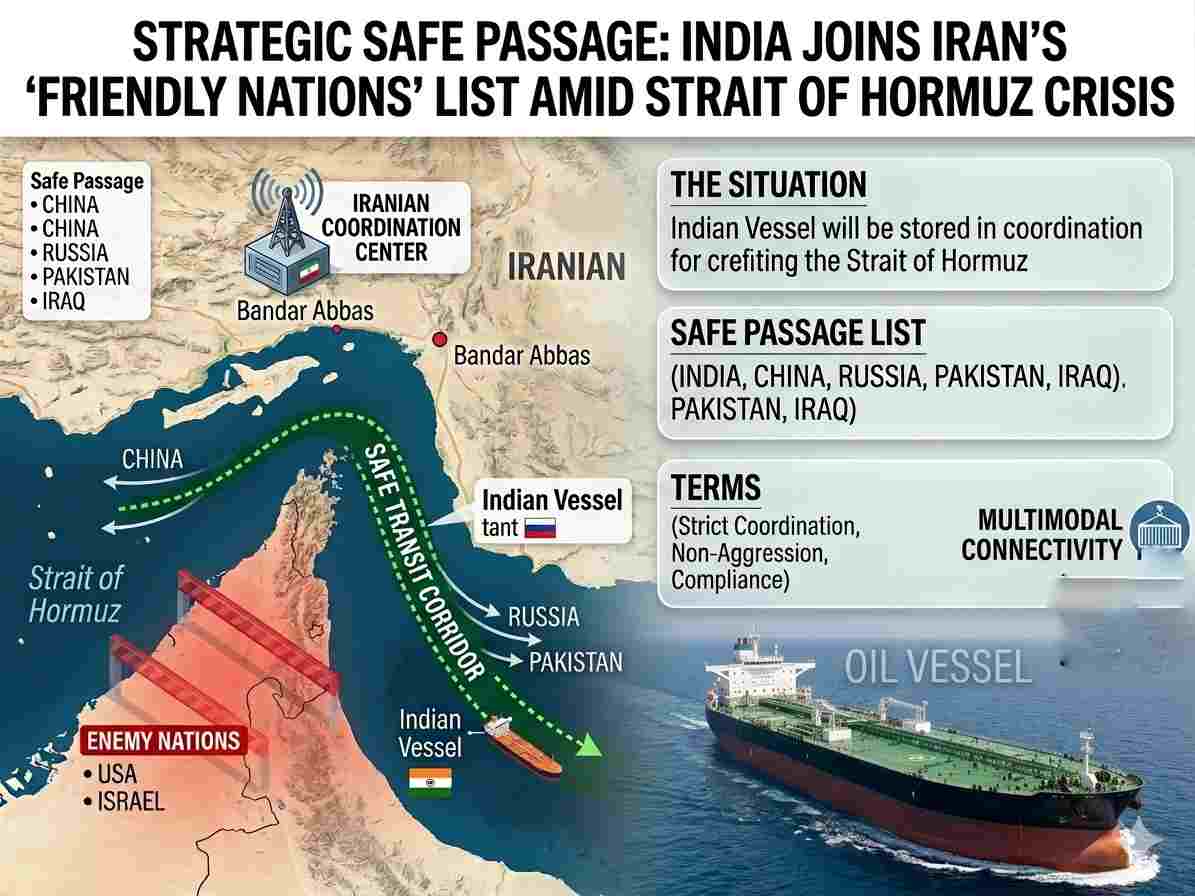
India Joins Iran’s :In a major geopolitical shift that carries profound implications for global energy markets, Iran has officially designated India as a “friendly nation,” granting its vessels safe passage through the Strait of Hormuz. This decision comes at a time when the waterway—a chokepoint responsible for nearly 20% of the world’s oil and liquefied natural gas (LNG)—has become the epicenter of a high-stakes maritime blockade.
As the conflict in West Asia escalates, Union Minister for External Affairs and Indian state-owned oil companies have moved swiftly to allay domestic fears, confirming that India’s fuel supply remains robust despite the volatility surrounding one of the world’s most critical transit routes.
1. The ‘Friendly Five’: Iran’s Selective Blockade
Strategic Safe Passage: India Joins Iran’s ‘Friendly Nations’ List Amid Strait of Hormuz Crisis
While the Strait of Hormuz is effectively restricted for nations Iran deems “hostile”—specifically the United States, Israel, and certain allied Gulf countries—Tehran has opened a strategic corridor for five specific partners.
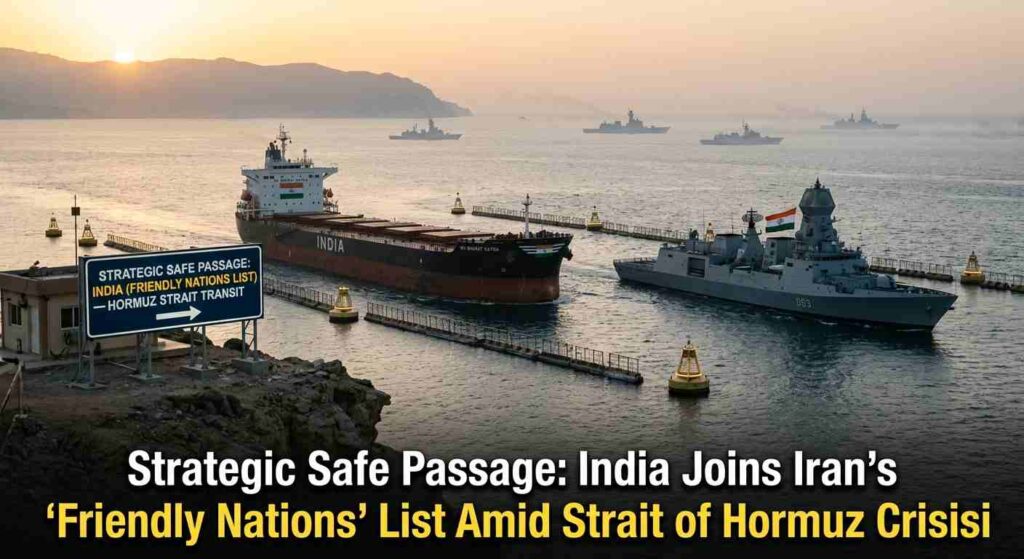
The Authorized Nations:
India
China
Russia
Pakistan
Iraq
Iranian Foreign Minister Abbas Araghchi confirmed that this arrangement is already operational. In a recent statement to state television, Araghchi noted, “Two of India’s ships passed through a few nights ago… these are countries that spoke with us and coordinated with us.” This coordination ensures that as long as vessels comply with Iranian safety regulations and remain neutral in the ongoing conflict, they can bypass the blockade that has sidelined Western shipping.
2. Energy Security: India’s “No Shortage” Assurance
The partial closure of the Strait has sent shockwaves through global markets, with maritime intelligence firm Windward reporting a staggering drop in traffic. Daily transits have plummeted from an average of 120 vessels to just five.
This scarcity fueled rumors on social media regarding potential petrol, diesel, and LPG shortages within India. However, Indian state-owned oil enterprises have issued a firm rebuttal:
Sufficient Stocks: India has maintained strategic reserves and diversified its sourcing to ensure domestic pumps remain functional.
Anti-Panic Measures: Authorities have urged citizens to ignore “panic-buying” narratives, asserting that the “Friendly Nation” status ensures a continuous flow of crude from the Persian Gulf.
Price Control: While global analysts predict oil could hit $150 to $200 per barrel if the blockade becomes total, India’s direct coordination with Tehran acts as a vital hedge against these extreme price spikes.
3. The Terms of Engagement: What “Safe Passage” Requires
Safe passage is not a blanket authorization; it is a conditional agreement managed by the “Reform Express” of Iranian maritime policy. To maintain access, Indian vessels must adhere to the following protocols:
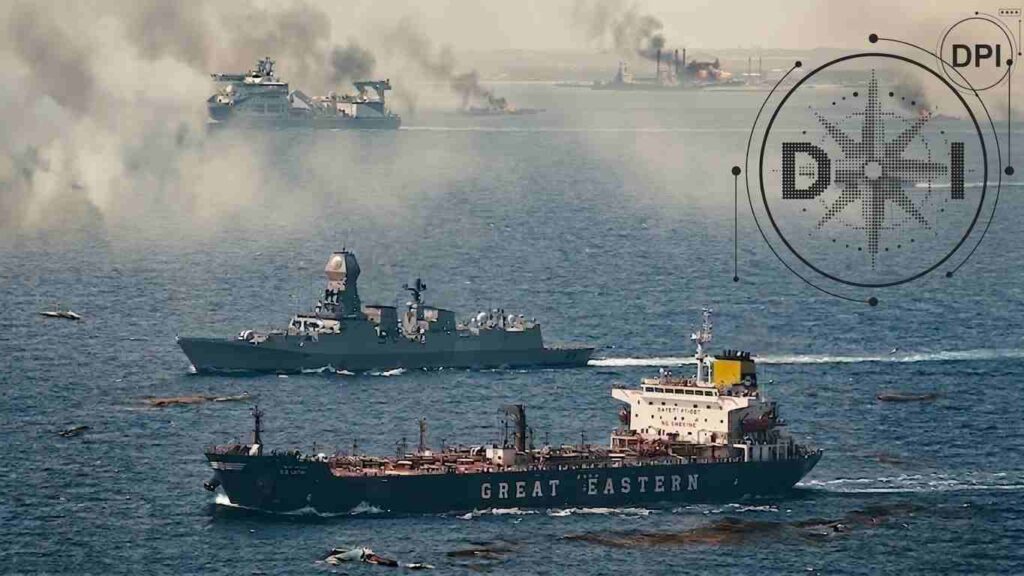
Non-Aggression: Ships must not participate in or support any acts of aggression against Iran.
Strict Coordination: All transits must be pre-coordinated with competent Iranian maritime authorities.
Safety Compliance: Vessels must follow specific Iranian security regulations, the details of which are being communicated to the International Maritime Organization (IMO).
Minister Araghchi underscored that this blockade is a demonstration of Iran’s “strategic capability,” claiming that despite Western efforts to reopen the waterway by force or diplomacy, the “partial blockade” remains firmly under Tehran’s control.
4. Geopolitical Analysis: Why India?
India’s inclusion in this list highlights New Delhi’s successful “multi-aligned” foreign policy. By maintaining a functional relationship with Tehran while simultaneously engaging with Western powers, India has secured a “maritime insurance policy” that most other major economies currently lack.
However, the situation remains fluid. The Trump administration has reportedly proposed plans to end the conflict, leading to temporary dips in Brent crude prices, but Tehran remains skeptical, stating that “exchanging messages via mediators does not mean negotiations.”
5. Global Impact vs. Local Stability
While the world watches the Strait of Hormuz with bated breath, the impact is bifurcated:
| Feature | Global Status | India’s Status |
| Shipping Volume | Dropped by 95% | Maintaining coordinated flow |
| Oil Price Outlook | High Risk ($200/bbl potential) | Managed through strategic ties |
| Access to Hormuz | Blocked for “Enemy Nations” | Granted “Friendly” access |
| Supply Chain | Massive disruption | Stable for essential fuel/gas |
Conclusion: A Delicate Balance
The inclusion of India in Iran’s safe passage list is a testament to the strategic importance of the Indo-Iranian energy corridor. While the “Friendly Nations” list provides a temporary shield against the energy crisis, the underlying volatility of the West Asia conflict means that Indian maritime authorities will remain on high alert.
For the Indian consumer, the message is clear: the tankers are moving, the reserves are full, and the diplomatic channels are wide open.