
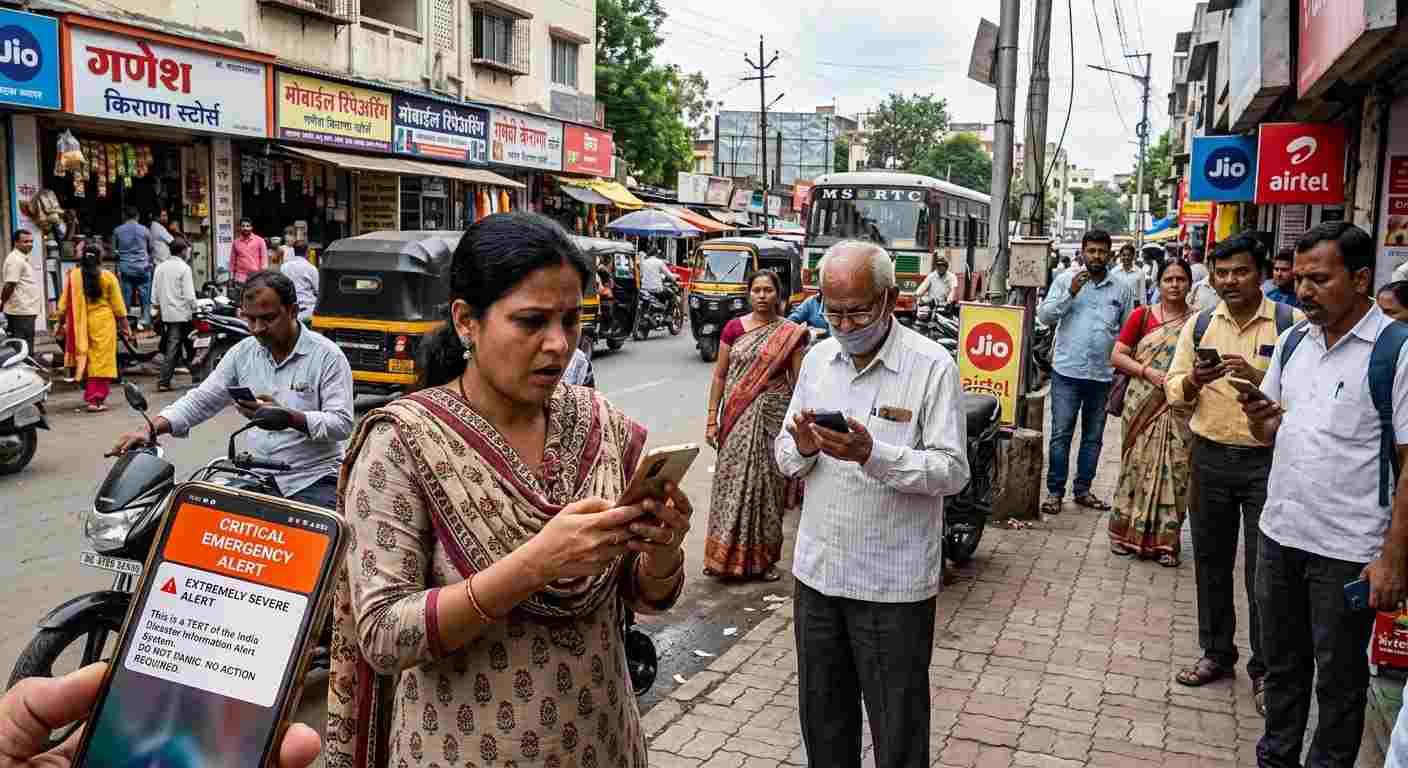
Extremely Severe Alert—these three words, accompanied by a piercing, siren-like sound and intense vibration, flashed across millions of smartphone screens across India today. If you were one of the people who jumped out of their seat or frantically checked their device for a local emergency, you aren’t alone.
This nationwide “scare” was actually a calculated and successful test of the Cell Broadcast Alert System conducted by the National Disaster Management Authority (NDMA) in collaboration with the Department of Telecommunications (DoT).
The Tech Behind the “Extremely Severe Alert”
The primary goal of this initiative is to enhance public safety during critical emergencies. Whether it’s a flash flood, a cyclone, or a major earthquake, every second counts. The Extremely Severe Alert system is designed to bypass traditional communication delays.
Unlike standard SMS messages, which can get stuck in network congestion, cell broadcasting uses a dedicated channel. This ensures that the alert reaches every active mobile device in a specific geographic area simultaneously.
Key Feature: The alert is designed to override “Silent” or “Do Not Disturb” modes on most devices, ensuring that even if you are asleep or in a meeting, you are notified of life-threatening situations.
Why the Government is Testing This Now
India has become increasingly prone to climate-related disasters. From the heatwaves in the north to the devastating cyclones on the eastern coast, the need for a real-time disaster information alert system has never been higher.
Zero Latency: Traditional news or SMS can take minutes or even hours to disseminate. This system is near-instant.
No Internet Required: You don’t need a data plan or a Wi-Fi connection to receive these alerts.
Geo-Targeting: The government can send alerts to a single city, a district, or the entire country depending on the scale of the threat.
What Should You Do When You Get an Alert?
During today’s test, the message clearly stated: “This is a SAMPLE TESTING MESSAGE sent through Cell Broadcasting System by Department of Telecommunications, Government of India. Please ignore this message as no action is required from your end.”
However, in a real-life emergency, the Extremely Severe Alert will contain specific instructions, such as:
Evacuate to higher ground.
Stay indoors and away from windows.
Stock up on essential supplies.
User Reactions: A Mix of Panic and Praise
Social media platforms like X (formerly Twitter) and Reddit were flooded with screenshots of the alert within seconds of the test. While some users praised the government for adopting world-class safety technology, others admitted the sudden, loud noise caused a momentary panic.
“I thought my phone was exploding or there was an earthquake,” one user wrote. “But honestly, I’d rather have a loud alarm than miss a real warning.”
The Road Ahead for India’s Disaster Management
The successful execution of the Extremely Severe Alert test marks a significant milestone in India’s digital infrastructure. Moving forward, the NDMA plans to integrate this system with weather agencies and geological departments to automate warnings.
By turning every smartphone into a potential life-saving tool, the government is building a more resilient nation. So, the next time your phone screams with an Extremely Severe Alert, don’t be annoyed—be grateful that the technology is there to keep you safe.