
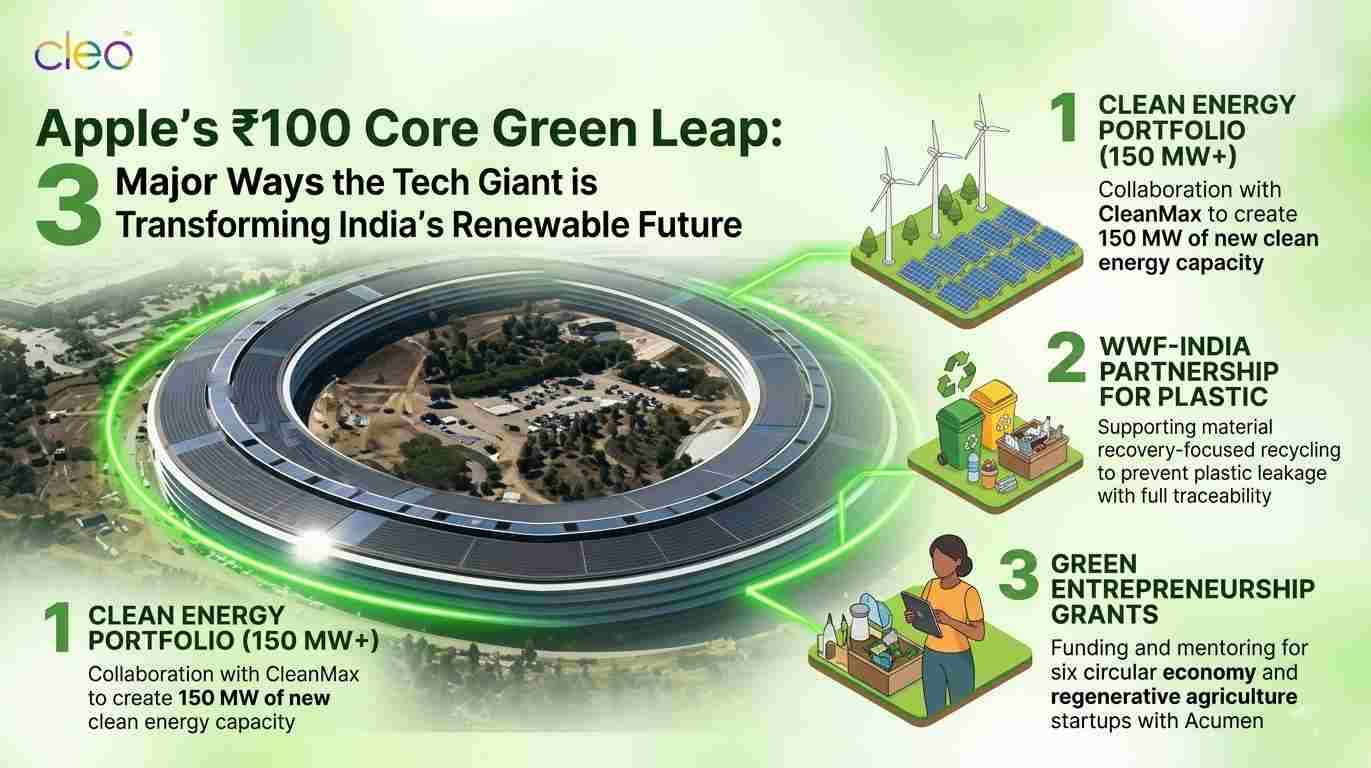
Apple is making headlines again, but this time it isn’t about a new iPhone launch. The Cupertino-based tech giant has announced a massive Apple’s ₹100 Crore Green Leap investment in India’s renewable energy sector. This move isn’t just a corporate CSR activity; it is a strategic masterstroke aimed at decarbonizing its supply chain and helping India meet its ambitious green energy targets.
In a landmark partnership with CleanMax, Apple is set to develop over 150 megawatts (MW) of new renewable energy capacity. This initiative is part of Apple’s broader “Apple 2030” vision—a commitment to be carbon neutral across its entire global supply chain and the life cycle of every product by the end of the decade.
1. Powering the Future: The Apple-CleanMax Partnership
The core of this announcement lies in the collaboration with CleanMax, a leading renewable energy developer in Asia. By investing ₹100 crore, Apple is facilitating the creation of a clean energy portfolio that can power approximately 150,000 Indian households annually.
Key Highlights of the Energy Expansion:
Scale: Over 150 MW of new solar and wind capacity.
Target Sector: The Commercial and Industrial (C&I) segment, which is traditionally the highest consumer of fossil-fuel-based grid power.
Supply Chain Impact: This investment helps Apple’s manufacturing partners in India transition to 100% renewable electricity.
Sarah Chandler, Apple’s Vice President of Environment and Supply Chain Innovation, noted that clean energy is a “driving force for innovation.” For Apple, this isn’t their first rodeo with CleanMax; they previously collaborated on rooftop solar projects to ensure Apple’s corporate offices and retail stores in India (like those in Mumbai and Delhi) run entirely on green power.
2. Tackling the Plastic Crisis: A Partnership with WWF-India
Beyond electricity, Apple is turning its attention to the ground level—specifically, plastic waste. The company has teamed up with WWF-India to strengthen waste management systems.
The Goa & Coimbatore Model
Apple is scaling a successful model initially deployed in Goa in collaboration with Saahas Zero Waste. The goal is to establish high-tech facilities that:
Collect and Sort: Efficiently manage local plastic waste.
Recover Materials: Ensure recyclable materials are put back into the circular economy.
Full Traceability: Use technology to track waste from the point of collection to the final recycled product, preventing “leakage” into delicate ecosystems like oceans and forests.
This expansion is now moving toward Coimbatore, working closely with local municipal authorities and waste workers to provide them with better livelihoods and safer working conditions.
3. Fostering the Next Generation of “Greenpreneurs”
Apple understands that solving the climate crisis requires grassroots innovation. Through a new partnership with Acumen, Apple is funding and mentoring early-stage social entrepreneurs in India.
The Apple-Acumen Program
The program provides catalytic grants to six hand-picked green enterprises. These startups are working on cutting-edge solutions in:
Circular Economy: Rethinking how products are made and reused.
Regenerative Agriculture: Helping Indian farmers improve soil health and carbon sequestration.
Waste Management: Turning trash into valuable raw materials.
By providing mentorship, technical assistance, and access to a global network, Apple is essentially “seeding” the future of India’s green economy.
Apple’s ₹100 Crore The Big Picture: 60% Reduction in Emissions
What makes Apple’s ₹100 Crore Green Leap investment in India so credible is their global track record. Since 2015, Apple has slashed its total greenhouse gas emissions by over 60%. Remarkably, they achieved this while their revenue grew by 78%, proving that economic growth and environmental protection can go hand-in-hand.
As Apple continues to shift its manufacturing hub from China to India, these green investments ensure that “Made in India” iPhones are produced with a significantly lower carbon footprint.
Conclusion: A Greener India Starts with Corporate Responsibility
Apple’s multifaceted approach—combining infrastructure investment, conservation, and entrepreneurship—sets a high bar for other multinational corporations operating in India. By focusing on the Commercial and Industrial sector, Apple is addressing the hardest part of the energy transition, proving that the road to 2030 is paved with green intentions and solid financial backing.
Disclaimer: Financial markets are subject to high risk. Please consult with a certified financial advisor before making any investment decisions.