
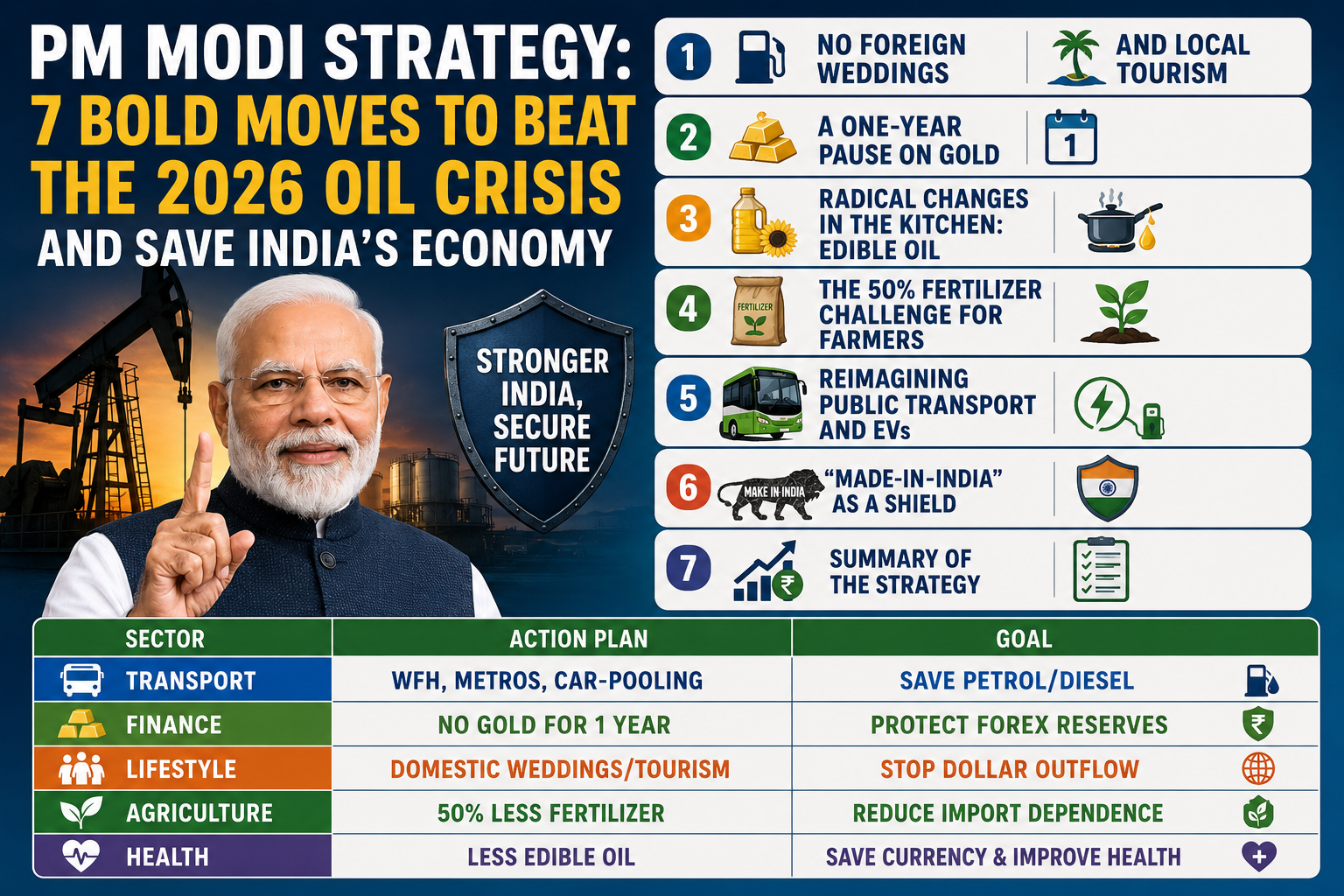
PM Modi Strategy- The year 2026 has brought a trial by fire for the global economy. As the war in the Middle East intensifies and the Strait of Hormuz remains a maritime graveyard for trade, India is standing at a critical crossroads. On Sunday, May 10, 2026, Prime Minister Narendra Modi delivered a landmark address from Hyderabad, framing economic prudence as the new face of patriotism.
With global crude prices skyrocketing to $126 per barrel, the PM’s message was clear: the era of “business as usual” is over. From reviving WFH to pausing gold purchases, the PM Modi strategy is a domestic blueprint to shield the common man from an international firestorm.
The Shadow of the Strait: Why Oil is the New Gold
To understand the urgency in the Prime Minister’s voice, one must look at the geography of the current conflict. The Strait of Hormuz is the world’s most important oil artery. With it blocked for over two months due to the US-Israel-Iran war, nearly 20% of global oil supply is trapped.
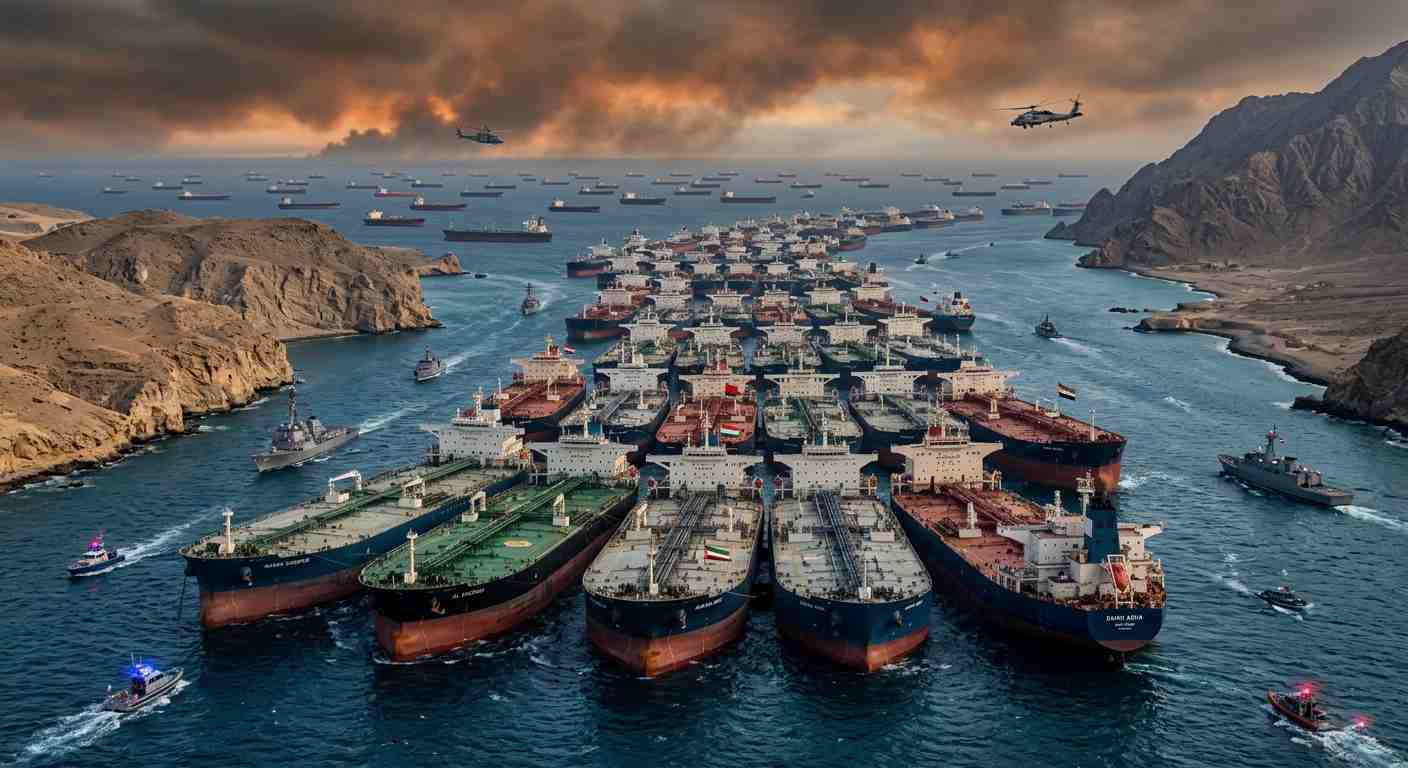
The “toll tax” demanded by Tehran and the subsequent interdiction threats from the US have left 1,500 ships stranded. For India, this isn’t just a news headline; it is a direct hit to the national treasury. Every liter of petrol saved is foreign exchange kept within our borders.
1. The Return of the WFH Era
One of the most significant pillars of the PM Modi strategy is the revival of COVID-era efficiency. The Prime Minister urged corporate India and government sectors to pivot back to:
Work From Home (WFH): Reducing the daily commute of millions.
Virtual Meetings: Eliminating the need for fuel-heavy travel for conferences.
Digital Governance: Ensuring that “minimum movement” leads to “maximum output.”
By cutting down the daily rush hour, India can significantly lower its immediate demand for petrol and diesel, providing a much-needed cushion for oil marketing companies.
2. ‘No Foreign Weddings’ and Local Tourism
In a bold social appeal, PM Modi asked citizens to rethink big-ticket expenditures that drain foreign reserves.
The “Wed-in-India” Push: Instead of destination weddings in Europe or the Middle East, the PM encouraged families to host celebrations within India.
Domestic Tourism: Choosing the backwaters of Kerala or the mountains of Himachal over overseas vacations.
Forex Conservation: Every dollar not spent on a foreign flight or hotel is a dollar available to buy essential energy supplies.
3. A One-Year Pause on Gold
Gold has always been India’s favorite investment, but it is also one of our largest imports. The Prime Minister’s request to avoid non-essential gold purchases for one year is a strategic move to stabilize the Rupee.
Why now? When gold imports rise, the trade deficit widens. By pausing gold buying, citizens can directly help prevent the Rupee from devaluing further against the Dollar.
4. Radical Changes in the Kitchen: Edible Oil
It might seem like a small ask, but the PM linked the kitchen to the battlefield. India remains a massive importer of edible oils.
National Health vs. National Wealth: PM Modi argued that reducing oil consumption is a “double win.” It improves the cardiovascular health of citizens while reducing the massive import bill that drains foreign currency.
5. The 50% Fertilizer Challenge for Farmers
Agriculture is the backbone of India, but it is also a sector heavily dependent on imported chemical fertilizers.
The Goal: A 50% reduction in chemical fertilizer use.
The Alternative: A shift toward Natural Farming and solar-powered irrigation pumps.
The Impact: This move aims to make Indian soil more resilient while decoupling our food security from global supply chain disruptions.
6. Reimagining Public Transport and EVs
The PM Modi strategy places a heavy emphasis on changing how we move.
Metros and Railways: Prioritizing mass transit over private vehicles.
Electric Vehicles (EVs): Accelerating the transition to battery-operated transport to end the “oil addiction.”
Logistics: Moving freight via railways instead of diesel-gulping trucks wherever possible.
7. “Made-in-India” as a Shield
The PM reiterated the Atmanirbhar Bharat vision, asking citizens to scrutinize their daily purchases. Whether it is shoes, bags, or simple accessories, choosing locally manufactured products ensures that Indian money stays in the Indian ecosystem.
The Looming Reality: Price Hikes Before May 15
Despite the government’s best efforts to shield consumers, the pressure is mounting. Sources suggest a ₹4–₹5 hike in petrol/diesel and a ₹40–₹50 increase in LPG might be inevitable before May 15. Oil companies are currently losing nearly ₹30,000 crore a month.
The Prime Minister’s appeal is a preemptive strike. If the nation can reduce consumption voluntarily, the “oil shock” will be a ripple rather than a tsunami.
Summary of the Strategy
| Sector | Action Plan | Goal |
| Transport | WFH, Metros, Car-pooling | Save Petrol/Diesel |
| Finance | No Gold for 1 Year | Protect Forex Reserves |
| Lifestyle | Domestic Weddings/Tourism | Stop Dollar Outflow |
| Agriculture | 50% less Fertilizer | Reduce Import Dependence |
| Health | Less Edible Oil | Save Currency & Improve Health |
Conclusion: Patriotism in the Pocketbook
PM Modi’s address reminds us that in 2026, a patriot isn’t just someone at the border—it’s the office worker choosing a Zoom call over a drive, the family choosing an Indian beach over a foreign one, and the farmer embracing the sun over the diesel pump. The PM Modi strategy is a call for a collective “economic defense” of the motherland.
FAQs on India’s 2026 Energy Crisis
Q1: Why are petrol prices rising in India despite government subsidies?
The blockade of the Strait of Hormuz has pushed crude to $126/barrel. Even with subsidies, the “under-recoveries” for oil companies have become unsustainable, leading to the predicted hike before May 15.
Q2: How does skipping a foreign wedding help the Indian economy?
Foreign weddings require payments in foreign currency (Dollars/Euros). When thousands of families spend locally, that “Forex” stays in India’s reserves to pay for essential imports like medicine and crude oil.
Q3: Is WFH mandatory now?
It is not a legal mandate yet, but the PM has strongly urged businesses to adopt it as a “national duty” to reduce the country’s fuel bill.