
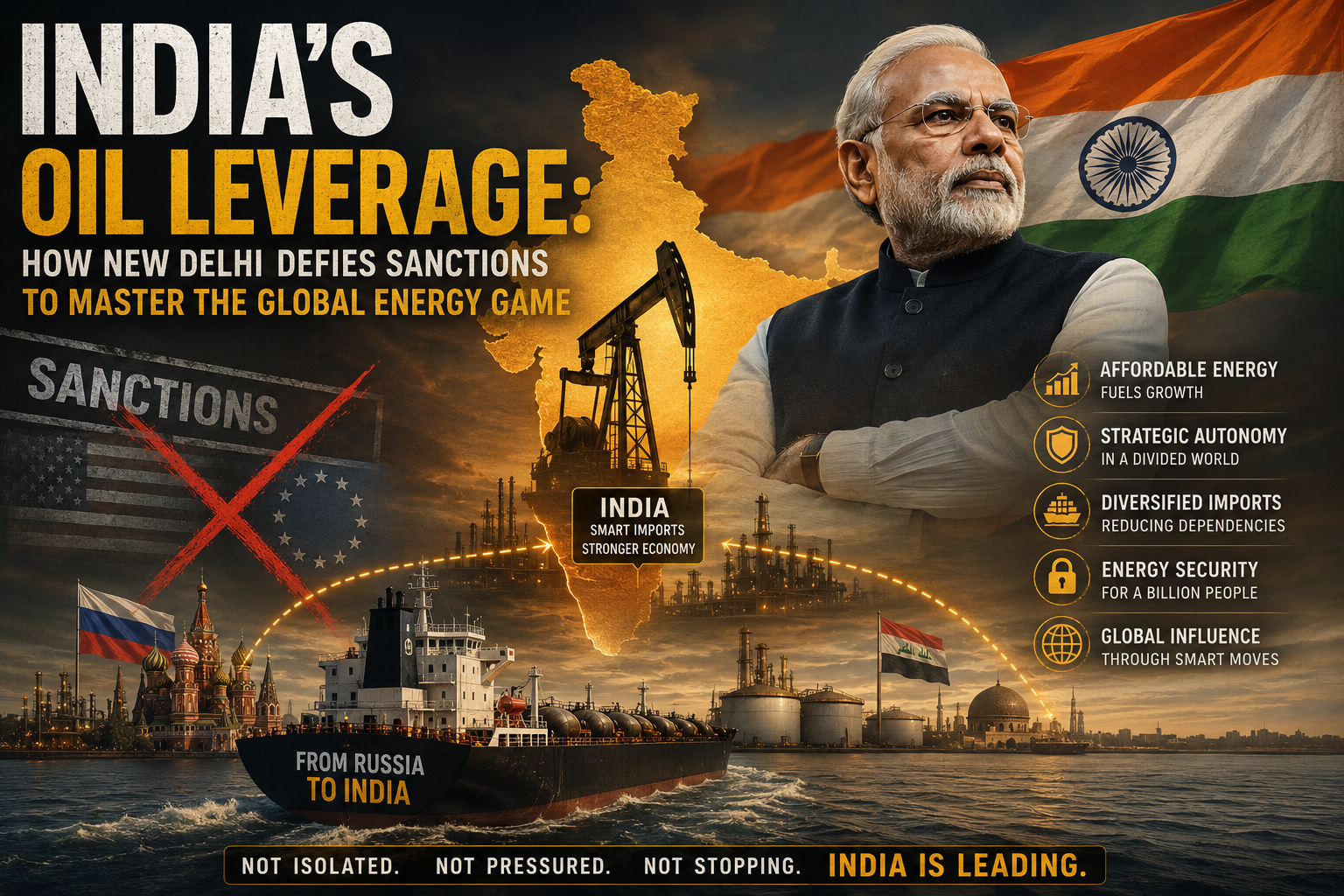
India’s oil leverage has taken center stage in global economics as New Delhi continues to reshape international trade dynamics on its own terms. In a definitive statement that highlights this growing influence, a senior Indian government official confirmed that the nation has consistently purchased Russian crude oil entirely independent of any Western geopolitical parameters or American sanctions waivers.
Speaking at a media briefing in New Delhi, Sujata Sharma, Joint Secretary in the Ministry of Petroleum and Natural Gas, clarified India’s unwavering stance.
“Regarding the American waiver on Russia, I would like to emphasize that we have been purchasing from Russia earlier… I mean before the waiver also, during the waiver also, and now also,” Sharma stated. “It is basically the commercial sense which should be there for us to purchase… There is no shortage of crude. Enough crude has been tied up repeatedly… and this, whatever waiver or no waiver, it will not affect.”
This bold declaration highlights a massive structural transformation in the global energy trade. As the West Asia conflict disrupts traditional shipping routes and creates volatility across the globe, a fierce international scramble has broken out among major world powers to secure a piece of India’s booming energy market.
From Moscow and Washington to the traditional oil powerhouses of the Persian Gulf, global energy exporters are fighting harder than ever for market share. This high-stakes competition underscores an undeniable reality: India is now one of the very few major economies where oil demand is not just surviving, but rapidly growing.
India’s Oil Leverage :The Scale of Growing Energy Demand
To understand why the world’s biggest oil producers are aggressively competing for New Delhi’s attention, one must look at the sheer scale of the country’s domestic consumption. India currently consumes nearly 5.8 million barrels of oil per day. Because the nation lacks massive domestic reserves, it is forced to import close to 90% of its total crude requirements, according to comprehensive data from the Petroleum Planning and Analysis Cell (PPAC) and the International Energy Agency (IEA).
India's Oil Market at a Glance:
┌───────────────────────────────┬───────────────────────────────┐
│ Daily Consumption             │ 5.8 Million Barrels           │
├───────────────────────────────┼───────────────────────────────┤
│ Import Dependence             │ ~90% of Total Requirements    │
├───────────────────────────────┼───────────────────────────────┤
│ Projected Demand Growth       │ Highest globally till 2035    │
└───────────────────────────────┴───────────────────────────────┘
While oil demand is slowing down or plateauing in major economies like the United States, Europe, and China—driven largely by aging demographics, economic shifts, and a rapid transition toward clean energy—India is moving in the opposite direction.
The IEA projects that India will account for the largest single share of global oil demand growth over the next decade. For global energy exporters staring down a highly uncertain future, the South Asian subcontinent looks like the last giant growth market standing. This massive demand gives New Delhi an unprecedented advantage, turning a historic vulnerability—import dependence—into a powerful economic shield.
The Russian Advantage: From Opportunity to Structural Power
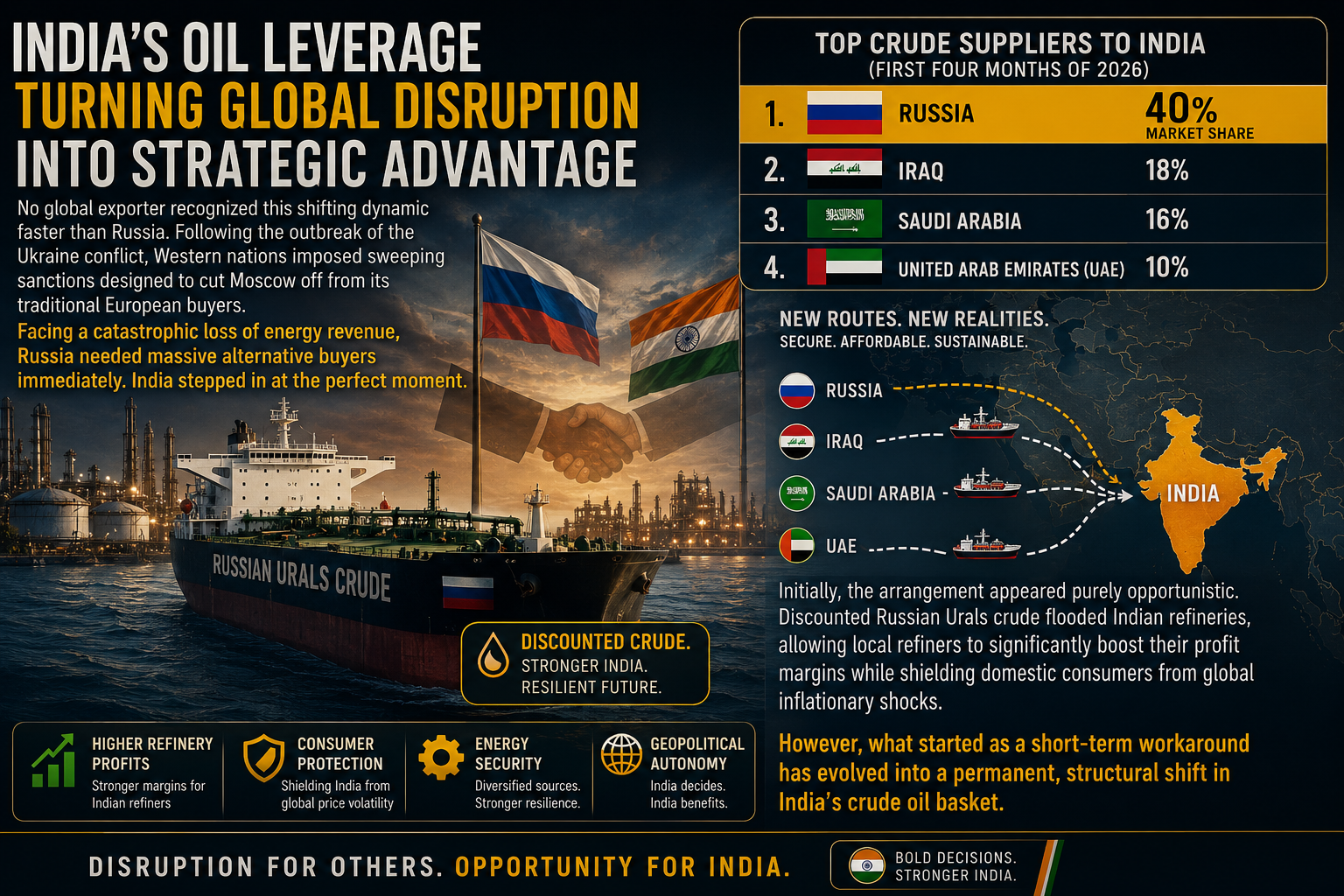
No global exporter recognized this shifting dynamic faster than Russia. Following the outbreak of the Ukraine conflict, Western nations imposed sweeping sanctions designed to cut Moscow off from its traditional European buyers. Facing a catastrophic loss of energy revenue, Russia needed massive alternative buyers immediately. India stepped in at the perfect moment.
Top Crude Suppliers to India (First Four Months of 2026):
1. Russia (40% Market Share)
2. Iraq
3. Saudi Arabia
4. United Arab Emirates (UAE)
Initially, the arrangement appeared purely opportunistic. Discounted Russian Urals crude flooded Indian refineries, allowing local refiners to significantly boost their profit margins while shielding domestic consumers from global inflationary shocks. However, what started as a short-term workaround has evolved into a permanent, structural shift in India’s crude oil basket.
The Evolution of the India-Russia Energy Corridor
Dominant Market Share: Today, Russia stands firmly as India’s single largest crude supplier. According to ship-tracking intelligence from Kpler, Russia maintained its top position through the first four months of the year, commanding roughly 40% of India’s total crude imports. This puts Moscow comfortably ahead of traditional top suppliers like Iraq and Saudi Arabia.
Resilience Beyond Discounts: The trade relationship is no longer dependent entirely on rock-bottom prices. Recent disruptions in West Asia and a tightening global supply market have narrowed the price gap between Russian Urals and global benchmarks like Brent. In fact, reports indicate that Russian Urals have occasionally traded at minimal discounts or even temporary premiums in Asian markets when regional geopolitical tensions peaked.
Deep Technological Integration: Despite the fading discounts, Indian refiners continue to buy Russian oil aggressively. Over the last three years of continuous trade, Russian crude grades have been deeply integrated into the chemical configurations and processing setups of Indian refining systems. Switching back to other grades would require costly technical recalibrations.
For Moscow, maintaining this trade relationship is an absolute necessity. Without India and China consistently absorbing its crude exports, Russia’s wartime economy would have faced severe fiscal damage under the weight of Western sanctions. This deep reliance explains why Moscow has gone to extraordinary lengths to protect this economic lifeline—deploying massive shadow tanker fleets, developing alternative non-dollar payment systems, and offering maximum pricing flexibility to Indian buyers.
Geopolitical Shifts: The Gulf Fights to Reclaim Lost GroundThe unprecedented rise of Russia in South Asia has deeply unsettled traditional Gulf Arab producers, who spent decades treating the Indian market as their exclusive territory. Now, nations like Saudi Arabia, Iraq, and the United Arab Emirates (UAE) are pivoting aggressively to protect their market share.
A major signal of this changing dynamic came directly from Abu Dhabi. On May 1, the UAE formally exited the OPEC+ alliance—the powerful oil cartel led jointly by Saudi Arabia and Russia. The UAE argued that it required complete sovereign flexibility to expand its domestic oil production capacity, directly challenging the strict production cuts enforced by the cartel.
The Diverging Strategies within OPEC+:
┌───────────────────────────────────────┬───────────────────────────────────────┐
│ Saudi Arabia Strategy                 │ UAE Strategy                          │
├───────────────────────────────────────┼───────────────────────────────────────┤
│ Enforce disciplined output cuts to    │ Expand production and exit OPEC+ to   │
│ maintain high global crude prices     │ lock in long-term buyers in India     │
└───────────────────────────────────────┴───────────────────────────────────────┘
While Saudi Arabia remains focused on restricting output to prop up international prices, the UAE recognizes that the window to sell fossil fuels is narrowing due to the global energy transition. Abu Dhabi’s primary goal is to lock in massive, long-term consumers while peak demand still exists, and India is the crown jewel of that strategy.
The Shift to Downstream Integration
The modern battle for the Indian energy market has moved well beyond simply undercutting competitors on the price per barrel. Gulf nations realize that to compete with Russia, they must embed themselves directly within India’s domestic infrastructure.
Refinery Partnerships: Saudi Aramco and Abu Dhabi National Oil Company (ADNOC) are actively seeking multi-billion-dollar stakes in massive, state-of-the-art Indian refinery projects.
Petrochemical Expansion: Joint ventures in petrochemical plants ensure that even if transportation fuel demand eventually drops, oil will still be supplied as raw material for industrial plastics and chemicals.
Strategic Storage Initiatives: By investing heavily in India’s Strategic Petroleum Reserves (SPR), Gulf producers can store millions of barrels locally, ensuring immediate delivery during supply crises while guaranteeing consistent market access.
By embedding their capital directly into India’s refining ecosystem, these nations are ensuring that Indian companies remain locked into their supply chains for decades to come.
Maritime Chokepoints and Sourcing Diversification
The urgency surrounding India’s oil market has intensified significantly as the West Asia conflict exposes the extreme fragility of traditional maritime shipping lanes. The Strait of Hormuz—the vital chokepoint through which a massive portion of Middle Eastern crude passes—has repeatedly faced intense regional security threats, disrupting shipping schedules and raising marine insurance premiums.
Global Energy Competitors Eyeing India:
┌─────────────────┬─────────────────────────────────────────────────────────────┐
│ Country         │ Primary Objective in Indian Market                          │
├─────────────────┼─────────────────────────────────────────────────────────────┤
│ Russia          │ Safeguard its single largest source of wartime revenue      │
│ United UAE      │ Leverage freedom from OPEC+ to expand total market volume   │
│ Saudi Arabia    │ Secure long-term demand via deep infrastructure investments │
│ United States   │ Build a strategic geopolitical alternative to Russian oil   │
└─────────────────┴─────────────────────────────────────────────────────────────┘
In response to these constant geopolitical shocks, Indian refiners have dramatically diversified their import strategies, creating a highly fluid procurement network. When Middle Eastern routes face instability, India quickly ramps up imports from the United States, West African producers like Angola, and South American exporters.
This hyper-flexible sourcing strategy ensures that domestic fuel prices remain insulated from external military conflicts and shipping blockades, transforming India into an extraordinarily resilient buyer.
The New Energy Paradigm: The Power Shifts to the Buyer
For over 50 years, oil-producing countries held all the power. They decided the prices, controlled how much oil was made, and set the rules for everyone else.
Today, that has completely changed.
Because oil demand is dropping in most parts of the world, major buyers like India now hold the power. India knows how important it is to the global economy. As a result, New Delhi is focused entirely on its own energy security and is making choices that benefit its own people without making any apologies.
Years ago, a developing nation would have faced heavy pressure from Western countries to follow their rules and sanctions. Today, India is too big economically and too powerful strategically to be pushed around. By buying oil from Russia, taking massive investments from the Gulf, and importing oil from the United States all at the same time, India has completely rewritten the rules of global energy diplomacy.