
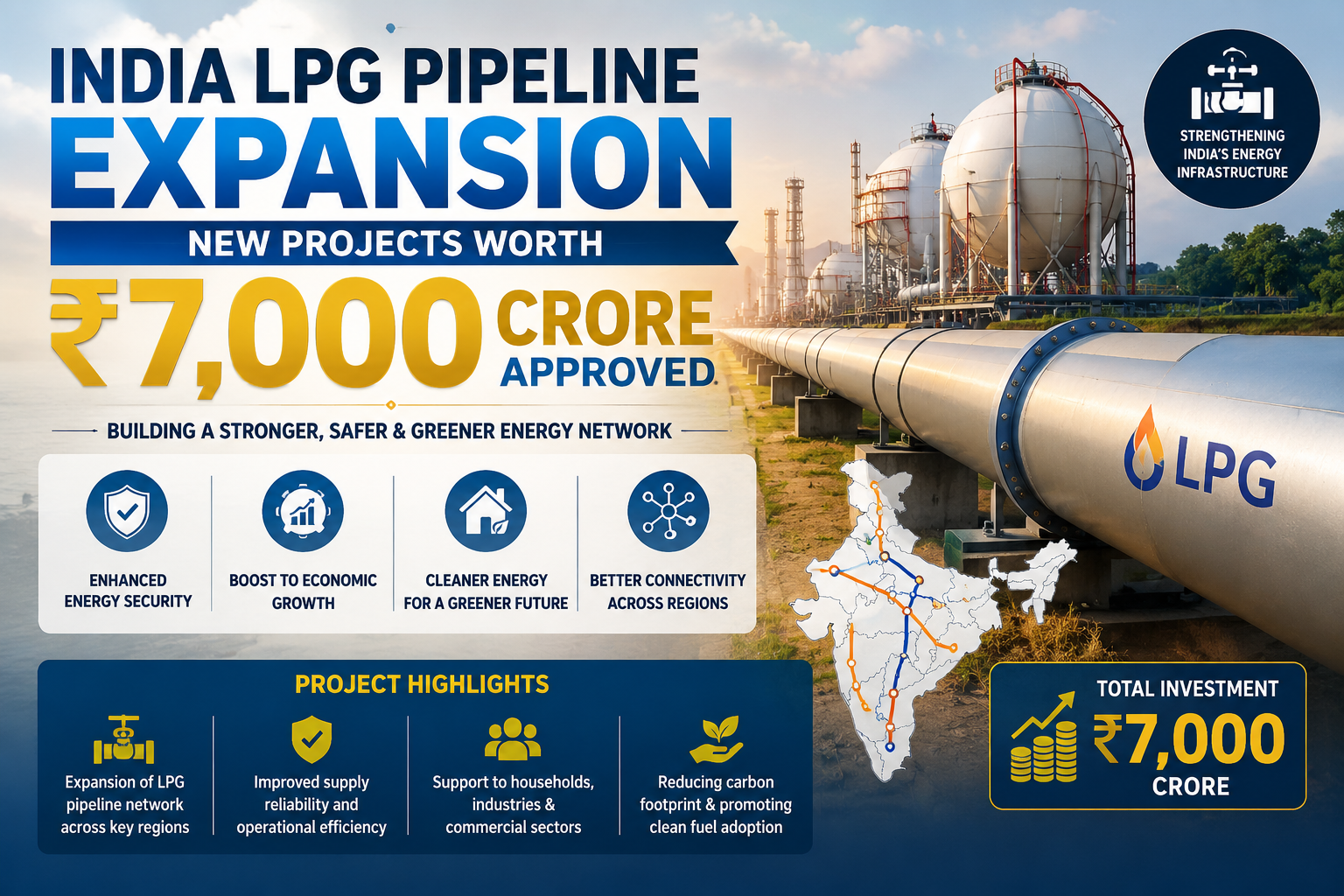
India LPG Pipeline Expansion has officially received a push. The Petroleum and Natural Gas Regulatory Board (PNGRB) cleared three high‑capacity trunk pipeline routes that cover 1,800 kilometers across six states. With an estimated capital investment of ₹7,000 crore the energy giant GAIL (India) Limited will lead the construction of these crucial supply lines. This critical move expands India LPG Pipeline Expansion’s common‑carrier LPG transportation grid by 24 percent moving total coverage from approximately 7,700 kilometers up to nearly 9,500 kilometers.
The timing of this clearance marks a strategic shift, in India’s inland energy logistics. By creating channels that span from coastal points and northern hubs straight into high‑demand regional markets India LPG Pipeline Expansion is building a permanent solution to replace vulnerable road transport. The expansion will directly benefit six states: Telangana, Maharashtra, Uttar Pradesh, Uttarakhand, Karnataka and Goa.

Breakdown of the 3 Approved LPG Pipeline Routes
The approval encompasses three distinct pipeline corridors, each designed to resolve specific supply bottlenecks across major industrial and domestic centers.
| Pipeline Route | States Covered | Total Length | Strategic Focus |
| Cherlapally to Nagpur | Telangana, Maharashtra | 556 km | Connects southern supply corridors with central Indian demand hubs. |
| Jhansi to Sitarganj | Uttar Pradesh, Uttarakhand | 611 km | Strengthens inland distribution across northern agricultural and urban belts. |
| Shikrapur to Goa & Hubli | Maharashtra, Goa, Karnataka | 633 km | Links western coastal supply networks with southern industrial regions. |
1. Cherlapally (Telangana) to Nagpur (Maharashtra). 556 Km
This 556-kilometer pipeline creates an energy link between the cities in Telangana and the central part of Maharashtra. By building an underground path the pipeline cuts down the time it takes for cooking gas to reach central India.
2. Jhansi (Uttar Pradesh) to Sitarganj (Uttarakhand). 611 Km
This 611-kilometer line goes across the plains and the foothills. The 611-kilometer line makes it easier to move fuel between Uttar Pradesh and southern Uttarakhand. This pipeline ensures supplies during the cold winter months when trucks on the road often slow down.
3. Shikrapur (Maharashtra) to Goa and Hubli (Karnataka). 633 Km
This 633-kilometer project covers three states. The 633-kilometer project connects supply depots in Maharashtra to coastal Goa and northern Karnataka. This helps bring energy to big factories and homes without making the local highways too crowded.
Why India is Shifting from Highway Tankers to Underground Pipelines
For years most of the cooking fuel moving from the coast to inland plants came on big trucks and heavy road tankers. While trucks work well for trips using road transport for long distances causes many problems:
High Vulnerability to Road Accidents: Carrying liquids that catch fire easily in road tankers is very dangerous for people on busy highways.
Heavy Carbon Footprint: Thousands of diesel LPG trucks driving every day across state lines create a lot of pollution. Make highway traffic much worse.
Freight and Transit Volatility: Moving fuel, on highways often leads to delays because of rain, road repairs, traffic jams and not having drivers.
By moving the transport to dedicated underground pipelines the fuel moves all the time without being stopped by traffic or bad weather. This change makes the roads much safer. Lowers the cost of moving fuel for public sector oil marketing companies.
National Energy Security and “Line-Pack Storage” Capabilities
India brings in most of its LPG from countries to supply kitchens and businesses. The big shipments land only at deep‑water ports on the east and west coasts. Getting this amount of LPG from the sea to the interior of the country needs a strong steady pipeline system that can move a lot each day.
Underground pipelines do more than just move gas. They hold an important strategic tool called line‑pack storage.
When LPG travels under pressure through kilometres of tough steel pipe the pipe system itself becomes a huge temporary storage tank. If a importing terminal is stopped by weather or a port needs repairs the LPG that is already inside the pipeline keeps moving on to bottling plants without stopping. This built‑in cushion of line‑pack storage protects markets, from sudden global supply shocks or local logistic problems.
Building on the Foundation of the Kandla-Gorakhpur Line
These three newly cleared projects follow the ongoing development of the landmark 2,757-kilometer Kandla-Gorakhpur LPG Pipeline, which remains the longest single LPG line in the country.
Together, these combined developments reflect a clear policy shift from the Petroleum and Natural Gas Regulatory Board: eliminating primary LPG movements by road altogether. By creating a fully integrated nationwide pipeline grid, India is building a safer, cleaner, and far more resilient energy foundation for millions of households across the country.