
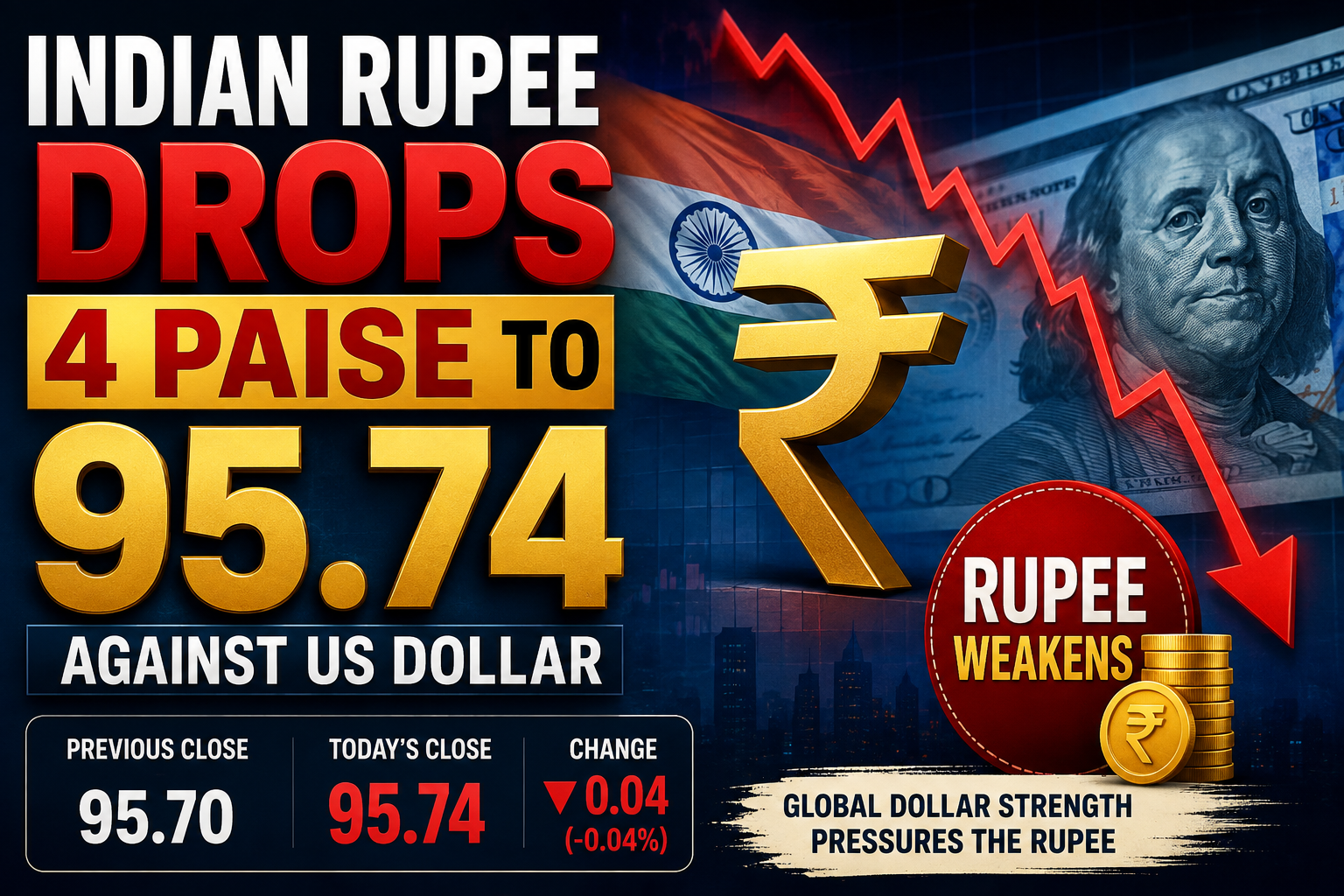
Indian Rupee drops 4 paise in early trade on Tuesday, August 25, 2026, touching The Rupee slipped four paise ending at 95.74 against the US dollar. High global crude oil prices and heavy buying of US Dollars by importers made the market feel weak. Still the Reserve Bank of India through its public sector banks acted quickly and kept the Rupee from falling much more. The Reserve Bank of India made sure the Rupee stayed inside a trading band.
Asian stock markets started the day on a note. Tensions around Iran added pressure, on emerging market currencies. With these challenges the Reserve Bank of India sold US Dollars in a careful way. Those Dollar sales gave the market a cushion. Because of that traders stayed calm. Volatility stayed low during the morning session.
Key Market Statistics & Daily Range
| Indicator / Metric | Trading Value / Details |
| Focus Pair | USD/INR |
| Early Trade Rate | 95.74 per USD (Down 4 paise) |
| Intraday Range | 95.58 – 95.74 |
| Key Resistance / Ceiling | 95.80 (Heavy RBI Defense Level) |
| RBI Special Buffer Garnered | ~$73 Billion (June policy measures) |
Why the Rupee Faltered in Early Trade
The dip in the domestic currency comes down to a mix of global macro pressure and local demand factors:
Rising Crude Oil Costs: Higher global crude benchmark prices increased the dollar bill for Indian oil importers, driving up demand for spot greenbacks.
Corporate & Importer Greenback Bids: Routine month-end commercial dollar requirements placed immediate selling pressure on the Indian currency.
Weak Regional Equities: Broader risk-off sentiment across Asian stock markets prompted foreign portfolio investors to adopt a cautious stance.
Geopolitical Risk Premiums: Escalating tensions involving Iran created additional flight-to-safety flows into the U.S. dollar across global currency desks.
How the RBI Kept the Currency Stable
The currency did not fall steeply, largely due to aggressive intervention strategy by the central bank:
State-Bank Dollar Supply: The RBI routinely directed state-run financial institutions to sell dollars whenever the exchange rate pushed toward critical threshold levels.
The 95.80 Resistance Wall: Currency traders avoided taking aggressive long-dollar bets, knowing central bank intervention heavy-handedness awaits near the 95.80 zone.
Massive Capital Reserves: The central bank built a strong liquidity buffer of nearly $73 billion from special balance-of-payments measures launched in June, giving it ample firepower to absorb speculative shocks.
Foreign Capital Inflows: Steady foreign investment into domestic debt and equity markets continued to balance out routine commercial outflows.
What Traders Should Watch Next
Market participants expect the currency pair to stay range-bound in the short term. The ongoing tug-of-war between high crude oil prices on one side and active central bank intervention on the other will determine whether the exchange rate stays below the 95.80 mark. Traders will also closely track upcoming economic data releases, crude futures movements, and central bank commentary to gauge the next decisive move.