
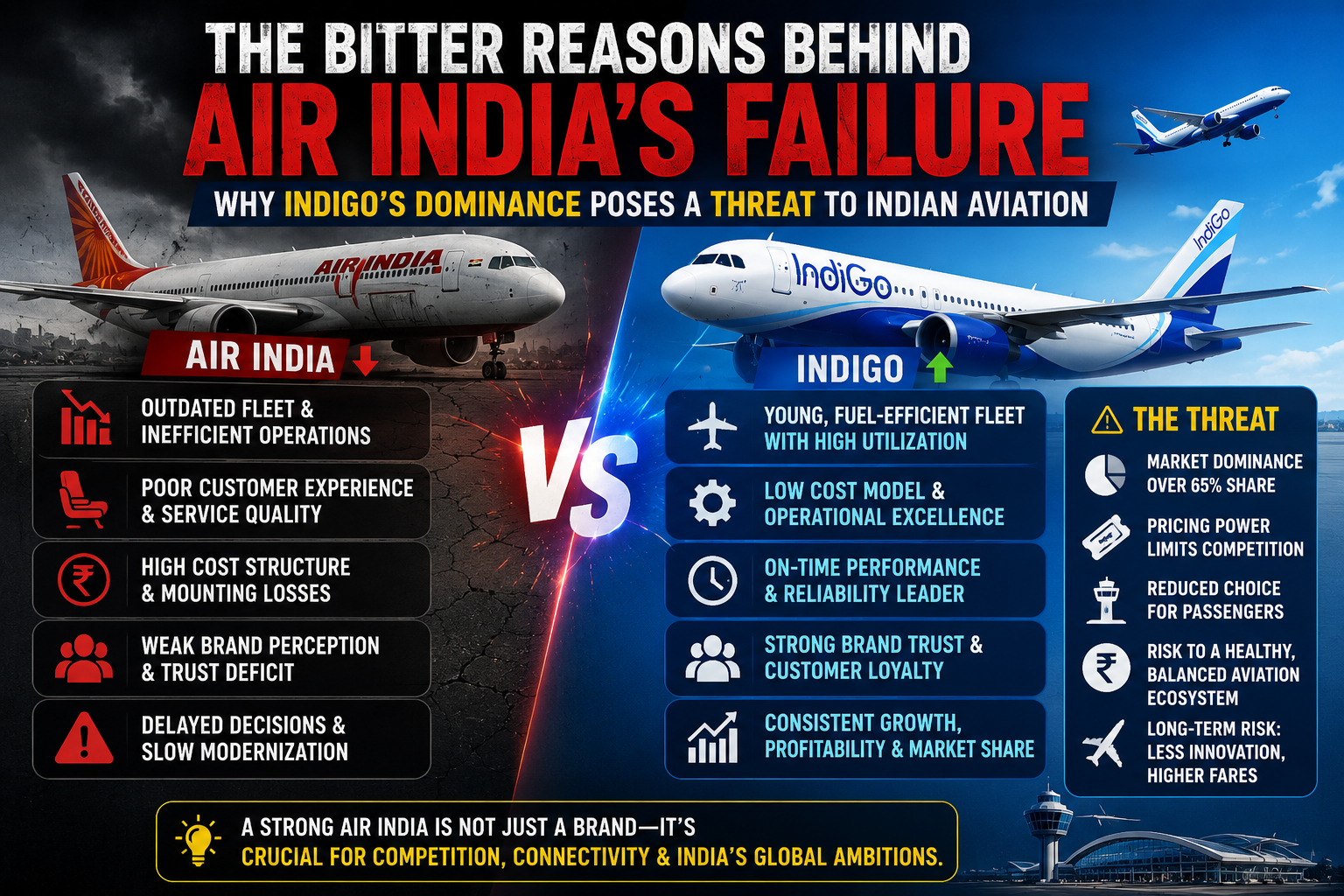
Air India is really having a tough time keeping up. Everyone thought we’d see a solid head-to-head battle with IndiGo, but that’s just not happening right now. Back when Tatas took over in early 2022, people expected quick fixes and top-notch service. Instead, massive money losses, crazy delays for plane parts, and a bunch of outside issues completely slowed things down.
Right now, IndiGo is pretty much running the whole show in Indian skies. With Air India lagging behind like this, regular flyers, airport bosses, and government folks are getting genuinely worried about where Indian aviation is headed.
The Widening Market Gap Between IndiGo and Tata Group
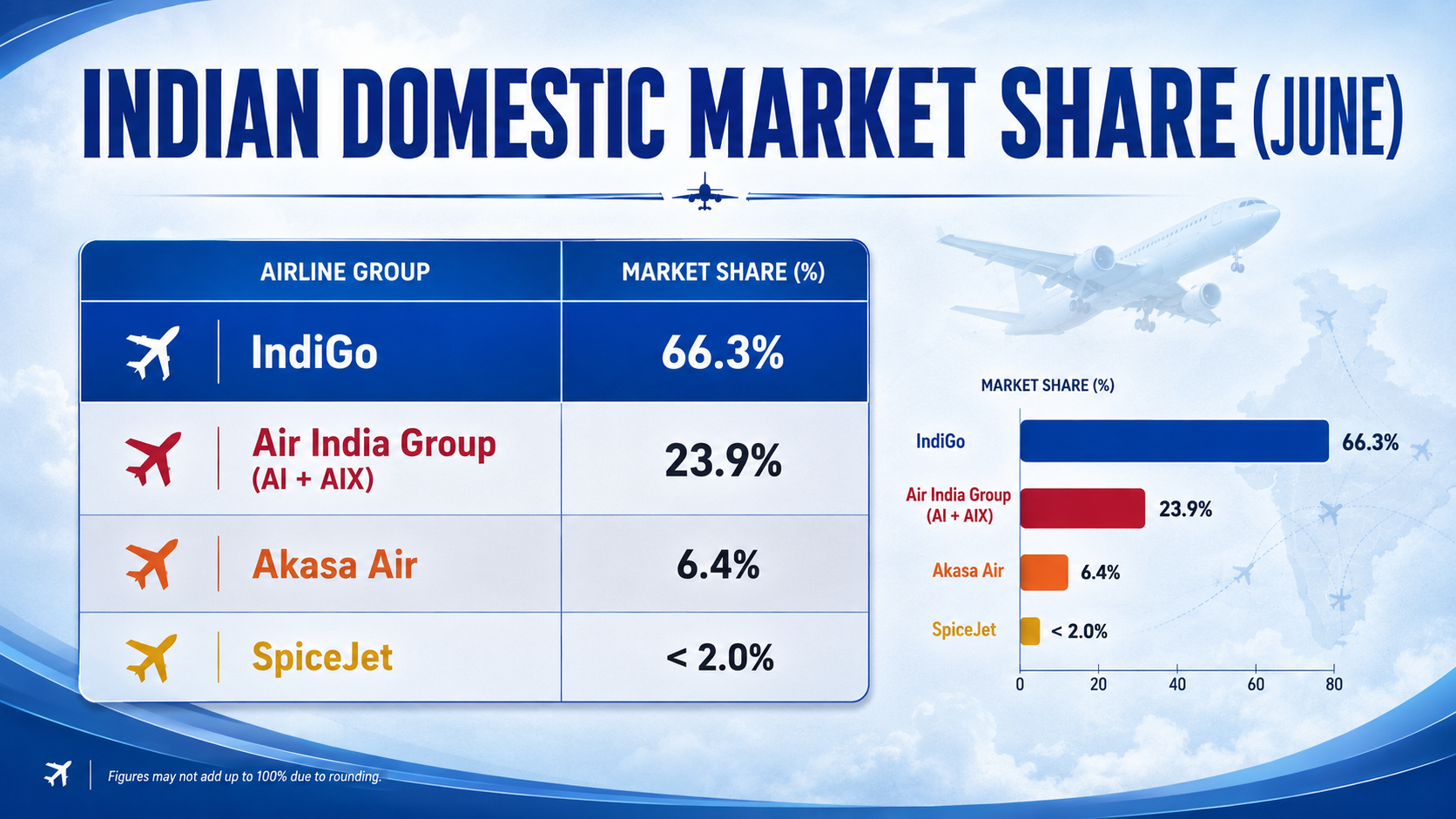
IndiGo and Air India are moving in totally opposite directions, according to the latest DGCA numbers. IndiGo hit a record 66.3% market share in June, solidifying its lead as India’s top airline.
Meanwhile, Tata’s Air India Group (including Air India Express) saw its market share slide down to 23.9%. That’s a clear drop from 27% in February and 25.6% in May. Akasa Air sits way behind in third place at 6.4%, and SpiceJet has fallen below 2%.
In aviation, size is everything. Bigger airlines get cheaper supplier deals, better airport slots, and can run more flights efficiently. While IndiGo uses its size to expand even further, Air India is having to cut back flights just to manage its growing losses.
Fixing a decades-old airline while keeping hundreds of flights in the air every single day? It’s a complete nightmare. Even Tata Sons Chairman N. Chandrasekaran didn’t sugarcoat it—he admitted turning Air India around will easily take 5 to 10 years, not a quick couple of months.
Honestly, the problems dragging them down right now are huge.
First off, the cash burn is staggering. Air India lost ₹22,238 crore in FY26. That is more than double what they lost the previous year, leaving almost no money to buy new planes or expand routes aggressively. On top of that, Tata didn’t just buy a company; they inherited decades of broken government systems, outdated software, and messy maintenance setups.
Then comes the administrative mess. They aren’t just running one airline—they’re trying to merge four distinct brands (Air India, Air India Express, Vistara, and AirAsia India) into two clean entities. Getting all those pilots, staff contracts, and booking databases onto the same page is swallowing up almost all management bandwidth.
To make matters worse, global supply chains are completely choked. Air India placed massive aircraft orders, but Boeing and Airbus simply aren’t delivering on time. Engines sit in repair shops for months waiting for basic spare parts.
And external shocks haven’t helped either. Conflict in West Asia closed critical airspaces, forcing international flights to take long, expensive detours right as jet fuel prices shot up. Add in the fallout from the tragic AI171 crash—which brought intense safety audits—and the sudden departure of CEO Campbell Wilson, and you have a total storm. Things got so intense that Chandrasekaran had to personally step in to run weekly operational meetings.
Signs of Progress: Long-Term Rebuilding Underway
Despite these severe short-term setbacks, the long-term plan is making tangible progress behind the scenes. Aviation turnarounds rarely follow a straight line, and major investments often take years to reflect on financial balance sheets.
“A nation of 1.4 billion people, with one of the world’s fastest growing economies, deserves a world-class flag carrier. Rebuilding Air India is a long journey: fleet renewal, training, service transformation, network expansion. Every great airline in history was built over decades, not quarters.”
— N. Chandrasekaran, Chairman of Tata Sons
Key operational milestones achieved so far include:
Complete Narrow-Body Refurbishment: The domestic narrow-body fleet is fully refurbished with updated cabin interiors, drawing positive passenger feedback.
Ongoing Wide-Body Upgrades: Complete cabin retrofits for long-haul wide-body aircraft are actively underway, with full completion expected by FY28.
Improved On-Time Arrival: Air India achieved top-tier status for on-time arrival performance among domestic carriers in recent months.
Surging Customer Satisfaction: The airline’s Net Promoter Score (NPS) jumped from -35 in FY23 to +42 in June, signaling steady progress in cabin service and customer experience.
AIR INDIA CUSTOMER SATISFACTION (NPS)
──────────────────────────
Metric Period │ Net Promoter Score (NPS)
FY23 │ -35
June │ +42
Why a Weak Number Two Hurts the Entire Aviation Market
An aviation market dominated by just one strong airline is always bad news for passengers. You don’t need ten different airlines to keep market prices fair, but you definitely need a tough number two that can challenge the leader on airfares, flight routes, and passenger comfort.
Right now, when Air India is forced to focus all its energy on internal repairs instead of expanding aggressively, IndiGo essentially gets a free pass to control the market.
That lack of real competition creates three major problems:
Ticket Prices Spike: Without a strong rival pushing back on major routes, passengers end up paying sky-high fares, especially during festivals and holiday seasons.
Zero Pressure to Innovate: When a market leader faces no real threat, there’s very little reason for them to improve cabin comfort, food, or customer support.
Total Control Over Airports: A dominant carrier gains huge leverage over airport slots, ground handlers, and regional hubs, making it almost impossible for smaller airlines to grow.
This growing imbalance has gotten so out of hand that aviation regulators are now debating radical ideas—including whether airport operators should be allowed to run their own regional feeder airlines just to bring real competition back to Indian skies.
What Lies Ahead for Indian Skies?
The Tata Group’s long-term bet on aviation remains fully active. Rebuilding a national icon from decades of decay while navigating global supply chain failures was never going to happen in a few quarters.
While IndiGo continues to solidify its domestic hold, Air India’s steady investments in fleet renewal, safety infrastructure, and pilot training are laying the groundwork for a far more capable carrier in the years ahead. For passengers and policymakers alike, the key question is how fast Air India can turn its structural upgrades into market strength—and whether it can restore true competitive balance to the skies.
Frequently Asked Questions
What is Air India’s current domestic market share? According to DGCA data, the combined Air India group holds a 23.9% domestic market share, while IndiGo leads the market with 66.3%.
What was Air India’s net loss in FY26? Air India reported a net loss of ₹22,238 crore in FY26, compared to a net loss of ₹10,859 crore in the previous fiscal year.
When will Air India finish retrofitting its wide-body aircraft fleet? The wide-body aircraft cabin refurbishment programme is currently underway and is scheduled for full completion by the end of FY28.