
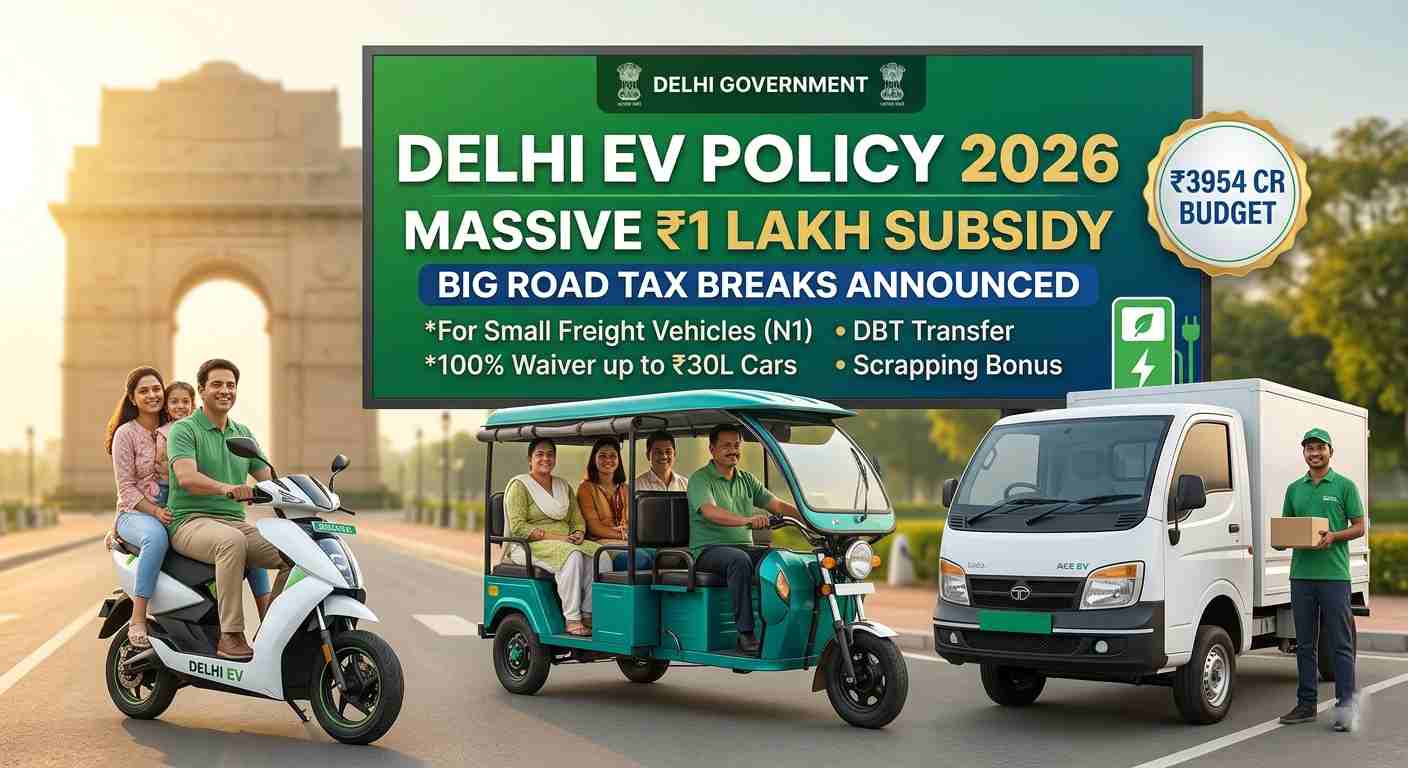
Delhi EV Policy 2026: The landscape of urban mobility in India’s capital is about to undergo a tectonic shift. The Delhi Government has officially released the draft of the Delhi EV Policy 2026-2030, a visionary document aimed at making Delhi the “EV Capital” of the world. With a staggering budget of ₹3,954.25 crore, the policy offers life-changing incentives, including a massive ₹1 lakh subsidy for specific vehicle categories.
If you are planning to buy a vehicle in Delhi, this is the most important update you will read this year. From tax exemptions to strict bans on petrol/diesel registrations, here is everything you need to know about the future of transport in Delhi.
Delhi EV Policy 2026 The Vision: A Pollution-Free Delhi by 2030
Delhi has long struggled with air quality challenges. To combat this, Transport Minister Pankaj Singh has introduced a draft policy that doesn’t just encourage Electric Vehicles (EVs) but practically mandates them for the future. The policy is currently in the public domain for feedback from experts and citizens before it becomes law.
The primary objective is simple: Reduce the carbon footprint by transitioning high-usage vehicles to electric power.
1. The Subsidy Breakdown: Who Gets What?
The cornerstone of the Delhi EV Policy 2026 is the direct financial assistance provided to buyers. The government has smartly designed a “tapering subsidy” model, meaning the benefits are highest in the first year to encourage immediate adoption.
Small Commercial Vehicles (N1 Category)
The biggest winners under the new policy are small freight carriers.
First Year: A whopping ₹1,00,000 subsidy.
Second Year: Reduced to ₹75,000.
Third Year: Reduced to ₹50,000.
Electric Two-Wheelers (Scooters & Bikes)
For personal and delivery use, if the vehicle cost is up to ₹2.25 lakh:
First Year: Up to ₹30,000.
Second Year: Up to ₹20,000.
Third Year: Up to ₹10,000.
Electric Auto-Rickshaws and E-Rickshaws
The lifeline of Delhi’s last-mile connectivity will receive:
First Year: ₹50,000.
Second Year: ₹40,000.
Third Year: ₹30,000.
Note: All subsidies will be credited directly to the beneficiary’s bank account via Direct Benefit Transfer (DBT), ensuring transparency and eliminating middlemen.
2. Road Tax and Registration Fee Waivers
Buying an EV in Delhi just became significantly cheaper than buying a traditional Internal Combustion Engine (ICE) vehicle.
100% Waiver: All registered EVs will enjoy a complete waiver on road tax and registration fees.
EV Cars: This 100% waiver applies to electric cars priced up to ₹30 lakh.
Hybrid Vehicles: In a surprising move to bridge the gap, the government is offering a 50% discount on road tax for hybrid vehicles.
Luxury Cap: Vehicles priced above ₹30 lakh will not be eligible for these tax exemptions.
3. The “Scrapping Incentive”: Bonus for Your Old Junk
The government isn’t just looking at new buyers; they want to get old, polluting vehicles off the road. If you scrap your old vehicle at an authorized facility and buy an EV within six months, you get an additional bonus:
| Vehicle Type | Scrapping Bonus |
| Two-Wheelers | ₹10,000 |
| Auto-Rickshaws | ₹25,000 |
| Passenger Cars | ₹1,00,000 (Limited slots) |
| Freight Vehicles | ₹50,000 |
4. Strict Deadlines: The End of Petrol and Diesel?
The Delhi EV Policy 2026 is not just about “carrots” (incentives); it also uses “sticks” (regulations) to ensure compliance.
Aggregator Ban: From this year, apps like Ola, Uber, Zomato, and Swiggy are prohibited from adding new petrol or diesel vehicles to their fleets. By 2026, their entire fleet must be 100% electric.
Three-Wheeler Deadline: From January 1, 2027, no new registrations for petrol/CNG three-wheelers will be allowed. Only Electric Three-Wheelers will be registered.
Two-Wheeler Deadline: From April 1, 2028, only electric new two-wheelers will be registered in the capital.
School Buses: Educational institutions must convert 10% of their fleet to electric within 2 years, 20% in 3 years, and 30% by 2030.
5. Infrastructure: Charging and Battery Management
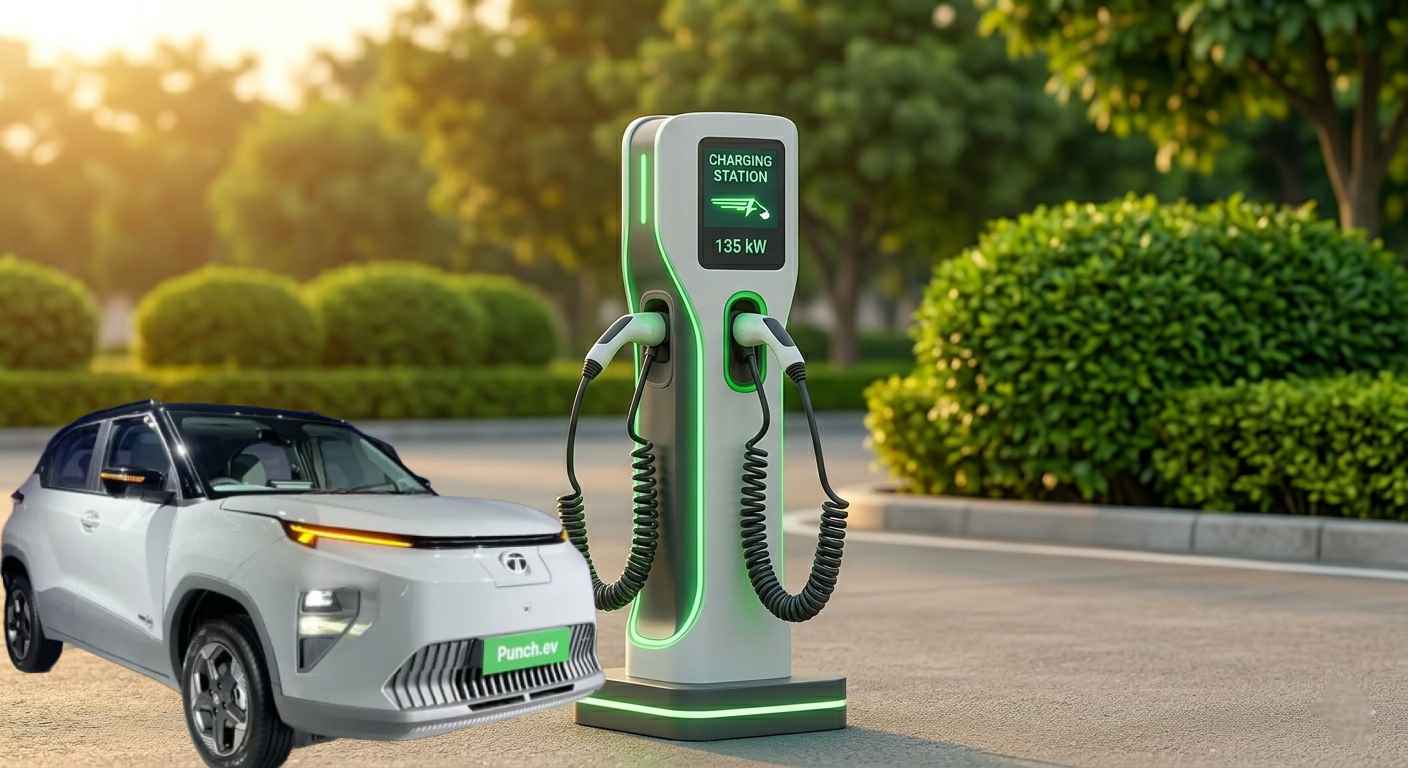
To solve “range anxiety,” the government is appointing Delhi Transco Limited (DTL) as the nodal agency to blanket the city with charging stations.
Battery Swapping
The policy places a heavy emphasis on Battery Swapping. This allows EV owners (especially commercial two and three-wheelers) to swap a drained battery for a fully charged one in minutes, eliminating long wait times at charging ports.
Waste Management
To prevent a future environmental crisis, the Battery Waste Management Rules 2022 will be strictly enforced. A sophisticated “Battery Tracking System” will be developed to ensure that old lithium-ion batteries are recycled properly rather than ending up in landfills.
6. How to Avail the Benefits?
The process has been simplified for the common man:
Purchase: Buy an EV from an authorized dealer in Delhi.
Documentation: Ensure your Aadhar and Bank account are linked for DBT.
Verification: The dealer uploads the purchase data to the transport portal.
Payment: After verification, the subsidy amount is pushed to your bank account.
Conclusion: A Bold Leap Forward
The Delhi EV Policy 2026 is more than just a financial document; it is a blueprint for a modern, breathable city. By targeting high-usage segments like aggregators and freight carriers, the government is tackling the root cause of vehicular pollution.
While the draft is open for suggestions, the core message is clear: The era of the internal combustion engine in Delhi is coming to a close. Whether you are a daily commuter or a business owner, switching to electric is no longer just an environmental choice—it is the most sound financial decision you can make.
Quick Summary Table for Readers
| Feature | Details |
| Policy Duration | Until March 31, 2030 |
| Total Budget | ₹3,954.25 Crore |
| Max Subsidy | ₹1 Lakh (N1 Category) |
| Road Tax Relief | 100% for EVs up to ₹30 Lakh |
| Hybrid Benefit | 50% Road Tax discount |
| Ola/Uber Rule | 100% Electric fleet by 2026 |