
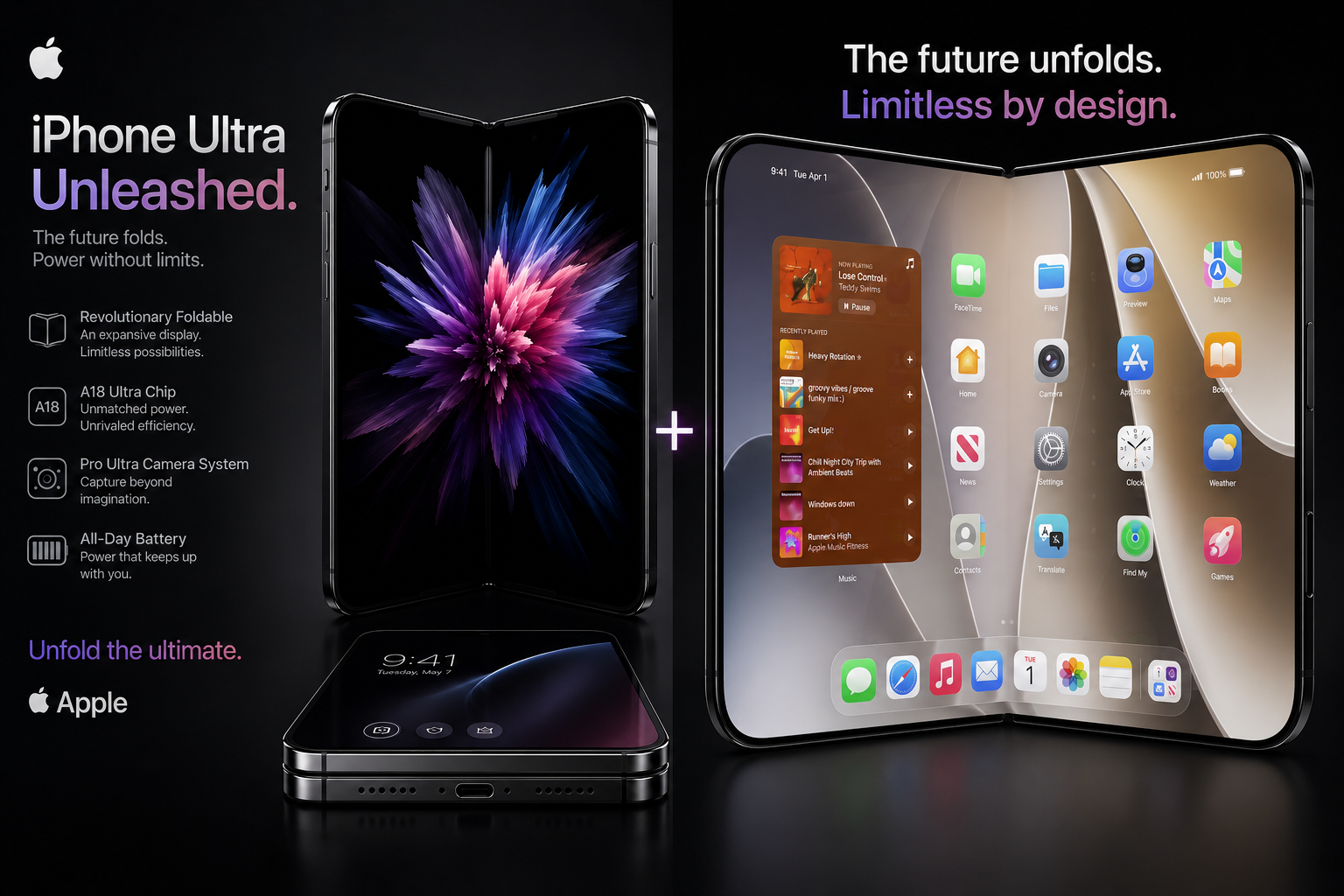
The foldable iPhone Ultra is no longer just a distant dream hidden inside Apple’s secretive testing labs. In a massive move that has sent shockwaves through the global smartphone supply chain, Apple has radically accelerated its production timeline for its first-ever folding flagship. Tech enthusiasts have spent years tracking concepts, patents, and subtle display leaks, but a definitive new supply chain report confirms that the tech giant is going “all-in” on its foldable ecosystem to battle shifting global market shares and memory component shortages.
According to a highly authoritative report from Nikkei Asia citing insiders close to the situation, Apple has instructed its global manufacturing network to assemble an eye-watering 10 million foldable iPhones within 2026 alone. This is an immense, aggressive upgrade from previous industry forecasts, which predicted a conservative initial run of 7 to 8 million units. Apple is clearly anticipating an immediate surge in consumer demand, moving past minor pilot testing straight into full-scale commercial domination.
The Massive 220 Million iPhone Production Blueprint
Apple’s massive assembly instructions extend far beyond its introductory foldable device. The Nikkei Asia report indicates that alongside the 10 million premium folding models, Apple has ordered a baseline production run of 70 million combined units for the highly anticipated iPhone 18 Pro and iPhone 18 Pro Max.
When combined with standard upgrades and legacy sales, this puts Apple’s initial target for the late 2026 hardware ecosystem at roughly 220 million devices.
Furthermore, parts suppliers have been told to keep manufacturing capacity highly flexible. Apple wants the capability to request an extra 85 million component sets during the second half of 2026 if consumer trends require it. In an unprecedented move to bypass ongoing global hardware allocation delays, Apple has also instructed its supply chain to reserve specific high-performance parts from the existing iPhone 17 lines to guarantee that production of the upcoming iPhone 18 series remains completely uninterrupted.
Foldable iPhone Ultra: Full Specifications & Design Details
| Feature | Specification Details |
| Primary Inner Display | 7.76-inch Foldable LTPO OLED, 120Hz refresh rate, 1.5K Resolution ($2713 \times 1920$ pixels) |
| Cover Outer Display | 5.49-inch LTPO OLED, 120Hz refresh rate, Ceramic Shield Protection |
| Aspect Ratio | 4:3 profile (similar form-factor to a passport or an iPad Mini) |
| Processor Architecture | Apple A20 Pro Chipset (Built on TSMC’s state-of-the-art 2nm node) |
| RAM Configuration | 12GB LPDDR5 RAM (Optimized for on-device Apple Intelligence) |
| Storage Options | 256GB, 512GB, 1TB, and 2TB high-speed NVMe configurations |
| Primary Rear Camera Array | Dual-sensor setup: 48MP Main Wide Lens ($f/1.8$, Sensor-Shift OIS) + 48MP Ultra-Wide Lens ($f/2.2$) |
| Front Selfie & Cover Cameras | Dual 18MP sensors with multi-aspect PDAF and 4K Dolby Vision video tracking |
| Chassis Thickness | An ultra-slim 4.5mm when fully unfolded; approx. 9.2mm to 9.5mm when closed |
| Biometric Security | Power Button-mounted side Touch ID (No Face ID due to thin display housing) |
| Battery & Charging Power | 5,400 mAh dual-cell design with high-speed USB-C connectivity |
| Wireless & Cellular | Wi-Fi 7, Bluetooth 5.3, Apple C2 Satellite-enabled 5G Modem |
Design Evolution: Breaking the Crease Barrier
The defining characteristic of the foldable iPhone Ultra is its ultra-premium, book-style construction. Rather than adopting the long, narrow footprint favored by some early Android folding alternatives, Apple is prioritizing an expansive 4:3 aspect ratio. When unrolled, the phone stretches into a 7.76-inch canvas, providing an operational area that effectively matches an iPad Mini. It acts as a pocketable powerhouse designed for multitasking, side-by-side app processing, and immersive mobile productivity.
To resolve the aesthetic issues that plague standard flexible screens, Apple is utilizing a complex combination of materials:
Amorphous “Liquid Metal” Alloys: The hinge uses a custom-engineered liquid metal composite that exhibits extreme structural memory. This prevents internal components from warping over extended use while providing massive torsional strength.
Self-Healing Memory Glass: The flexible interior panel incorporates an optically clear, self-healing polymer adhesive coat designed to automatically smooth out micro-stress points caused by repeated folding. This reduces the visual appearance of the center crease down to near invisibility.
Unmatched Thinness: When opened up, the structural engineering yields an incredibly thin profile measuring just 4.5mm. However, this hyper-thin build requires major functional trade-offs: there is simply no physical depth to house a standard Apple TrueDepth camera array. Consequently, Face ID is absent. Biometric authentication returns to a rapid, capacitive Touch ID reader built directly right into the side power button.
The Next-Gen 2nm A20 Pro Processing Breakthrough
Powering this entire premium hardware ecosystem is Apple’s crown jewel for late 2026: the A20 Pro processor. This chipset represents Apple’s transition to TSMC’s revolutionary 2-nanometer (2nm) chip architecture. Shifting downward from previous 3nm designs allows engineers to cram billions of extra transistors onto a microscopic piece of silicon.

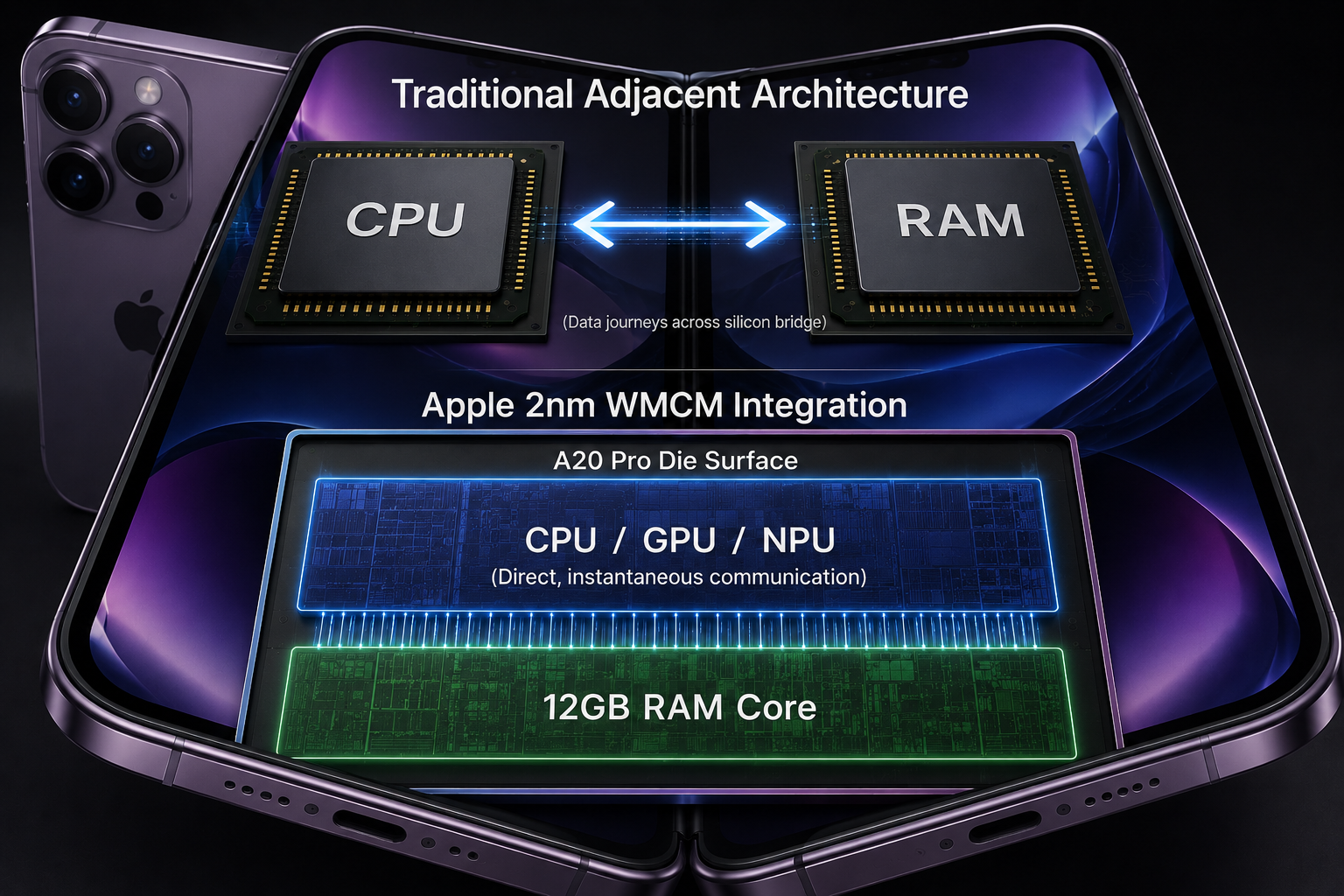
This structural shift is supercharged by Wafer-Level Multi-Chip Module (WMCM) integration. Instead of positioning the device memory next to the processing core, Apple permanently binds the 12GB LPDDR5 RAM directly on top of the main CPU and Neural Engine architecture.
This creates instant communication pipelines, resulting in a 15% bump in CPU speed and a massive 30% reduction in power consumption. The massive RAM capacity also ensures that complex local AI models can process natural text and voice commands instantly without communicating with cloud networks.
iPhone 18 Pro Series: Cameras and Variables
While the foldable iPhone Ultra captures early headlines, the traditional flagships—the 6.3-inch iPhone 18 Pro and 6.9-inch iPhone 18 Pro Max—are receiving major upgrades of their own.
The primary addition to the Pro lineup’s triple 48MP camera setup is a mechanical variable-aperture main lens. Rather than utilizing software to artificially generate focal depth, the iPhone 18 Pro will adjust physical glass blades to alter how much light enters the primary sensor. This lets mobile photographers capture sharp landscapes in direct daylight, and then immediately switch to a wide aperture for professional, true-to-life hardware background blur in low-light environments.
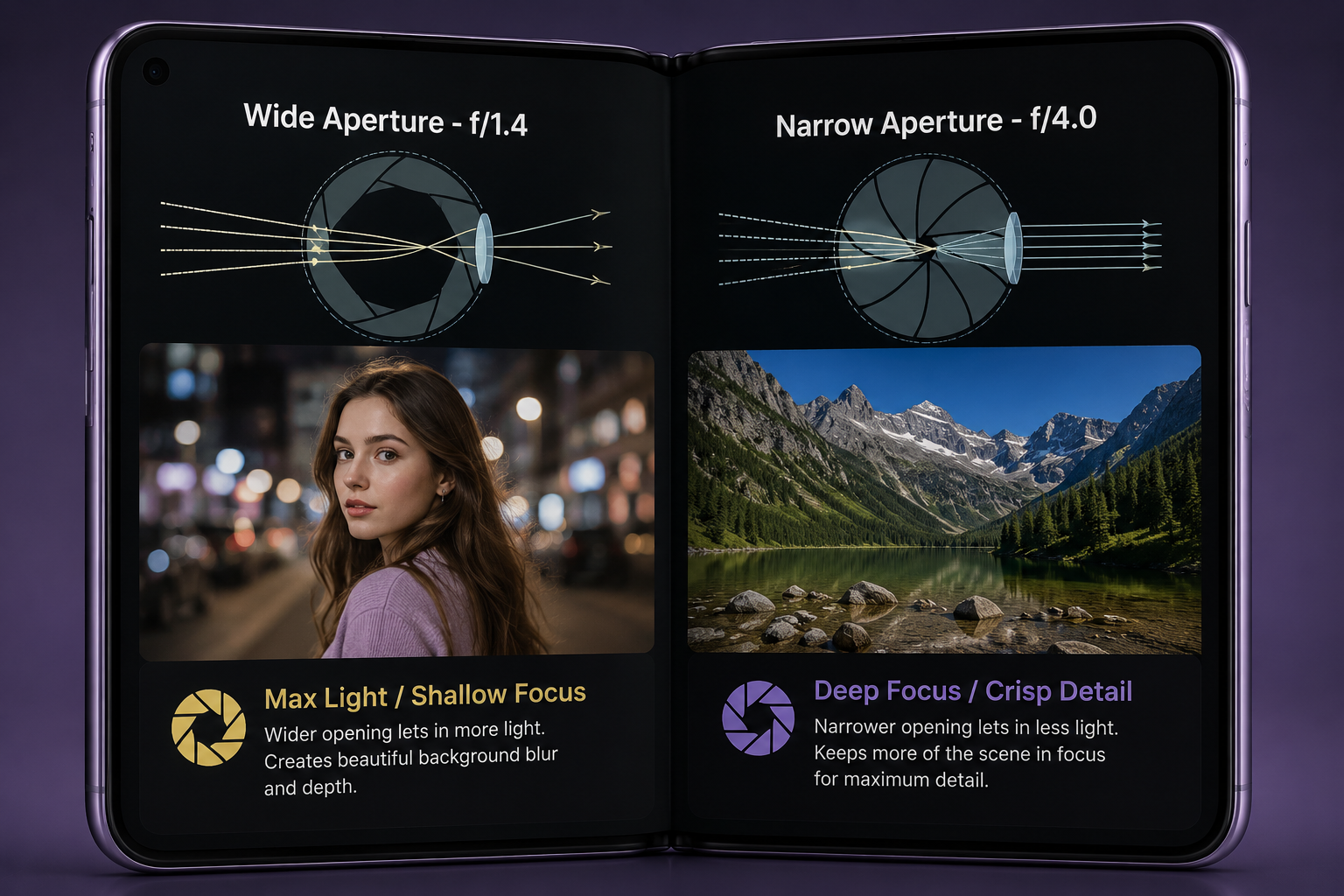
Conversely, due to the tight thickness tolerances of the folding frame, the foldable iPhone Ultra misses out on these massive mechanical lenses and the standard telephoto prism. It relies instead on a high-end dual 48MP layout, ensuring that the traditional Pro Max remains the definitive choice for dedicated focal length photographers.
Global Launch Pricing & Availability Outlook
Apple’s premier launch presentation is tipped for September 8, 2026, with official carrier pre-orders opening worldwide shortly thereafter. Given the heavy costs associated with 2nm silicon design and complex hinge production, the luxury models carry matching price tags.
The foldable iPhone Ultra will land firmly at the top of the luxury consumer market, starting at $2,000 to $2,500 for the baseline configurations, and stretching up to $3,000 for top-tier 2TB models. For the Indian market, once local import taxes and custom duties are applied, pricing is projected to comfortably exceed Rs 2,00,000, positioning it as one of the most elite consumer devices in mobile history.
Concurrently, the standard iPhone 18 Pro will face its own component-related price adjustment. Due to memory component pinches, the entry point is expected to step up to $1,399 (estimated around Rs 1,34,900 in India), solidifying Apple’s strategic shift toward premium, ultra-high-margin hardware options.
Disclaimer: The information presented in this article is based on ongoing tech industry rumors, leaked supply chain reports, and preliminary insider projections (including reports from sources like Nikkei Asia). Apple Inc. has not officially confirmed the existence, production targets, specifications, pricing, or launch dates of the “iPhone Ultra” or the iPhone 18 Pro series. Final product names, hardware details, features, and pricing are subject to change prior to any official announcement by the manufacturer.