
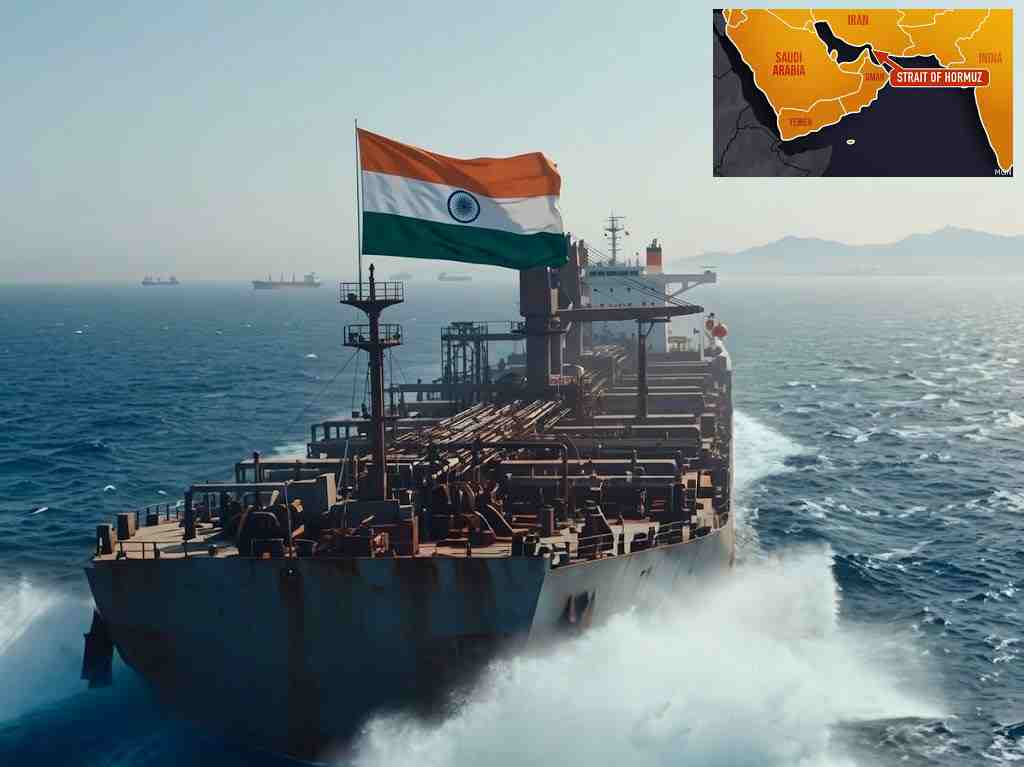
New Delhi, March 14, 2026 —Strategic Shield:Iran Guarantees Safe Passage for Indian Vessels Through the Strait of Hormuz In a major diplomatic breakthrough that promises to stabilize energy markets and secure India’s maritime interests, Iran has officially signaled that Indian merchant vessels will be granted “safe passage” through the Strait of Hormuz. The announcement comes at a time of peak volatility in the Persian Gulf, where escalating regional conflicts have threatened to choke the world’s most vital energy artery.
The assurance was delivered by Iran’s Ambassador to India, Mohammad Fathali, who underscored the “unbreakable bond” and “common faith” shared between the two nations. His comments, delivered with a sense of urgency and confidence, suggest that New Delhi and Tehran have reached a high-level understanding to insulate Indian trade from the broader turbulence in West Asia.
A Vital Corridor Under Pressure
Strategic Shield: Iran Guarantees Safe Passage for Indian Vessels Through the Strait of Hormuz : The Strait of Hormuz is a narrow waterway between the Persian Gulf and the Gulf of Oman. It is the only sea passage from the Persian Gulf to the open ocean and is one of the world’s most strategically important choke points.
Approximately one-fifth of the world’s total oil consumption passes through this strait daily. For India, the stakes are even higher. Over 60% of India’s crude oil imports and a massive portion of its Liquefied Natural Gas (LNG) supplies transit through this corridor. Any prolonged disruption would not only spike fuel prices at Indian petrol pumps but could also lead to a severe industrial slowdown.
“India is Our Friend”: The Envoy’s Bold Promise
Strategic Shield: Iran Guarantees Safe Passage for Indian Vessels Through the Strait of Hormuz : Ambassador Fathali’s interaction with the press was marked by an unusually direct and optimistic tone. When pressed by reporters on whether India could navigate these treacherous waters without fear of seizure or collateral damage, his response was immediate.
“Yes, because India is our friend. You will see it within two or three hours,” Fathali stated, implying that operational directives had already been issued to the maritime forces in the region.
When asked to clarify the timeline of this “safe passage” status, he repeated his confidence: “Yes, yes, you can see that in the future. I think that after two or three hours.” This suggests that the diplomatic machinery has been working overtime behind the scenes to finalize protocols for Indian-flagged vessels.
The Pillars of Indo-Iranian Ties
The Ambassador’s remarks go beyond mere maritime logistics; they reflect a deep-seated strategic partnership that has survived decades of shifting global alignments. Fathali highlighted three core pillars that define the current relationship:
- Common Regional Interests: Both nations seek a stable West Asia and secure trade routes to Central Asia via the Chabahar Port.
- Shared Faith and History: The Envoy referred to the “common faith” and longstanding cultural ties that act as a buffer during geopolitical crises.
- Mutual Support: Fathali specifically acknowledged India’s role in providing humanitarian and economic assistance during challenging periods, stating, “The government of India in this situation, after the war, helped us in different fields.”
Impact on Global Energy Markets
The global shipping community and energy analysts have been watching the Strait of Hormuz with bated breath. Recent skirmishes and “shadow wars” in the region had forced many shipping firms to re-route vessels around the Cape of Good Hope, significantly increasing freight costs and delivery times.
By granting India safe passage, Iran is effectively creating a “neutral lane” for one of the world’s largest energy consumers. This move could potentially:
- Lower Insurance Premiums: War-risk insurance for Indian ships is expected to stabilize, reducing the overall cost of landed crude.
- Secure Supply Chains: Indian refineries can maintain their production schedules without the fear of sudden supply shocks.
- Influence Other Nations: This bilateral agreement may serve as a template for other “neutral” powers looking to secure their energy interests in the Gulf.
Geopolitical Implications: The “Chabahar Factor”
Analysts believe that this safe passage guarantee is closely linked to India’s continued investment in the Chabahar Port. Unlike other regional ports, Chabahar is a cornerstone of India’s “Connect Central Asia” policy, bypassing Pakistan. Iran views India’s presence in Chabahar as a strategic balance against other regional players, further incentivizing Tehran to ensure that Indian trade remains unhindered.
Domestic Reaction in India
In New Delhi, the Ministry of External Affairs (MEA) has welcomed the positive signals from the Iranian side, though officials maintain a cautious watch. The Indian Navy’s ‘Operation Sankalp’—an initiative where Indian warships escort merchant vessels in the Gulf region—is likely to continue, but the Iranian assurance adds a critical layer of diplomatic security that military escorts alone cannot provide.
The Road Ahead
As the world waits for the “two or three hours” mentioned by Fathali to manifest into long-term maritime policy, the message is clear: India’s “strategic autonomy” is paying dividends. By maintaining a balanced relationship with both Iran and its rivals, India has secured a unique position that allows its economy to keep moving even as regional tensions boil over.
The Strait of Hormuz remains a “key global energy corridor,” but for India, it is now a corridor paved with the friendship of a long-standing ally.
Summary Table: The Importance of the Strait of Hormuz
| Metric | Statistic/Detail |
| Global Oil Traffic | ~21 million barrels per day |
| India’s Dependency | >60% of total crude imports |
| Width at Narrowest Point | 33 kilometers (21 miles) |
| Main Commodities | Crude Oil, LNG, Petroleum Products |
| Indian Security Initiative | Operation Sankalp |