
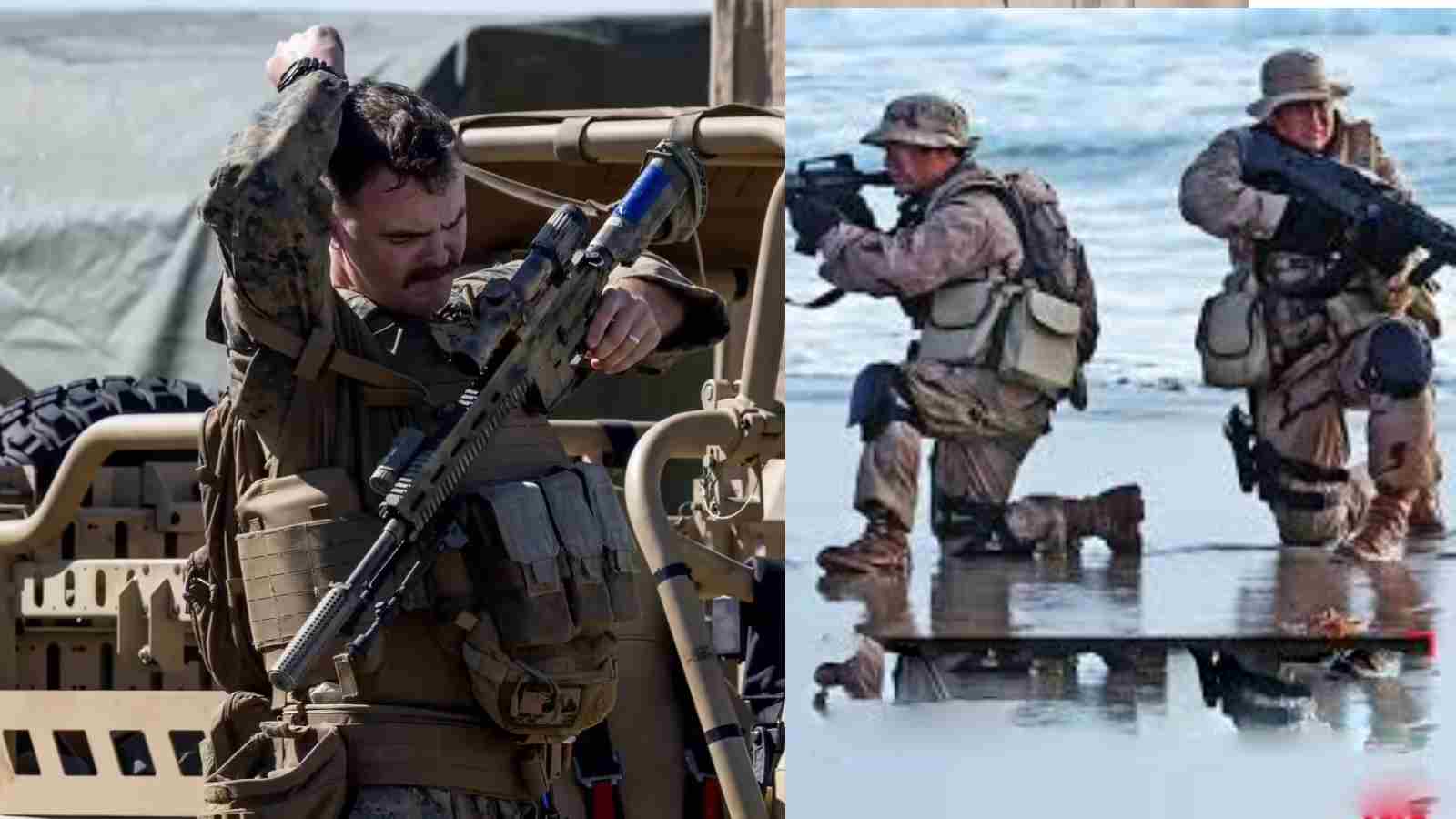
Israle-US-Iran War: The drums of war in West Asia have taken on a deeper, more resonant tone this weekend. According to explosive reports from the Washington Post and other major U.S. media outlets on Saturday, March 28, the Pentagon has finalized advanced plans for ground operations within Iranian territory.
While the Trump administration continues to send mixed signals—alternating between threats of “unleashing hell” and claims of a “15-point peace plan”—the arrival of thousands of U.S. Marines and soldiers in the region suggests that the military is preparing for a “dangerous new phase” of a conflict that began exactly one month ago.
The Nature of the Mission: Raids, Not Invasion
Israle-US-Iran War: Pentagon Readies Ground Raid Plans for Iran as Diplomacy Falters Sources within the Department of Defense emphasize that the current planning does not envision a 2003-style full-scale invasion or long-term occupation of the Iranian mainland. Instead, the strategy focuses on targeted, high-intensity raids designed to dismantle specific Iranian capabilities that airstrikes alone have failed to neutralize.
Key Targets: Kharg Island and the Strait of Hormuz
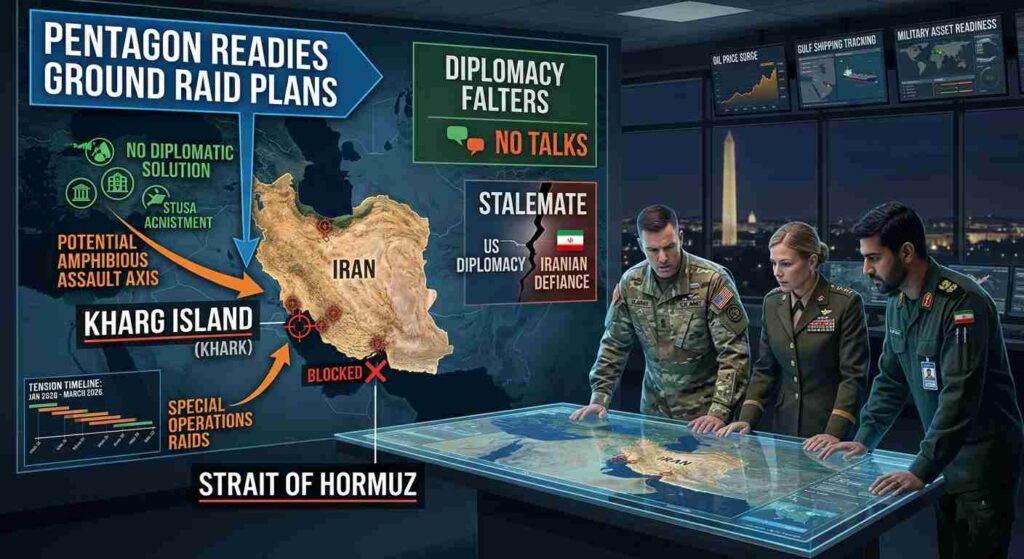
Military officials have identified two critical geographic priorities for these potential ground actions:
Kharg Island: As Iran’s “crown jewel” for oil exports, handling nearly 90% of its crude, the island is seen as the ultimate economic lever. While U.S. airstrikes on March 13 reportedly “obliterated” military infrastructure there, the Pentagon is now weighing a physical seizure of the island to ensure the complete cessation of Iranian oil revenue and to use it as a bargaining chip.
The Strait of Hormuz: With the vital waterway currently “closed to enemies” by Tehran, conventional infantry and Special Operations Forces (SOF) are being wargamed for missions to clear coastal missile batteries and drone launch sites that continue to threaten global energy shipping.
A House Divided: The White House vs. The State Department
The reporting highlights a significant rift within the U.S. leadership regarding the necessity of “boots on the ground.”
On Friday, Secretary of State Marco Rubio struck a confident, almost dismissive tone while meeting with G7 counterparts in France. Rubio insisted that the United States “can achieve all of our objectives without ground troops,” predicting the war would conclude in “weeks, not months.” He framed the current troop buildup—including the arrival of the USS Tripoli and the 31st Marine Expeditionary Unit—as a move to provide President Trump with “maximum optionality” rather than a definitive roadmap for escalation.
However, the Washington Post report cites unnamed officials who claim the planning is far more “advanced” than the State Department suggests. “This is not last-minute planning,” one official noted. The Pentagon’s move to prepare for a “weeks-long” ground campaign indicates a lack of confidence that airstrikes and diplomacy will reopen the Strait of Hormuz by the President’s April 6 deadline.
The Risks: A “Trap” of America’s Own Making?
Military analysts and regional experts are sounding the alarm over the inherent risks of putting U.S. personnel on Iranian soil.
The “Porcupine” Defense: Iran’s Islamic Revolutionary Guard Corps (IRGC) has spent the last month fortifying its coastlines. Reports suggest the deployment of MANPADS (shoulder-fired missiles), anti-personnel mines, and “suicide” FPV drones specifically designed to counter amphibious landings.
The Attrition Factor: Even if U.S. forces successfully seize Kharg Island, they would remain within range of Iranian mainland artillery and short-range ballistic missiles. Analysts from the Institute for the Study of War (ISW) warn that such an outpost could become a “magnet” for Iranian attacks, leading to a steady stream of American casualties that would be politically disastrous for the Trump administration.
Global Economic Fallout: Any ground battle for oil infrastructure is likely to send global energy prices into a tailspin. Already, the conflict has caused the largest disruption to energy supplies in history, fueling inflation fears across the G7.
Timeline of Escalation: One Month of War
To understand the gravity of the Pentagon’s current posture, one must look at the rapid-fire events of the past 30 days:
| Date | Event | Impact |
| Feb 28 | Operation “Epic Fury” begins; Airstrikes kill Supreme Leader Ali Khamenei. | Immediate collapse of regional stability. |
| Mar 13 | Heavy U.S. bombing of Kharg Island. | Oil prices spike; Iran vows “heavy price.” |
| Mar 26 | Israel strikes Tehran; Iran shuts Strait of Hormuz to “enemies.” | Global shipping effectively halted in the Gulf. |
| Mar 27 | Iranian-aligned Houthis launch first attacks on Israel. | Conflict expands to a multi-front regional war. |
| Mar 28 | Reports emerge of Pentagon plans for ground raids. | U.S. forces reach 15,000+ in the immediate theater. |
The Road Ahead: Diplomacy or Deployment?
As of Sunday morning, President Donald Trump has not yet given the final order to deploy ground forces into Iran. The White House maintains that “all options are on the table,” but the window for a non-kinetic solution is closing.
Tehran has publicly rejected the U.S. “15-point plan,” with Foreign Minister Abbas Araghchi stating that negotiating while under fire is “an admission of defeat.” Meanwhile, the IRGC has begun recruiting volunteers as young as 12 for “armed patrols,” signaling that Iran is preparing for a “holy defense” against any foreign incursion.
The Pentagon’s planning suggests they are preparing for the worst-case scenario: a situation where the “weeks, not months” timeline promised by Secretary Rubio can only be met through the direct application of American ground power.
Whether this is a high-stakes bluff to force Iran back to the negotiating table or the blueprint for the largest ground engagement in the region in over two decades remains to be seen. But for the thousands of Marines currently stationed in the Persian Gulf, the “optionality” described by Washington is becoming a very physical, very dangerous reality.