
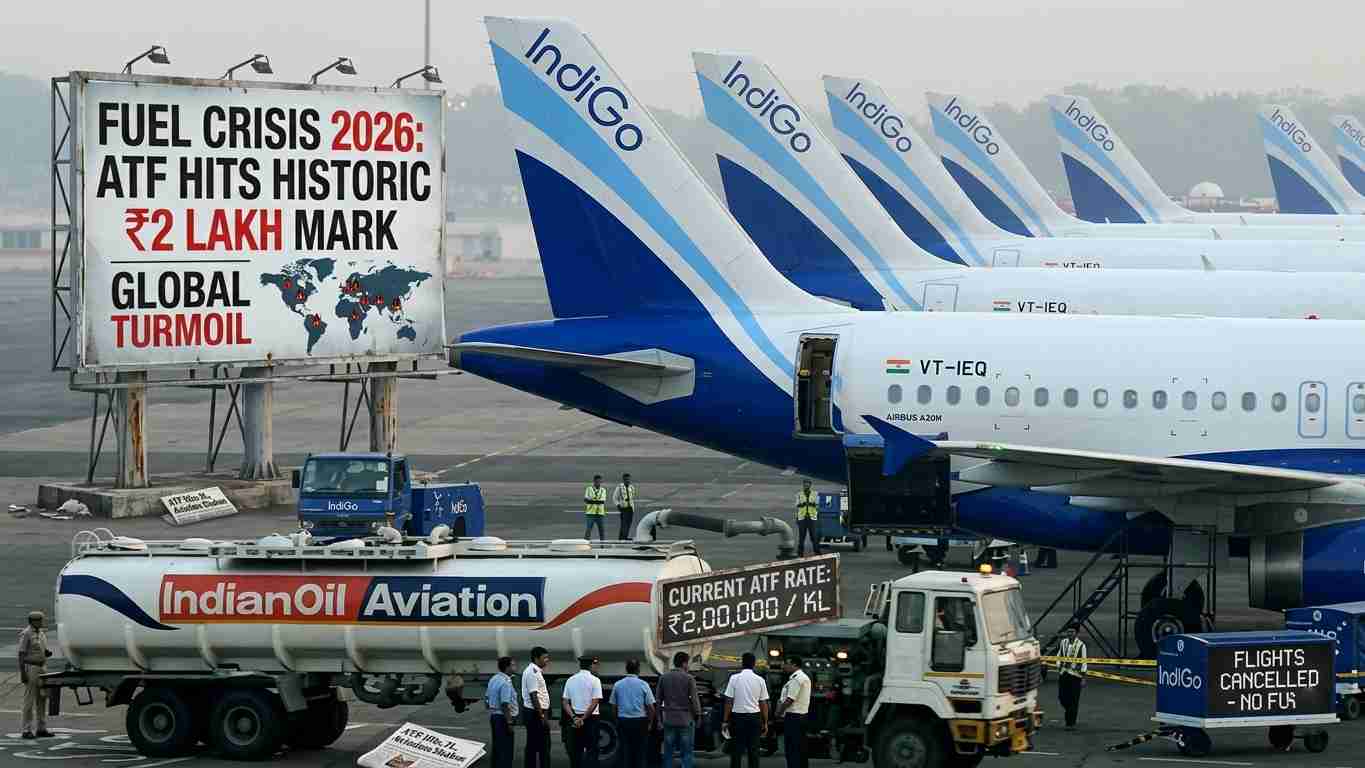
LPG and fuel crisis 2026: While April 1st is usually associated with lighthearted pranks, there was nothing funny about the notifications issued by India’s State-owned Oil Marketing Companies (OMCs) this morning. In a historic and staggering move, the Indian energy sector faced a “Black Wednesday” as fuel prices underwent a massive upward revision.
Driven by the intensifying conflict in West Asia and critical disruptions in key maritime corridors, the price of Aviation Turbine Fuel (ATF) breached the psychological and economic barrier of ₹2 lakh per kilolitre for the first time in history. Simultaneously, the hospitality and food sectors were dealt a heavy blow as commercial LPG rates saw their sharpest single-day spike in recent memory. This blog dives deep into the numbers, the geopolitical triggers, and the “trickle-down” impact on the average Indian citizen.
The Sky-High Surge: Understanding the ATF Record
LPG and fuel crisis 2026: ATF Hits Historic ₹2 Lakh Mark Amid Global Turmoil, The aviation sector, which was just finding its wings after years of global supply chain issues, has been grounded by a brutal price hike.
The ₹2.07 Lakh Milestone
Early this morning, Indian Oil Corporation, Bharat Petroleum, and Hindustan Petroleum announced that jet fuel prices in Delhi had more than doubled. The rate surged from approximately ₹96,638.14 per kl to a record ₹2,07,341.22 per kilolitre.
Why It Matters
To put this into perspective, we must look at the 2022 energy crisis triggered by the Russia-Ukraine war. At that time, prices peaked at around ₹1.1 lakh per kl. The 2026 hike doesn’t just break that record; it nearly doubles it. For airlines, where fuel typically accounts for 40% of operational costs, this is not just a hike—it is a threat to the industry’s survival.
The Government Intervention (The Rollback)
Recognizing that a 100% hike would lead to the immediate grounding of fleets, the Oil Ministry stepped in within hours. A “domestic revision” was issued, bringing the rate for local airlines down to ₹1,04,927 per kl. While this provides temporary relief, it is still a “staggered” increase that leaves prices at historic highs.
The Kitchen Crisis:Commercial LPG Reaches a Boiling Point
While the headlines are dominated by jet fuel, the real impact on the urban middle class will likely come from the kitchen—specifically, the commercial kitchen.
Five Hikes in Four Months
The price of a 19-kg commercial LPG cylinder—used extensively by hotels, restaurants, and catering services—was raised by ₹195.50 today. This brings the current price in Delhi to ₹2,078.50, up from ₹1,768.50 just a month ago.
Timeline of a Crisis:
January 1, 2026: First major hike of the year.
March 1, 2026: Prices stabilize briefly.
April 1, 2026: A ₹195.50 jump, marking the 5th hike this year.
Total Increase since March 1: Over ₹300.
Small businesses, already dealing with high food inflation, now face a choice: absorb the cost and risk bankruptcy, or pass it on to the consumer through “menu inflation.”
Premium Petrol and the Luxury Performance Gap
High-end vehicle owners were not spared either. Indian Oil Corporation Limited (IOCL) raised the price of its premium 100-octane petrol (XP100) to ₹160 per litre in Delhi, up from ₹149.
Similarly, Xtra Green premium diesel now costs ₹92.99 per litre. These fuels, meant for luxury cars and superbikes, act as a bellwether for the broader oil market. When premium prices rise this sharply, regular fuel prices usually follow unless there is significant government intervention.
The Geopolitical Catalyst: Why Is This Happening?
The root of this “Energy Explosion” lies thousands of miles away in West Asia. The widening regional conflict has moved from a localized skirmish to a full-scale threat to global energy security.
1. The Strait of Hormuz Crisis
The oil ministry explicitly cited the Strait of Hormuz as a primary factor. As one of the world’s most critical “choke points,” any threat to shipping in this narrow passage sends insurance premiums sky-high. Ships are being forced to take longer, more expensive routes, adding thousands of dollars in freight costs to every barrel of oil imported into India.
2. Supply Chain Disruptions
With refineries in the Middle East operating under “emergency protocols,” the global supply of refined products like ATF and LPG has tightened. India, which imports over 80% of its crude requirements, is uniquely vulnerable to these price shocks.
The Balancing Act: The Indian Government’s Strategy
How has the government managed to keep domestic cooking gas (14.2 kg) and regular petrol prices relatively stable amidst this chaos?
Excise Duty Buffers: On March 27, the government cut excise duty on regular petrol and diesel by ₹10 per litre. This move effectively allowed oil companies to absorb the international price hike without raising prices at the common man’s pump.
The “Staggered” Policy: By doubling ATF prices and then rolling them back for domestic carriers, the government is essentially “testing the ceiling.” They are attempting to shield the core economy (commuters and domestic households) while allowing prices to rise in “premium” sectors (aviation and luxury fuel).
The Domestic Impact: What This Means for You
| Fuel Category | New Status | Expected Outcome |
| Domestic LPG | Unchanged (₹60 hike in March) | Safe for now, but high pressure on subsidies. |
| Commercial LPG | Up by ₹195.50 | Expect a 5-10% increase in restaurant bills. |
| Aviation Fuel | Record Highs | Summer vacation airfares could spike by 20%. |
| Premium Petrol | ₹160/Litre | Rise in transport costs for high-end logistics. |
1. The Cost of Dining Out
With a ₹300 total hike in commercial gas over the last 30 days, your local “thali” or cafe coffee is about to get more expensive. Restaurants are likely to introduce “service surcharges” or simply raise prices to survive.
2. The Summer Travel Squeeze
April marks the beginning of the summer holiday planning season. With ATF prices at historic highs, airlines will undoubtedly reintroduce “Fuel Surcharges.” If you haven’t booked your tickets yet, expect to pay a significant premium.
3. General Inflation
While regular diesel is shielded by excise cuts, the general sentiment of an energy crisis usually leads to “speculative inflation.” Transport unions often raise freight rates in anticipation of future hikes, which eventually pushes up the price of milk, vegetables, and grain.
Expert Predictions: The Road to $150 Crude
Market analysts are painting a grim picture for the remainder of the 2026-27 fiscal year. If the conflict in West Asia does not see a diplomatic de-escalation, global crude oil could test the $150 per barrel mark.
“We are entering an era of Energy Realism,” says a leading Mumbai-based analyst. “The ‘cheap fuel’ era is over. This crisis will likely accelerate India’s shift toward Electric Vehicles (EVs) and Green Hydrogen as a matter of national security rather than just environmental policy.”
Conclusion: Navigating the New Normal
The fuel revisions of April 1, 2026, serve as a wake-up call for the Indian economy. While the government has successfully created a “buffer” for the common man through excise cuts and domestic rollbacks, the pressure on commercial sectors is unsustainable.
As we move further into the year, the “cost of living” will dominate the national conversation. For now, the Indian consumer must brace for a summer of high costs, limited travel, and a growing need for energy efficiency. The resilience of the Indian economy is once again being tested by global forces—and the results will depend on how long the “buffer” can last before the international surge becomes impossible to contain.