
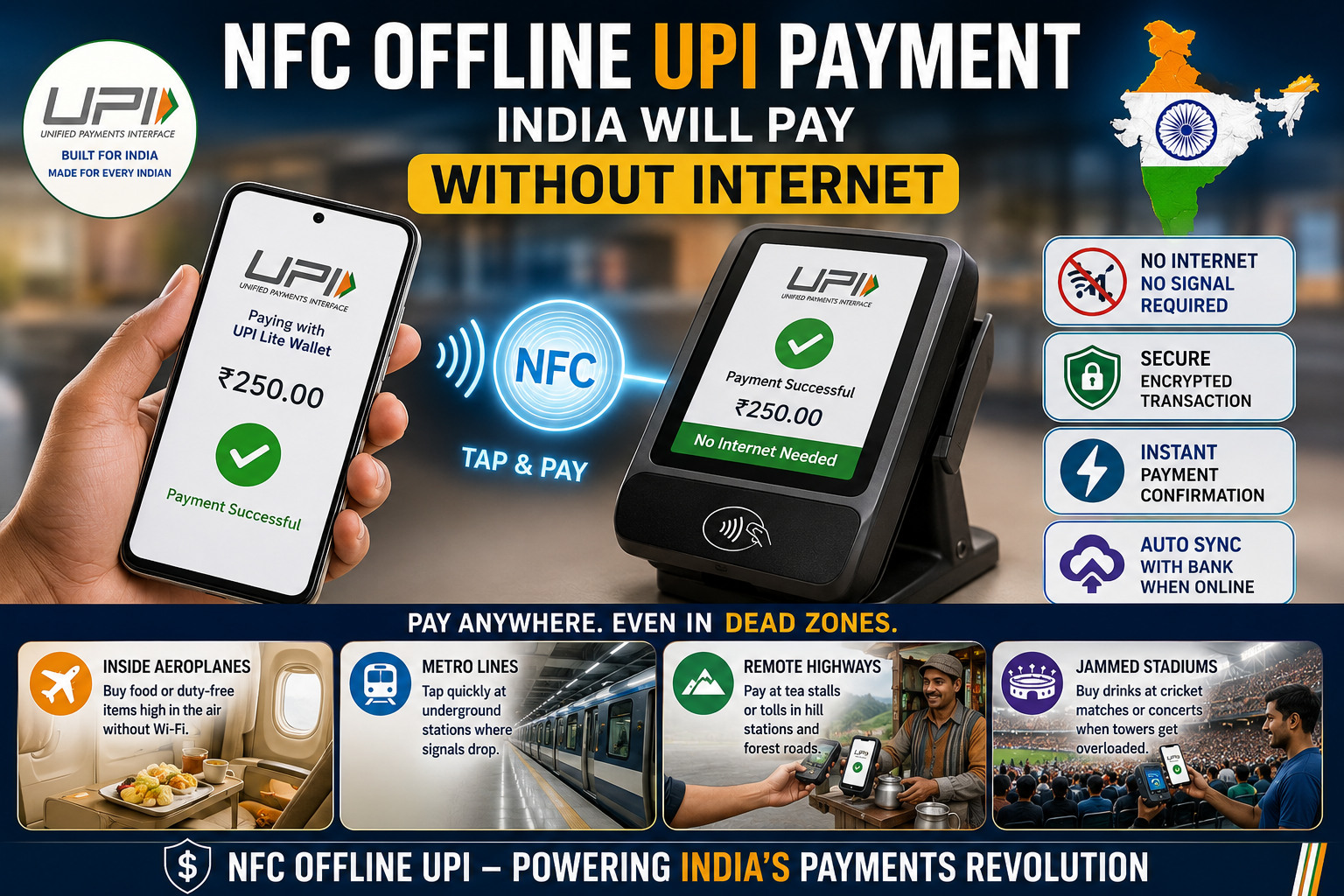
NFC offline UPI payment is coming to change how we spend money every day, even when our mobile phones have zero network bars. Imagine being on a flight high in the sky or deep inside an underground metro tunnel. Soon, you will not have to hunt for Wi-Fi or wait for network signals to clear your shopping bill.
A new system being prepared by the National Payments Corporation of India (NPCI) will allow users to tap their phones on retail store terminals to complete payments completely offline. Using Near-Field Communication (NFC) technology, this update aims to solve the annoying problem of failed payments due to bad mobile internet.
Here is a simple, clear guide on how this feature works, how it compares with older methods, and what it means for everyday shoppers in India.
1. How This Offline Payment System Actually Works
The idea behind this feature is simple: your phone talks directly to the payment machine at the shop using short-range radio waves, completely skipping the internet.
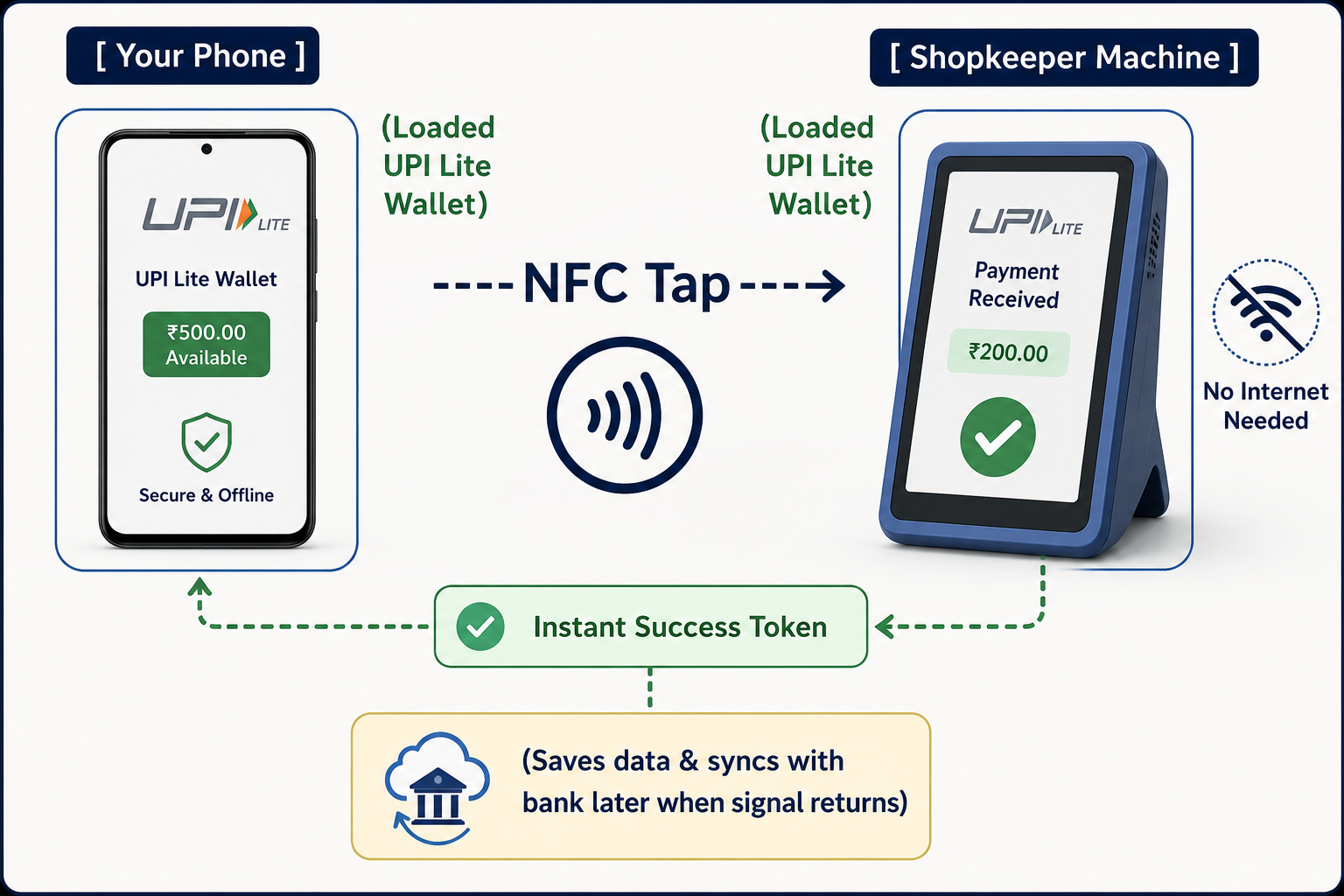
Here is the step-by-step process:
Step 1: Load your wallet online
While sitting at home or anywhere with active internet, you put money into your UPI Lite wallet.
Step 2: Tap your phone at the store
At the billing counter, you just bring your phone close to the shopkeeper’s payment terminal.
Step 3: Quick approval without PIN
Since the payment comes out of your pre-loaded balance, you do not need to type in your UPI PIN. The payment completes in under two seconds.
Step 4: Machine saves the record
The store terminal records the payment securely inside its own memory. When the machine gets a network signal later in the day, it updates the bank servers automatically.
Bottom line: Neither your smartphone nor the store owner’s card machine needs to be online at the exact moment you tap and pay.
2. Limits and Rules You Should Know
To keep your money safe while keeping payments fast, NPCI and RBI have set clear financial limits for offline payments.
| Feature | New NFC Offline System | Existing UPI Lite X | Old *99# USSD Code |
| Max Limit Per Tap | Rs 2,000 | Rs 500 | Rs 5,000 |
| Needs Mobile Signal? | No Signal Needed | No Signal Needed | Needs 2G GSM Signal |
| Needs UPI PIN? | No PIN | No PIN | Yes, PIN Required |
| Main Use Place | Aeroplanes, Subways, Shops | Phone-to-Phone Transfers | Feature / Button Phones |
The Rs 2,000 transaction limit is a huge jump from older rules that stopped offline transactions at Rs 500. This makes it practical to buy meals, buy metro passes, or pay at toll plazas without waiting for network bars to appear.
3. How It Differs From Older Offline Payment Tricks
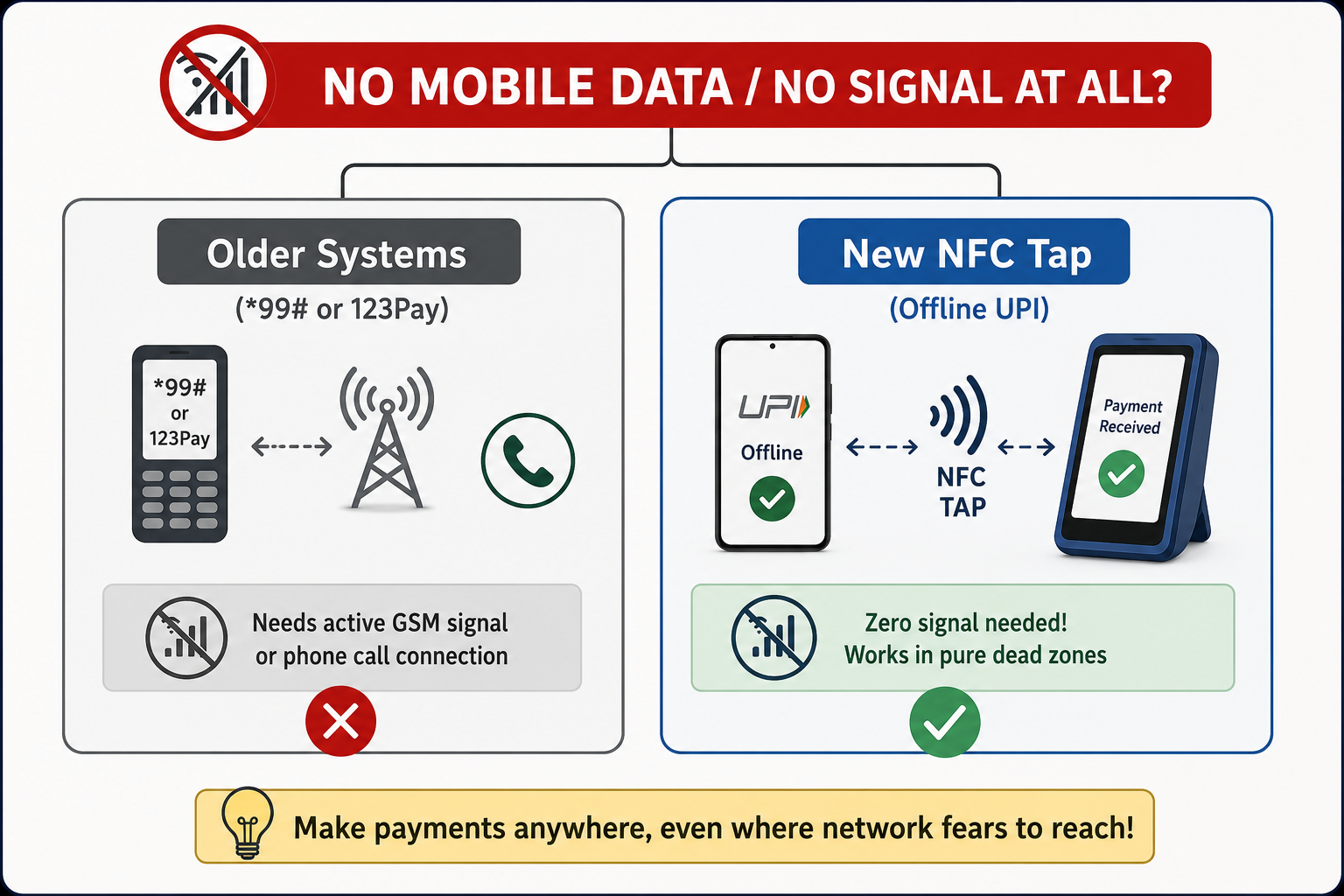
Offline digital payments are not brand new in India, but older systems had limitations that this new tap system eliminates completely.
The *99# USSD Method
How it works: You dial
*99#on any basic mobile phone to open an interactive text menu.The Catch: It does not need internet data, but it still needs a basic mobile network signal (2G bars). If you are inside an airplane or deep in a basement,
*99#will not work.
UPI 123Pay Voice Calls
How it works: You call a phone number and follow voice prompts to send money.
The Catch: You need a clear voice signal to make the phone call. Without cellular signal, it fails.
UPI Lite X
How it works: Released earlier, this let two phones tap each other or scan offline stickers.
The Catch: It was built mostly for phone-to-phone transfers. The new update focuses on standard card swipe machines (PoS terminals) used in everyday retail shops.
4. Where Will This Help You the Most?
This new payment feature will solve daily headaches in four main places:

5. What Needs to Happen Before You Can Use It?
Before this feature rolls out across every market near you, two major technical steps are taking place:
Machine Certification: NPCI is starting to test and approve payment machine makers so their hardware can store offline payment records safely.
App Updates: Popular apps like PhonePe, Google Pay, Paytm, and BHIM will add a quick button to turn on NFC payments and manage your wallet balance easily.
6. Is It Safe to Use Without a PIN?
Skipping the PIN might sound risky at first, but built-in safety rules protect your main bank balance:
Fixed Wallet Cap: A thief cannot touch your main bank account. They can only access whatever small balance you intentionally loaded into your UPI Lite wallet.
Bank Accountability: As per RBI guidelines, payment companies and banks take responsibility for machine glitches or system errors at the shopkeeper’s end.
Full Dispute Support: If a transaction goes wrong, you still have full rights to file a complaint through your bank or the RBI Ombudsman office.
7. The Road Ahead
India’s UPI system processes billions of payments every month. As digital money becomes our primary habit, making payments work without depending on phone signals is the most important upgrade yet.
By removing the need for internet at the counter, NFC offline UPI payment will stop payment delays, shorten long checkout lines, and make digital money work everywhere you go.
Common Questions (FAQs)
Do I need an NFC phone to use this feature?
Yes, your smartphone must have NFC hardware built into it. If your phone does not have NFC, you can still use options like *99# or UPI 123Pay.
What happens if I lose my phone?
Since small payments do not ask for a PIN, someone holding your unlocked phone could spend the balance stored inside your UPI Lite wallet. However, they cannot touch your primary bank account. Keeping a screen lock or fingerprint lock on your phone keeps your money safe.
Will I get an SMS text message immediately?
You will see an instant success screen inside your UPI app right after you tap. However, the official SMS alert from your bank will arrive a bit later, once your phone or the store machine gets back online.