
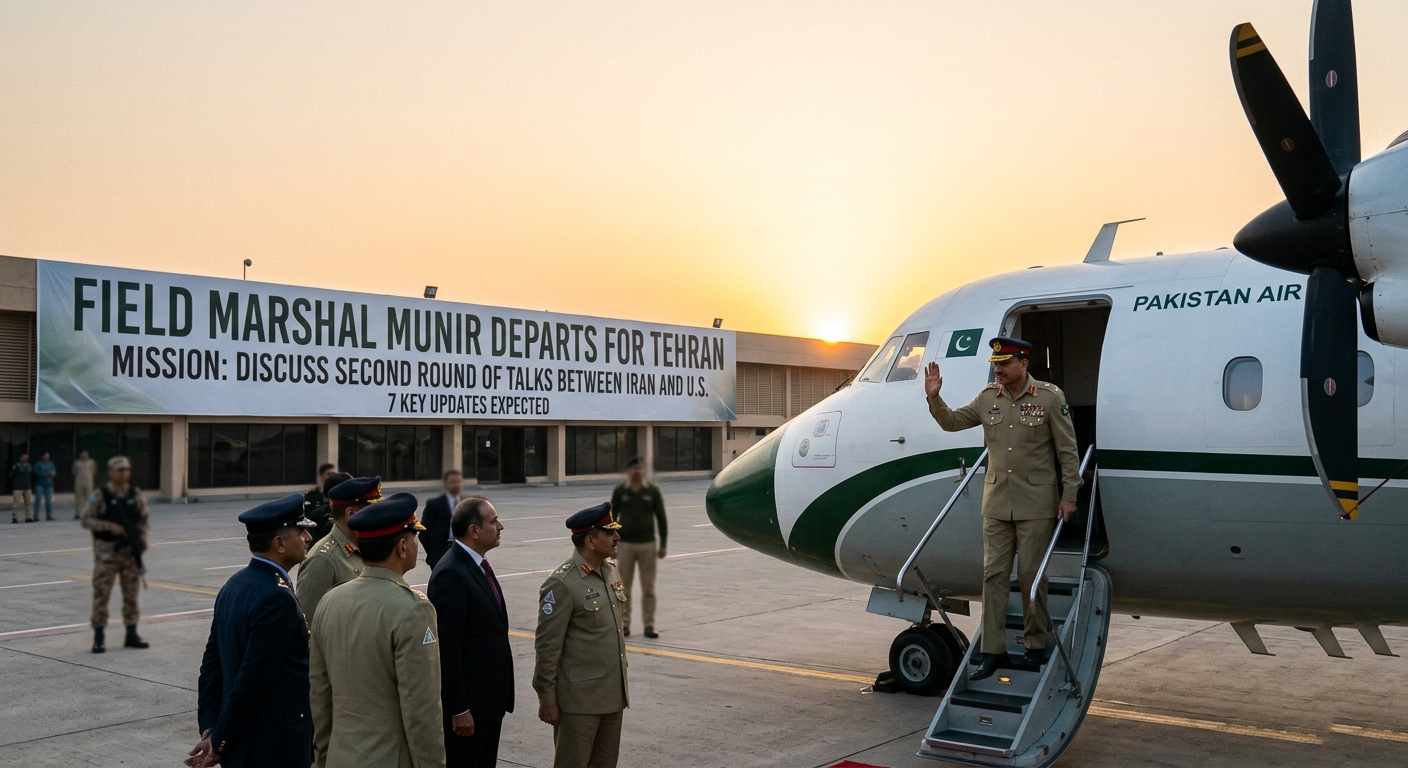
Second Round of US-Iran Talks Possible : The geopolitical landscape of South Asia and the Middle East is currently witnessing a high-stakes diplomatic marathon. On Wednesday, April 15, 2026, the global spotlight shifted toward Tehran as Field Marshal Asim Munir arrived in the Iranian capital, carrying a message that could either de-escalate a burgeoning maritime conflict or solidify a long-standing rivalry. This visit follows a weekend of intensive but inconclusive negotiations in Islamabad, marking a pivotal moment in the “Trumpian grand bargain” strategy being deployed by the United States.
Key Takeaways for Readers:
Mediation: Pakistan is now the primary bridge between the U.S. and Iran.
The Deal: It’s a choice between nuclear status and economic prosperity.
The Conflict: The naval blockade remains the most volatile element of this standoff.
Second Round of US-Iran Talks Possible -The Diplomatic Shuttle: Why Islamabad is the New Neutral Ground
For decades, neutral intermediaries like Oman or Qatar have facilitated back-channel communications between Washington and Tehran. However, 2026 has seen a shift. Pakistan has emerged as a central mediator, leveraging its unique position as a neighbor to Iran and a long-term strategic partner to the U.S.
The arrival of the Pakistani delegation in Tehran, received by Iranian Foreign Minister Abbas Araghchi, signifies that the “Islamabad Process” is far from over. Despite the lack of a “decisive outcome” during the initial meetings—where U.S. Vice-President J.D. Vance led the American side—the fact that messages are still being exchanged suggests that neither side is ready to walk away from the table just yet.
The “Grand Bargain”: Prosperity vs. Proliferation
The core of the current tension revolves around what Vice-President J.D. Vance describes as a “Trumpian grand bargain.” The proposal is characteristically bold: a complete dismantling of Iran’s nuclear program in exchange for total economic reintegration.
The U.S. Stance: President Donald Trump has maintained a rigid line—any deal must permanently bar Iran from nuclear capabilities. Vance’s rhetoric in Islamabad focused on the carrot rather than just the stick, promising to “make Iran thrive” if they forego their nuclear ambitions.
The Iranian Stance: Tehran, however, remains skeptical. Foreign Ministry spokesman Esmaeil Baqaei has labeled several U.S. demands as “unreasonable and unrealistic.” Iran continues to insist that its uranium enrichment is strictly for civilian energy and medical purposes, viewing the demand for a permanent ban as a violation of its national sovereignty.
The Naval Blockade: Pressure at the Strait of Hormuz
While diplomats talk in Islamabad and Tehran, the waters of the Persian Gulf tell a more aggressive story. The U.S. Central Command recently announced the “full implementation” of a naval blockade aimed at halting all maritime trade into and out of Iran.
Economic Warfare: The blockade is designed to maximize “maximum pressure,” cutting off the lifeblood of the Iranian economy to force concessions at the negotiating table.
The Reality on the Ground: Interestingly, maritime tracking data paints a complicated picture. Despite the heavy presence of the U.S. Navy, several vessels were spotted sailing from Iranian ports and successfully crossing the Strait of Hormuz on Tuesday.
The Risk of Escalation: The Strait of Hormuz remains the world’s most important oil transit chokepoint. Any miscalculation here could send global oil prices into a tailspin, complicating the very “peace talks” Trump is pushing.
Field Marshal Munir’s High-Stakes Mission
The inclusion of Field Marshal Asim Munir in this delegation is significant. As a high-ranking military figure with deep ties to the regional security apparatus, his presence suggests that the talks are moving beyond mere diplomatic pleasantries into hard security guarantees.
Sources indicate that Munir is likely to meet with Mojtaba Ali Khamenei, Iran’s new Supreme Leader. This meeting, if confirmed, would be a landmark event. Engaging directly with the highest level of Iranian leadership suggests that Pakistan is attempting to secure a “green light” for a second round of talks in Islamabad, potentially scheduled within the next 5 to 7 days.
The 3 Major Obstacles to a Second Round
For a second round of talks to be successful, three primary hurdles must be cleared:
The Nuclear Definition: The U.S. wants “zero enrichment,” while Iran wants “monitored civilian enrichment.” Finding a middle ground between these two definitions is the primary task of the Pakistani mediators.
The Blockade Lift: Tehran is unlikely to sign any agreement while a naval blockade is actively strangling its economy. They view the blockade as “negotiating with a gun to the head.”
Trust Deficit: Following the collapse of previous agreements, the Iranian leadership is wary of the longevity of any deal made with the current U.S. administration.
What Happens Next? The 7-Day Window
President Trump told the New York Post that a fresh round of dialogue was “imminent.” If Field Marshal Munir’s mission to Tehran is successful, we could see the delegations return to Islamabad by the end of next week.
The stakes could not be higher. A successful “Grand Bargain” would reshape the Middle East, potentially ending decades of sanctions and opening Iranian markets to the world. Conversely, a failure in these talks, combined with the ongoing naval blockade, could lead to a direct military confrontation in the Strait of Hormuz.
Frequently Asked Questions (FAQs)
Q1: Why is Pakistan mediating between the U.S. and Iran? Pakistan shares a border with Iran and has a long-standing military and economic relationship with the United States. Its unique position allows it to talk to both sides when direct communication fails.
Q2: What is the “Strait of Hormuz” issue? The Strait is a narrow waterway through which a significant portion of the world’s oil passes. Iran has often threatened to close it in response to sanctions, while the U.S. currently maintains a blockade there.
Q3: Who is Mojtaba Ali Khamenei? He is the new Supreme Leader of Iran, succeeding his father. His involvement in these talks indicates that the discussions have reached the highest levels of the Iranian government.
Q4: Will the talks lead to lower oil prices? If a deal is reached and the blockade is lifted, the influx of Iranian oil into the global market would likely lead to a decrease in prices. However, the current tension is keeping prices volatile.