
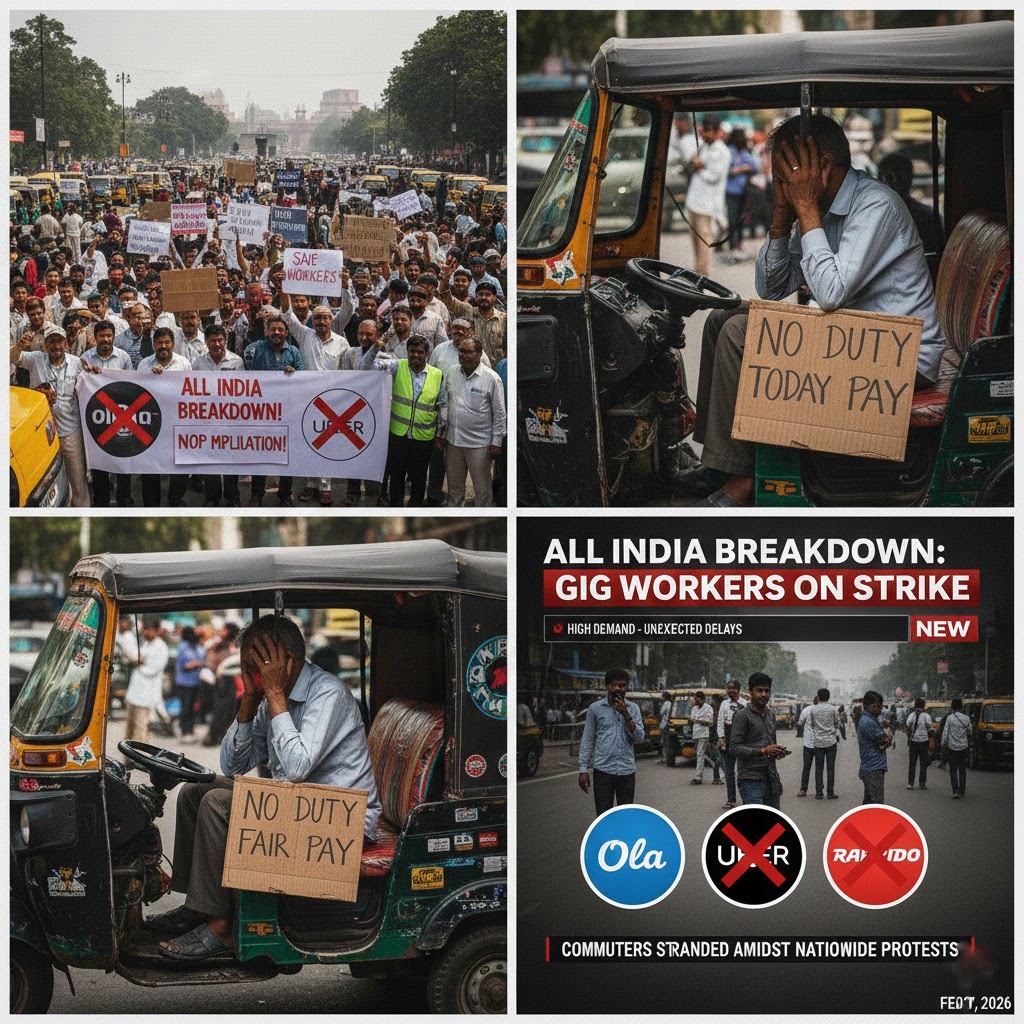
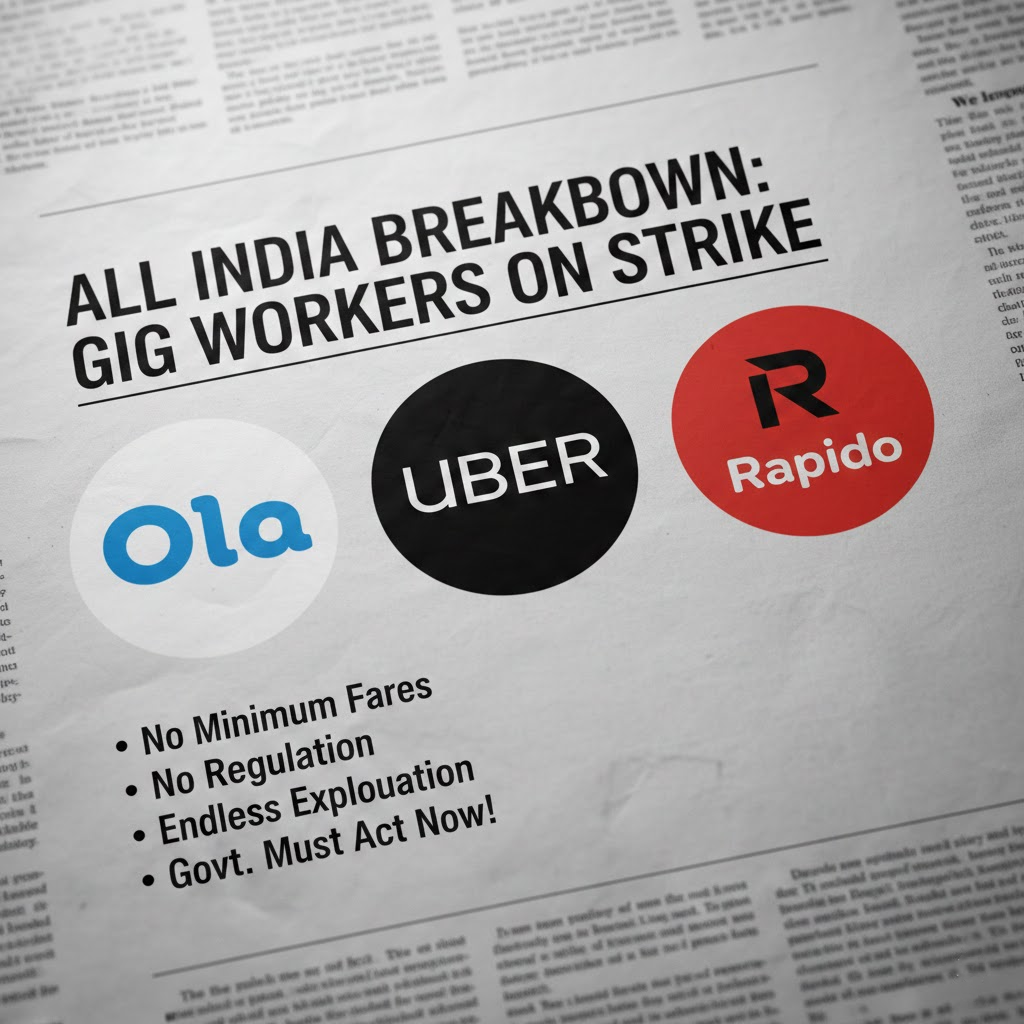
The ‘All India Breakdown’: Why Uber, Ola, and Rapido Drivers Are on Strike Today. Commuters across India woke up to a significant disruption in digital mobility today, Saturday, February 7, 2026. Thousands of drivers associated with major ride-hailing platforms, including Ola, Uber, Rapido, and Porter, have gone offline as part of a coordinated nationwide strike dubbed the “All India Breakdown.”
The strike, organized by the Telangana Gig and Platform Workers Union (TGPWU) and supported by various labor bodies like the Indian Federation of App-Based Transport Workers (IFAT), marks a boiling point for the millions of workers who power India’s gig economy. In a strongly worded letter to Union Road Transport Minister Nitin Gadkari, the unions have warned that millions of drivers are being “pushed into poverty” while aggregator platforms continue to post record profits.
Here are the three primary reasons why transport workers are off the roads today.
1. The Demand for Regulated Minimum Base Fares
The ‘All India Breakdown’: Why Uber, Ola, and Rapido Drivers Are on Strike Today. At the heart of today’s protest is the lack of a government-mandated price floor. Currently, platforms like Ola and Uber have the “unilateral” power to set fares. Drivers argue that these companies often slash prices to attract customers, leaving the workers to absorb the financial hit.
- The 2025 Guidelines: The unions are pointing to the Motor Vehicle Aggregator Guidelines, 2025, which were designed to introduce regulatory oversight.
- Arbitrary Pricing: Despite these guidelines, state and central governments have yet to “notify” a minimum base fare. Without this legal floor, drivers claim they are forced to work 12–14 hour shifts just to cover fuel and vehicle maintenance, often earning less than ₹15,000 per month—a figure cited as being below the urban poverty line in recent economic studies.
- Call for Consultation: The TGPWU has demanded that fares be finalized only after consultation with recognized worker unions, ensuring that the “per-kilometer” rate reflects current inflation and fuel costs.
2. Unfair Use of Private Vehicles for Commercial Transport
A major point of contention, particularly for the Maharashtra Kamgar Sabha and Delhi-based unions, is the proliferation of “illegal” bike taxis and private vehicles operating as commercial transport.
- The Problem: Many platforms allow private (white-plate) vehicles to ferry passengers and goods. Commercial drivers, who pay higher registration fees, taxes, and commercial insurance, find it impossible to compete with the lower overhead of private vehicle owners.
- The Demand: Unions are seeking a strict ban on the commercial use of non-transport vehicles or a mandatory conversion of such vehicles into the commercial category. They argue this is not just an issue of fair competition but also of safety, as passengers in private-vehicle taxis often lack the insurance protections guaranteed in commercial rides.
3. The Financial Burden of Mandatory “Panic Buttons”
While safety is a priority for both the government and the public, the implementation of safety features has become a financial nightmare for drivers.
- Device Chaos: In states like Maharashtra, drivers are protesting the “arbitrary” rules surrounding panic buttons. Reports indicate that while the Central Government approved 140 device providers, state authorities recently declared nearly 70% of those companies unauthorized.
- High Costs: As a result, thousands of cab drivers are being forced to rip out their existing equipment and spend approximately ₹12,000 to install new, “approved” devices. For a workforce already struggling with declining incentives and high commissions (which can reach up to 30–40% per ride), this extra expense has been described as “endless exploitation.”
A Growing Wave of Discontent
Today’s “All India Breakdown” is not an isolated event. It follows a similar strike by food delivery workers (Blinkit, Swiggy, Zepto) on December 31, 2025, which successfully pressured companies to reconsider “10-minute delivery” promises that put riders at risk.
The issue has also reached the highest levels of government. AAP MP Raghav Chadha recently raised these concerns in the Rajya Sabha, while a delegation of gig workers met with the Leader of Opposition, Rahul Gandhi, yesterday. They advocated for a statutory law—similar to the one recently enacted in Karnataka—to provide social security, health insurance, and accident cover to gig workers.
What Should Commuters Expect?
With drivers at Jantar Mantar in Delhi and across major hubs like Mumbai, Bengaluru, and Hyderabad participating, commuters should brace for:
- Significant Surge Pricing: Limited availability will likely trigger high multipliers on the few active cabs.
- Longer Wait Times: Many drivers are staying offline for at least six hours, while others are striking for the full day.
- Disrupted Deliveries: The strike also includes some delivery partners from Porter and quick-commerce apps.
As the government remains silent on the immediate notification of fares, the unions have warned that this “survival signal” is just the beginning of a broader movement for dignity and fair pay in the digital age.
Disclaimer: This information is based on various inputs from news agency.