

The Silent Striker in the cold, vast theater of modern warfare, the loudest explosions may soon be the ones we never hear. While the world has traditionally looked toward missiles and orbital bombs as the ultimate space-based threats, Beijing has just shifted the paradigm.
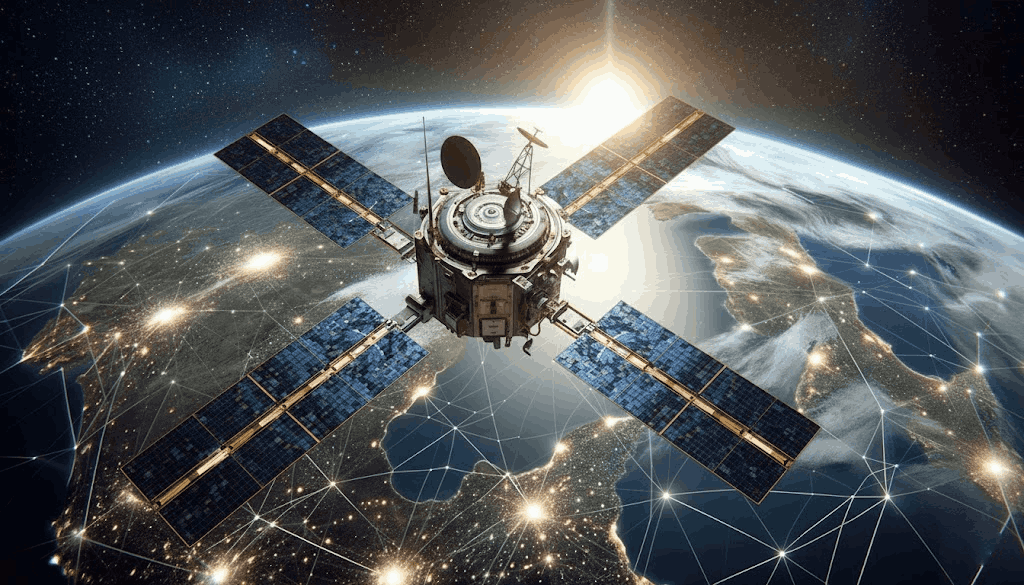
Chinese researchers have unveiled a groundbreaking high-power microwave (HPM) system, the TPG-1000C, designed to disable satellites not through physical destruction, but by frying their electronic “brains” with invisible bursts of energy. This development signals a major escalation in the race for space dominance, turning the orbital domain into a battlefield of silent, non-kinetic strikes.
The Silent Strike TPG-1000C: A Compact Giant
Developed at the state-linked Northwest Institute of Nuclear Technology (NINT) in Xi’an, the TPG-1000C is a marvel of miniaturization and raw power. On the surface, the device appears deceptively modest:
- Length: Approximately 4 meters
- Weight: Roughly 5 tons
- Power Output: A staggering 20 gigawatts
To put that into perspective, experts suggest that just one gigawatt is enough to disrupt the sensitive electronics of a satellite in low-Earth orbit (LEO). By generating 20 times that threshold, the TPG-1000C doesn’t just disrupt; it dominates.
Perhaps more significant than its raw power is its endurance. Older microwave weapons were often limited to firing for just a few seconds before overheating or exhausting their power supplies. The TPG-1000C, however, can maintain its output for nearly a full minute. This sustained pulse allows it to accumulate approximately 200,000 pulses with consistent performance, ensuring that no target within its range escapes the electromagnetic surge.
The Silent Striker “No-Debris” Strategy
The strategic brilliance—and terror—of a microwave weapon lies in its cleanliness. Traditional anti-satellite (ASAT) weapons, like the kinetic missiles tested by India, Russia, and China in the past, work by physically smashing into a target. While effective, these collisions create thousands of pieces of “space junk.”
In the crowded environment of LEO, this debris can trigger a Kessler Syndrome—a chain reaction where debris hits other satellites, creating more debris until the entire orbit becomes unusable for everyone. By using microwave energy, China can “soft-kill” a satellite, rendering it a useless hunk of metal while keeping it physically intact. This provides a level of plausible deniability and prevents a self-defeating debris cloud from threatening China’s own space assets.
Targeting the Constellations: The Starlink Factor
Beijing’s researchers have been remarkably transparent about their primary concern: large satellite constellations. Specifically, networks like Elon Musk’s Starlink have become a major security headache for the Chinese military.
Starlink’s resilience and ability to provide high-speed communication in conflict zones—most notably during the war in Ukraine—have proven that traditional jamming isn’t always enough. The TPG-1000C is being framed as a direct counter to this “Starlink threat.” Because it can be mounted on trucks, ships, or potentially even its own satellite platforms, it offers the PLA a flexible way to neutralize thousands of small satellites simultaneously.
“A small signing amount, adjustable against future work, is not charity, it’s dignity. When one of our own is going through a tough phase, the industry must remind him he’s not alone.” — Contextualizing the shift from kinetic to non-kinetic dignity in space defense.
A Global Arms Race in the Shadows
China isn’t the only player in this invisible war. The race to control the “high ground” of space is intensifying across the globe:
- The United States: Has been researching directed-energy weapons (DEWs) since the 1960s, focusing on both lasers and microwaves.
- Russia: Has explored space-based microwave systems to complement its electronic warfare capabilities.
- Germany & France: Recently increased investments in “active defense” capabilities to protect European navigation and communication assets.
Satellites are now the backbone of modern civilization. Everything from banking and GPS navigation to military command and control depends on them. This makes them an irresistible target in any scenario of global conflict.
The Future of Space Warfare
The TPG-1000C represents a pivot toward silent warfare. As space becomes more crowded and contested, the ability to “switch off” an enemy’s eyes and ears without firing a shot becomes the ultimate deterrent.
While the system is currently in the research and testing phase, its existence sends a clear message: the future of conflict will not always involve a visible explosion. It will be won by whoever can control the spectrum, fry the circuits, and leave the enemy drifting in the dark.