
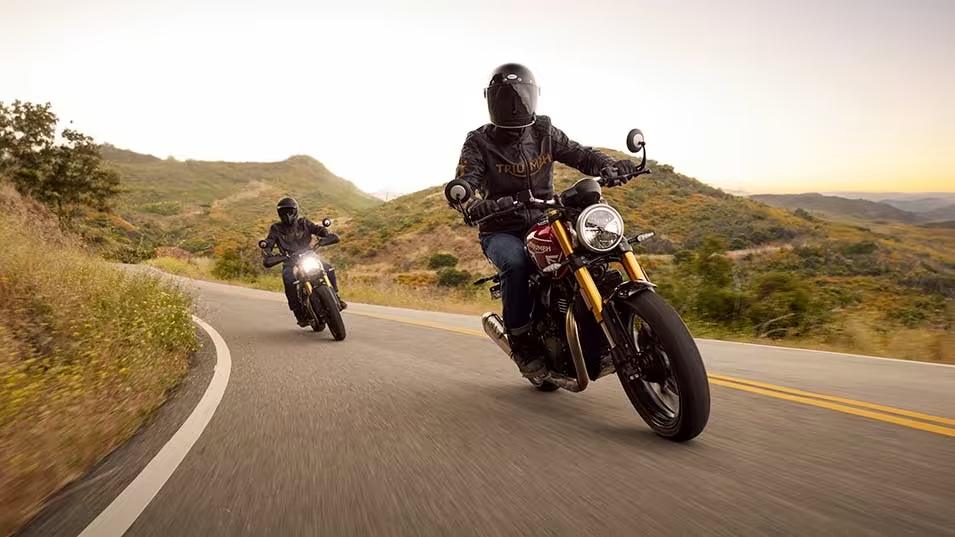
Triumph Tracker 400 Launched in India: The Indian mid-capacity motorcycle landscape has just witnessed a seismic shift. Today, Triumph Motorcycles, in strategic partnership with Bajaj Auto, officially launched the all-new Triumph Tracker 400 in India. Priced at ₹ 2,46,225 (ex-showroom, Delhi), this flat-track inspired machine isn’t just another addition to the “modern-classic” portfolio—it is a calculated engineering marvel designed to exploit India’s new tax laws and take a direct swing at the segment leader, Royal Enfield.
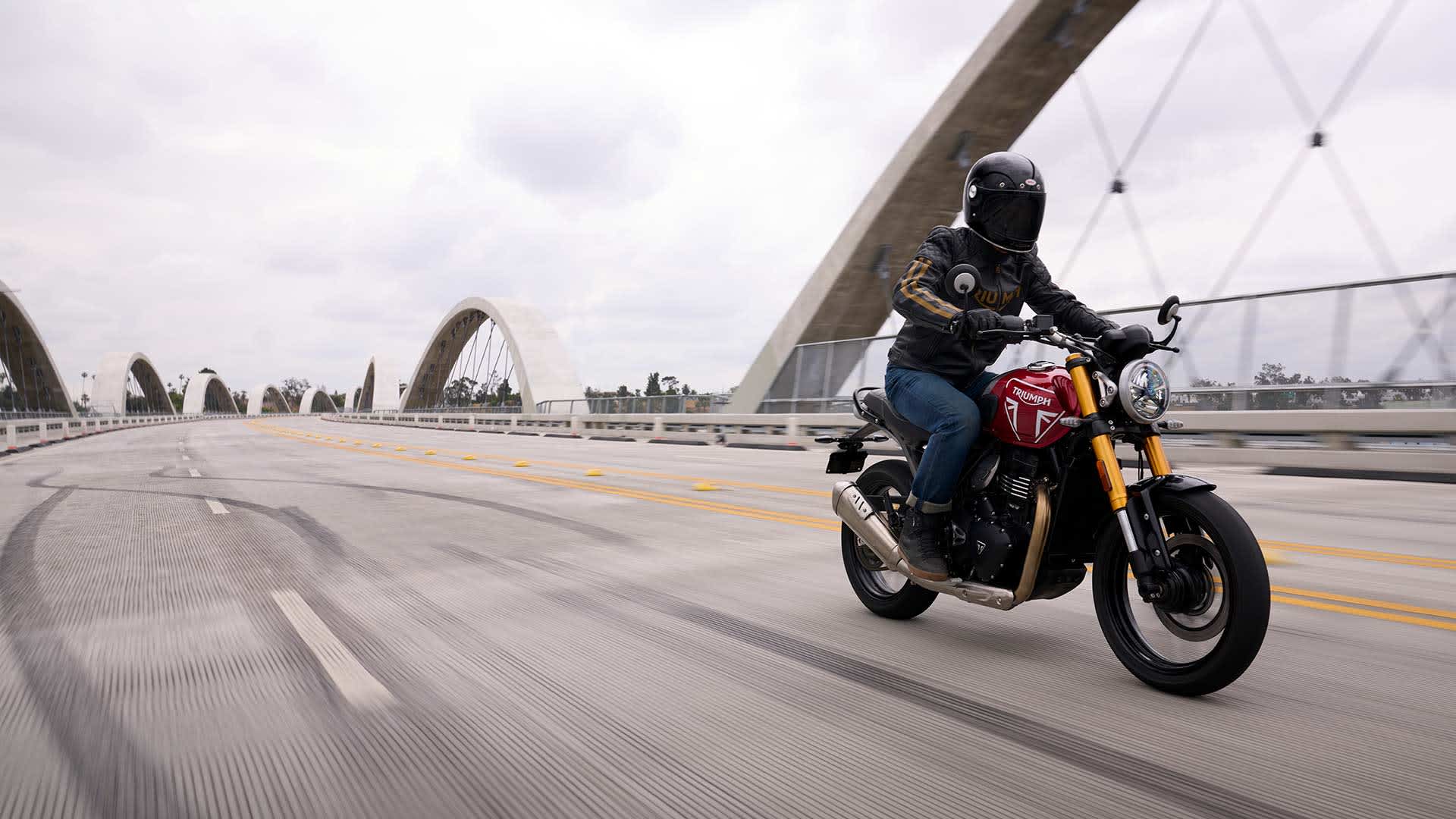
The Tracker 400 arrives as a “wolf in sheep’s clothing.” While it proudly wears the ‘400’ badge, it is the first in Triumph’s lineup to be powered by a specially developed sub-350cc engine, specifically tuned to benefit from the GST 2.0 regime that has redefined motorcycle pricing in 2026.
Triumph Tracker 400 Launched in India : Price, Specs & Launch Toolbar
| Category | Technical Details |
| Engine Type | Liquid-cooled, 4 valve, DOHC, single-cylinder |
| Engine Capacity | 349.0 cc |
| Bore x Stroke | 89.0 mm x 56.1 mm |
| Compression Ratio | 12.1:1 |
| Maximum Power | 37 PS (27.21 kW) @ 8,500 rpm |
| Maximum Torque | 32 Nm @ 7,000 rpm |
| Fuel System | Bosch electronic fuel injection with electronic throttle control |
| Exhaust Compliance | BS6 OBD2B |
| Gearbox | 6-speed |
| Clutch | Wet, Multiplate, Assist & Slipper (A&S) Clutch |
| Chassis | Hybrid spine/perimeter, tubular steel, bolt-on rear subframe |
| Front Suspension | 43mm Upside Down (USD) Big Piston forks; 130mm travel |
| Rear Suspension | Gas monoshock RSU with external reservoir & pre-load adjust; 120mm travel |
| Front Brakes | 300mm fixed disc, ByBre™ 4-piston radial caliper, ABS |
| Rear Brakes | 230mm fixed disc, ByBre™ single-piston floating caliper, ABS |
| Tyres (Front/Rear) | Front: 110/80 R17 | Rear: 150/70 R17 |
| Wheels | 10-spoke Cast Aluminium Alloy (17-inch) |
| Instrument Cluster | Dual format (Analog Speedometer + Digital Tachometer/Display) |
| Seat Height | 803 mm |
| Wet Weight | 179 kg |
| Fuel Tank Capacity | 13 Litres |
| Wheelbase | 1386 ± 10 mm |
| Service Interval | 16,000 km / 12 Months (Whichever comes first) |
| Ex-Showroom Price (Delhi) | ₹ 2,46,225 |
| Booking Status | Open Across All Triumph-Bajaj Dealerships |
| Feature | Details |
| Engine Displacement | 350cc (Liquid-Cooled, Single-Cylinder) |
| Max Power | 39.4 bhp (40 PS) @ 8,750 rpm |
| Max Torque | 32 Nm @ 7,500 rpm |
| GST Tax Bracket | 18% (Sub-350cc Category) |
| Color Options | Racing Yellow, Phantom Black, Aluminium Silver Gloss |
The Strategic Downsize: Why 350cc is the New 400cc
The most significant story behind the Tracker 400 isn’t just its looks—it’s the math. Since the implementation of GST 2.0, motorcycles with engine capacities above 350cc are taxed at a steep 40%. However, motorcycles falling under the 350cc threshold enjoy a significantly lower 18% tax rate.
By downsizing the existing 398cc TR-series motor to a 350cc displacement, Triumph and Bajaj have managed to cut costs significantly without sacrificing the premium “400” brand identity. This move allows Triumph to offer a high-performance, liquid-cooled machine at a price point that directly threatens Royal Enfield’s air-cooled 350cc monopoly.
The Performance Trade-off
Despite the smaller displacement, the Tracker 400 remains a powerhouse. It produces 39.4 bhp and 32 Nm of torque. When compared to the international 400cc spec, there is a marginal drop of only 2 bhp and 5.5 Nm. However, when compared to the Royal Enfield Classic 350 (which produces roughly 20.2 bhp), the Triumph Tracker 400 offers nearly double the power, making it the most potent sub-350cc motorcycle currently on sale in India.

Design & Styling: Flat-Track Aggression
The Tracker 400 draws heavy inspiration from the world of flat-track racing. It ditches the “gentlemanly” looks of the Speed 400 for a more minimalistic, “stripped-back” attitude.
Minimalist Bodywork: The motorcycle features a sculpted fuel tank with deep knee recesses for better grip during spirited riding.
Race Cues: A compact flyscreen, a color-matched rear seat cowl, and a distinctive side-mounted number board displaying the “400” digits give it an authentic competition look.
Aggressive Graphics: Racing stripes and unique “mud-splatter” detailing across the bodywork emphasize its off-road, rugged DNA.
Commanding Ergonomics: Wide, flat handlebars and repositioned footpegs create a “commanding stance,” allowing the rider to manhandle the bike through city traffic or dirt trails with ease.
Hardware & Technology: No Compromises
Triumph has ensured that the “budget-friendly” tax bracket doesn’t lead to a budget-feeling motorcycle. The Tracker 400 is loaded with premium cycle parts:
Suspension: It features 43 mm upside-down (USD) Big Piston Forks at the front with 140 mm of travel, paired with a gas-charged monoshock at the rear.
Braking: Stopping power comes from a four-piston radial caliper setup and dual-channel ABS as standard.
Tyres: To match its tracker aesthetic, it comes equipped with block-pattern dual-purpose tyres that offer grip on both tarmac and loose gravel.
Rider Aids: Even in this segment, Triumph provides switchable traction control and a torque-assist clutch, making it one of the most technologically advanced bikes in its class.
The Rivalry: Triumph Tracker 400 vs. Royal Enfield 350/400 Range
The launch of the Tracker 400 marks a direct confrontation with Royal Enfield, who currently holds a staggering 92-95% market share in the 250cc-350cc category.
Price Comparison (On-Road Estimates)
With the 18% GST advantage, Triumph has been able to keep the Tracker 400’s price competitive. While a Royal Enfield Guerrilla 450 or Himalayan 450 attracts the 40% tax, the Tracker 400 stays in the lower bracket. This creates a unique market position where a buyer can get Triumph’s liquid-cooled performance for nearly the same price as a high-end Royal Enfield 350.
The “Lifestyle” Battle
Royal Enfield has long relied on heritage and “thump.” Triumph is now countering that with “Fun, Style, and Sportiness.” Manik Nangia, President of Probiking at Bajaj Auto, noted that the Tracker 400 is aimed at a younger demographic that values a “distinctly sportier ride” over traditional retro cruising.
Market Impact: A Broad Shift to Sub-350cc
The Tracker 400 is the first of many. Triumph has already hinted that the Speed T4, Scrambler 400, and the upcoming Thruxton 400 will all eventually adopt this 350cc platform for the Indian market. This strategic engineering to meet tax limits signals a broad market shift.
Competitors like KTM, Jawa, and Yezdi are now under immense pressure to follow suit. Even Royal Enfield, which saw its 350cc prices drop by roughly ₹ 22,000 after the GST revision, now faces a rival that offers significantly higher specifications (USD forks, liquid cooling, and double the horsepower) for a marginally higher price.
Conclusion: Is the Tracker 400 the Game Changer?
The Triumph Tracker 400 is more than just a motorcycle; it is a masterclass in navigating Indian policy and consumer psychology. By keeping the “400” name but using a “350” heart, Triumph has managed to keep the aspirational value high while bringing the cost down to earth.
For the Indian rider, this is a win-win. You get the prestige of the Triumph badge, the reliability of Bajaj’s manufacturing, and a performance-packed engine that doesn’t break the bank at the petrol pump or the registration office.
The Tracker 400 is now available in three colors:
Racing Yellow (For the bold)
Phantom Black (For the stealthy)
Aluminium Silver Gloss (For the classic)
With units reaching showrooms this week, the battle for the Indian streets has officially entered its most exciting chapter yet.