
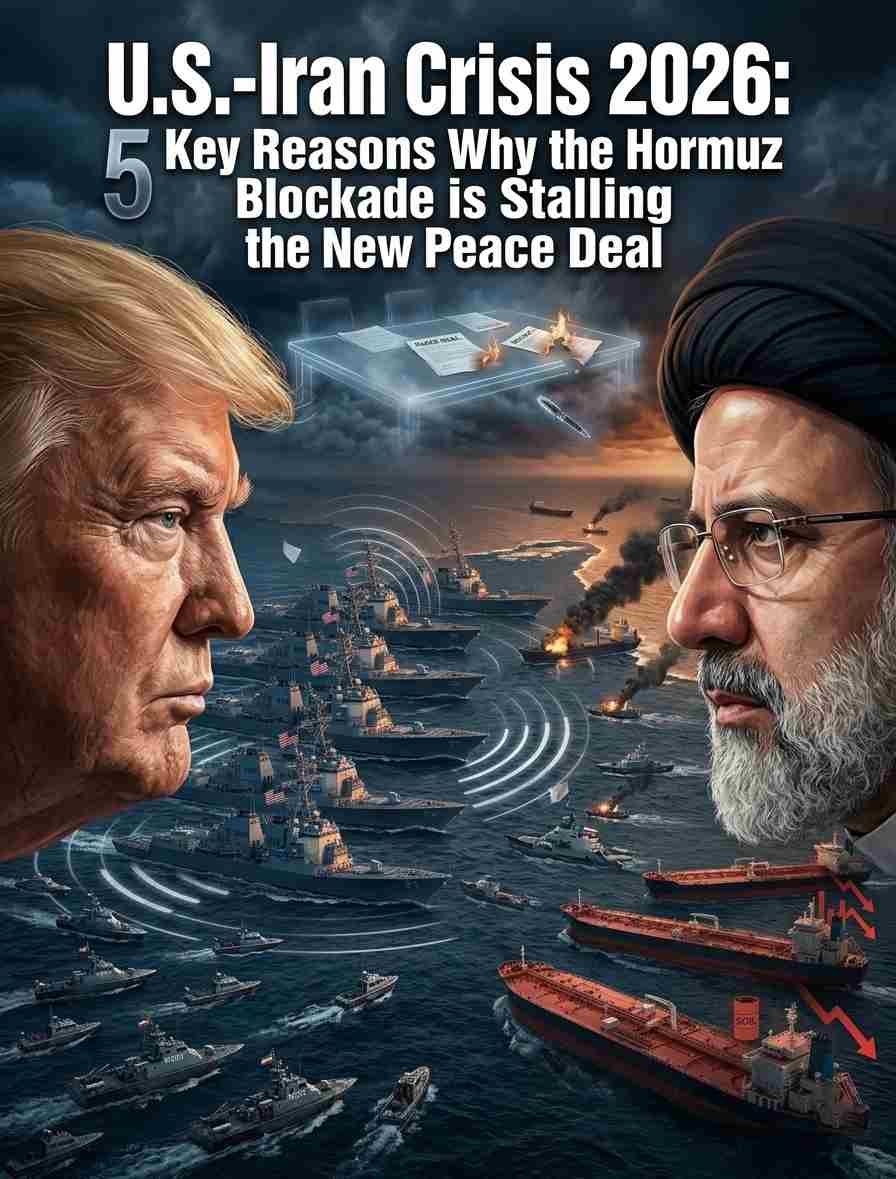
The U.S.-Iran Crisis geopolitical landscape of the Middle East is currently suspended in a state of “aggressive hibernation.” As of April 22, 2026, the world watches with bated breath as President Donald Trump has officially extended the ceasefire with Iran indefinitely. However, what sounds like a de-escalation on paper is, in reality, a high-stakes game of chicken.
With the Strait of Hormuz transformed into a naval fortress and Tehran labeling the current U.S. strategy an “act of war,” the road to Istanbul or Islamabad has never looked more treacherous. In this deep dive, we explore the intricate layers of the current standoff, the secret diplomatic channels involving Pakistan, and why a single spark in the Persian Gulf could still ignite a global catastrophe.
1. The “Ceasefire” Paradox: Peace on Land, War at Sea
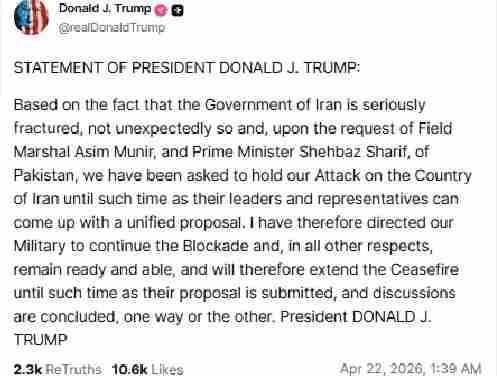
On Tuesday, President Trump took to Truth Social to announce a move that surprised both critics and allies: an indefinite extension of the ceasefire. While the immediate threat of aerial bombardment has subsided, the “Blockade of Hormuz” remains the ultimate sticking point.
The U.S. Position: Pressure Until Submission
The Trump administration’s logic is simple yet brutal. By maintaining a naval blockade, Washington is effectively suffocating the Iranian economy without dropping a single bomb. Trump’s rhetoric has been characteristically blunt:
“Without the blockade, there can never be a Deal with Iran, unless we blow up the rest of their Country, their leaders included!”
For the U.S., the blockade isn’t a violation of the truce; it is the leverage required to force a “fractured” Iranian leadership to the table.
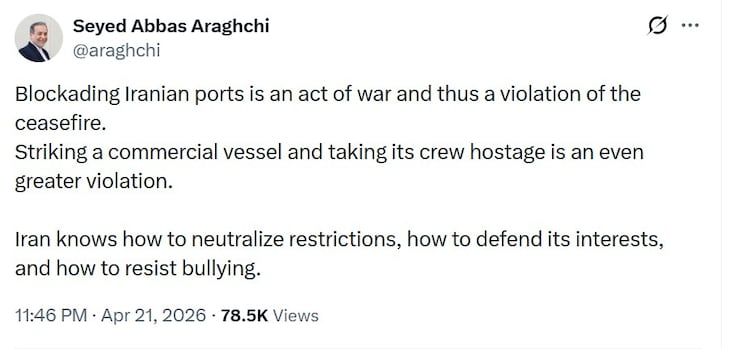
The Iranian Rebuttal: “An Act of War”
Tehran sees it differently. Foreign Minister Abbas Araghchi recently took to X (formerly Twitter) to clarify that a blockade is internationally recognized as an act of aggression. To Iran, negotiating while their ports are sealed is like trying to discuss a lease while the landlord has a boot on your neck.
2. The Role of the “Kingmakers”: Pakistan’s Diplomatic Hail Mary
One of the most fascinating developments in this 2026 crisis is the emergence of Pakistan as the primary mediator. Usually, such roles are reserved for Oman or Qatar, but this time, the heavy lifting is being done by Islamabad.
The Munir-Sharif Appeal
President Trump explicitly credited Field Marshal Asim Munir and Prime Minister Shehbaz Sharif for the ceasefire extension. Pakistan is in a delicate position; it shares a border with Iran and cannot afford a regional spillover of a full-scale war.
However, the diplomatic momentum hit a major speed bump when Vice President JD Vance canceled his scheduled trip to Islamabad. This cancellation came on the heels of Iran’s refusal to attend the latest round of talks, citing “excessive and unreasonable” American demands.
3. The Shadow War: Tankers Slipping Through the Net
If the blockade is meant to be total, why is Iranian oil still hitting the water? Recent intelligence reports suggest that at least two Iranian tankers managed to bypass the U.S. naval screen in the Strait of Hormuz this week.
Dark Fleet Tactics: Iran has mastered the art of “ghost shipping”—turning off transponders and conducting ship-to-ship transfers in the middle of the night.
The Message: These successful maneuvers are Tehran’s way of showing Washington that their “maximum pressure” has leaks. It boosts domestic morale and signals to oil markets that Iran isn’t out of the game yet.
4. Internal Strife: Is the Iranian Leadership Truly Fractured?
A significant portion of Trump’s strategy relies on the belief that the Iranian government is currently “seriously fractured.”
| Sector | Current Stance |
| The Diplomats (Araghchi/Iravani) | Open to talks in Istanbul IF the blockade is lifted. |
| The Hardliners (Ghalibaf Advisors) | View the ceasefire as a “ploy” for a surprise strike; urging military retaliation. |
| The Military (IRGC) | Focused on asymmetrical naval warfare and “breaking” the blockade through force. |
This internal divide is exactly what the U.S. is betting on. By extending the ceasefire, Trump is giving these internal factions more time to clash, hoping the pragmatists will eventually override the hardliners out of economic necessity.
5. The “Istanbul Condition”: What Happens Next?
Iran’s UN Ambassador, Amir Saeid Iravani, has laid out the roadmap: “Break the blockade, and we will negotiate.”
Iran has identified Istanbul as the preferred venue for the next round of high-level talks. Turkey, maintaining a balance between its NATO obligations and its energy needs from Iran, remains a neutral ground that both sides respect.
The Risk of a “Surprise Strike”
The suspicion in Tehran remains sky-high. Advisors to the Iranian Parliamentary speaker have warned that this “peaceful pause” is merely a tactical delay. They argue that the losing side cannot dictate terms and that Iran must “take the initiative.” This rhetoric suggests that the window for diplomacy is closing faster than the U.S. might realize.
U.S.-Iran Crisis Final Thoughts: A Region on the Edge
As we move into the final week of April, the “US-Iran War” remains a war of nerves rather than a war of kinetic motion—for now. The extension of the ceasefire provides a momentary sigh of relief for global markets, but the underlying issues remain unresolved.
The Bottom Line: As long as the U.S. keeps the Strait of Hormuz closed and Iran refuses to talk until it’s opened, we are in a circular deadlock. The world now waits to see if Pakistan can convince Tehran to return to the table, or if the “ploy” suspected by Iranian hardliners turns into a devastating reality.