
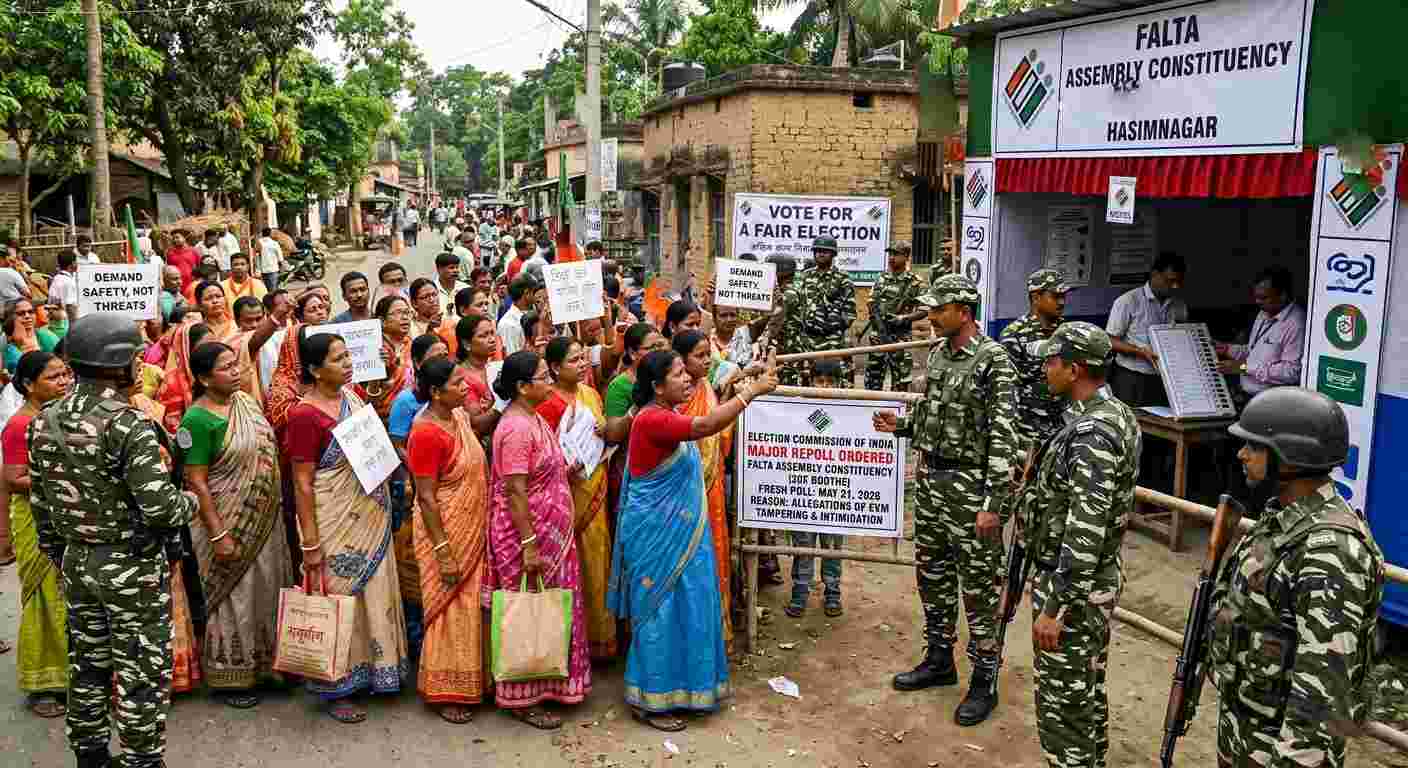
The democratic landscape of West Bengal has taken a dramatic turn as the West Bengal Assembly Elections 2026 face unprecedented scrutiny. In a move that has sent shockwaves through the political corridors of the state, the Election Commission of India (ECI) has officially nullified the previous voting results for the Falta Assembly seat. On Saturday, May 2, the ECI announced that a fresh round of polling will be conducted across all 285 booths in the constituency on May 21, 2026.
This decision comes on the heels of explosive allegations regarding “severe electoral offences” and “subversion of the democratic process.” While the rest of the state anticipates the results for 293 seats this Monday, May 4, the residents of Falta find themselves back at the starting line, caught in a whirlwind of protests, fear, and demands for justice.
The Breaking Point: Why the ECI Voided the Falta Polls
The West Bengal Assembly Elections 2026 have been marked by high tensions, but the situation in Falta reached a boiling point following the second phase of polling on April 29. The ECI’s notification was surprisingly blunt, citing a laundry list of irregularities that made a fair count impossible.
1. The “Perfume and Tape” Scandal
In one of the most bizarre yet calculated forms of alleged tampering, reports surfaced that black adhesive tape was placed over specific buttons on the Ballot Units of EVMs. More sinister was the reported use of “attar” (perfume) on specific buttons. This tactic was allegedly used to identify which party a voter chose based on the scent left on their finger, effectively destroying the principle of a secret ballot.
2. Voter Intimidation and Illegal Presence
The ECI noted that “physical, unauthorized, and illegal presence of political party cadres” was reported inside multiple polling stations. Voters alleged they were obstructed from entering booths, while others claimed they were coerced into voting for a specific candidate under the watchful eyes of party workers.
3. The “Post-Result” Threats
The most visceral reaction came from the villagers themselves. Following the initial polls, hundreds of locals in South 24 Parganas took to the streets. The catalyst? Alleged life threats from Trinamool Congress (TMC) workers. Specifically, residents pointed fingers at Israfil, a local panchayat pradhan and close aide to TMC candidate Jehangir Khan, accusing him of threatening “violence and arson” once the central forces leave after the May 4 results.
Chaos on the Ground: Protests in Hasimnagar
The tension in Falta wasn’t just confined to official reports. On Saturday, the village of Hasimnagar became the epicenter of local resistance. Hundreds of protesters, including a significant number of women carrying BJP flags, blocked main roads, demanding immediate protection.
“We are not afraid to vote, but we are afraid of what happens after the booths close,” said one protester. “If we cannot vote freely without being threatened with our lives, is this even a democracy?”
The deployment of the Central Reserve Police Force (CRPF) in heavy numbers was required to bring the situation under control. The officers assured the villagers that security would be “adequate and sustained” to prevent post-poll retaliatory violence.
The Adjusted Election Timeline
Because of the total repoll in Falta, the West Bengal Assembly Elections 2026 will now conclude in a staggered fashion. Here is the updated schedule for the remaining process:
| Event | Date | Status |
| General Counting (293 Seats) | May 4, 2026 | Scheduled |
| Repoll in Falta (All 285 Booths) | May 21, 2026 | Newly Scheduled |
| Final Counting for Falta | May 24, 2026 | Final Declaration |
Earlier on Friday, May 1, the ECI had already conducted smaller-scale repolls in 15 stations across the Diamond Harbour and Magrahat Paschim seats. However, the total nullification of an entire constituency like Falta is a much rarer and more serious intervention.
Political Reactions: A War of Words
The political atmosphere in Bengal is currently electric. The BJP has hailed the ECI’s decision as a victory for the “common man’s voice,” claiming that the TMC’s “machinery of fear” has finally been checked. They argue that the large-scale EVM tampering was a desperate attempt by the ruling party to hold onto power in South 24 Parganas.
On the other hand, the TMC has largely dismissed the allegations of organized intimidation, suggesting that the protests are “staged” by the opposition to delay the inevitable victory of their candidates. They maintain that the ECI is acting under pressure, though they have stated they are ready for the May 21 face-off.
What This Means for the Final Verdict
On Monday, May 4, West Bengal will still know who is likely to form the next government. With 293 seats being declared, the majority mark of 148 is well within reach for either major bloc without waiting for Falta.
However, the West Bengal Assembly Elections 2026 will be remembered for the Falta incident as a case study in electoral vigilance. The use of “scent markers” and “adhesive tapes” suggests a level of local-level manipulation that the ECI is clearly determined to weed out.
For the voters of Falta, May 21 represents more than just a second chance to vote; it is a test of whether the administrative machinery can truly guarantee the safety and the “secret” nature of the ballot in one of India’s most politically volatile regions.
Stay tuned for live updates on the May 4th counting and the lead-up to the Falta repoll.