
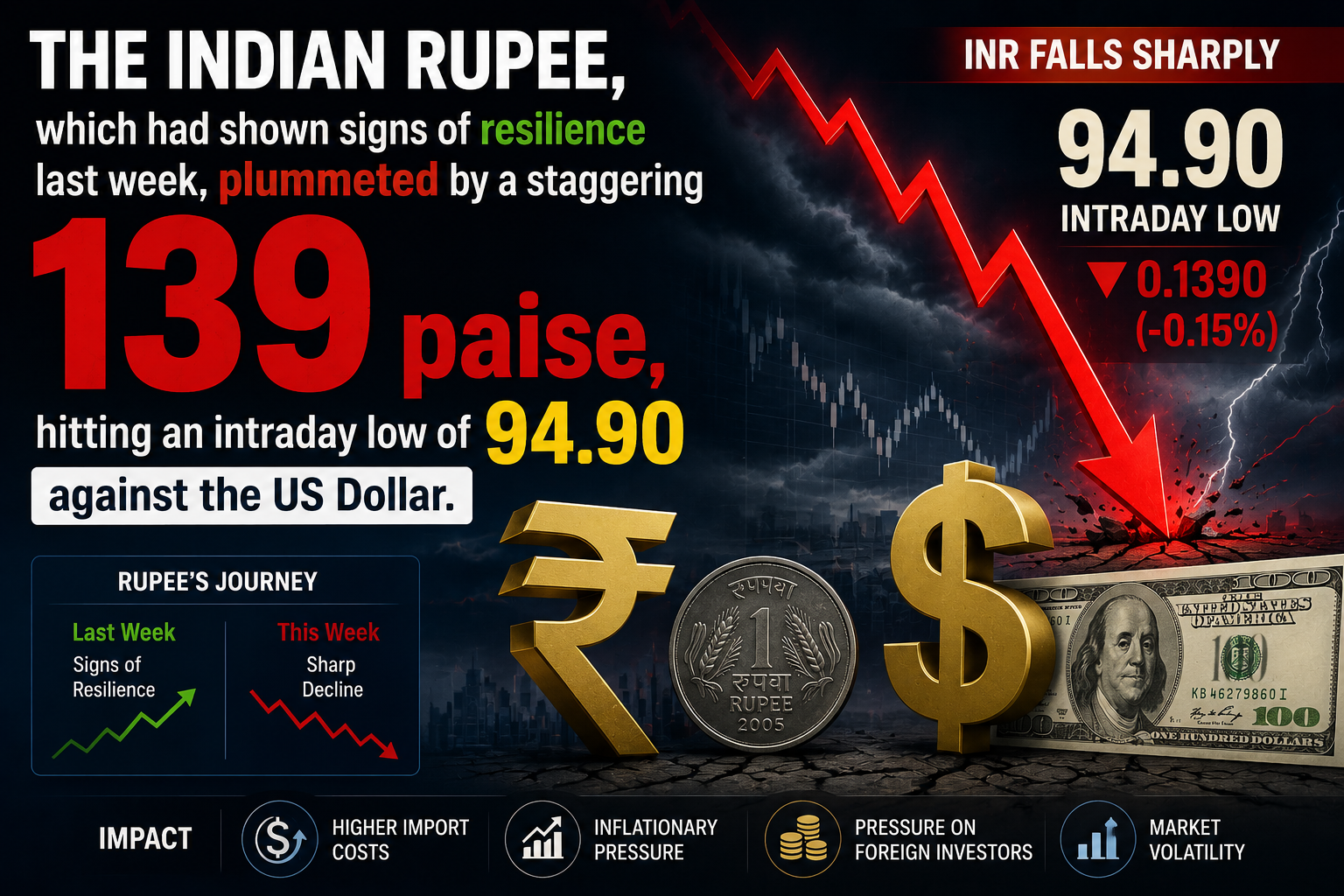
The global currency markets witnessed a seismic shift this Monday as the INR vs USD exchange rate took a sharp turn for the worse. The Indian Rupee, which had shown signs of resilience last week, plummeted by a staggering 139 paise, hitting an intraday low of 94.90 against the US Dollar. This sudden depreciation comes at a time when the world is watching the Middle East with bated breath, as geopolitical tensions have pushed crude oil prices to levels not seen in months.
The Current State of INR vs USD: A Monday Meltdown
As the markets opened on May 11, the volatility in the INR vs USD pair was immediately evident. Opening at 94.97, the rupee briefly attempted to stabilize at 94.90, but the pressure from global macro factors proved too heavy. This 139-paise drop follows a surprisingly strong Friday where the rupee gained 71 paise to close at 93.51. However, the optimism was short-lived.
Despite this massive fall, currency analysts are quick to point out that the rupee is still holding above its record low of 95.4, a level breached just last week. The psychological barrier of 95.00 is currently the primary focus for forex traders and the Reserve Bank of India (RBI).
1. The Oil Factor: Crude Surges to $105/bbl
The most significant catalyst behind the current INR vs USD weakness is the explosive rise in global crude prices. On Monday, Brent crude futures for July delivery jumped over 4.6%, reaching an intraday high of $105.99 per barrel. Similarly, the West Texas Intermediate (WTI) advanced by 5.19% to touch $100.37.
For an economy like India, which imports more than 80% of its oil requirements, such a price hike is a direct blow to the fiscal deficit. Higher oil prices lead to an increased demand for US dollars to pay for imports, naturally driving the value of the dollar up against the rupee.
“When oil crosses the $100 mark, the Indian economy feels the heat instantly. The sudden $4-5 jump in a single session has forced importers to rush for dollar hedging, further straining the INR vs USD balance.” – Forex Market Insight.
2. Trump Rejects Iran Peace Proposal: Geopolitical Fallout
Politics and economics are currently inextricably linked. The primary reason for the oil price spike is the breakdown in diplomatic negotiations between the US and Iran. While Iranian state media suggested a willingness to negotiate a permanent end to the conflict, President Donald Trump rejected the proposal, labeling it “totally unacceptable.”
This rejection has reignited fears of a broader conflict in West Asia, specifically affecting the Strait of Hormuz—a vital transit point for global oil supplies. As long as the geopolitical risk remains high, the INR vs USD trajectory is likely to remain skewed toward a stronger greenback.
3. The Strengthening US Dollar Index (DXY)
It isn’t just the Rupee that is weak; the Dollar is exceptionally strong. The Dollar Index (DXY), which measures the greenback against a basket of six major world currencies, rose by 0.20% to 98.20. When the DXY rises, emerging market currencies like the Indian Rupee often face “capital flight” as investors move their money into the perceived safety of US Treasury bonds and dollar denominate assets.
4. Foreign Portfolio Investors (FPI) Outflows
The domestic stock market has reflected the currency’s pain. On Monday, the SENSEX tumbled 1.5%, dropping to 76,165.57, while the NIFTY fell to 23,845.30. This sell-off is largely driven by Foreign Institutional Investors (FIIs) pulling money out of Indian equities. On the previous Friday alone, FIIs were net sellers to the tune of ₹4,110.60 crore. This exodus of capital requires the conversion of Rupees back into Dollars, creating a massive supply-demand imbalance in the INR vs USD market.
5. Declining Foreign Exchange Reserves
According to the latest data from the RBI, India’s forex reserves fell by $7.79 billion to $690.69 billion for the week ended May 1. While $690 billion is still a formidable war chest, the rapid decline suggests that the central bank may have been intervening in the markets to prevent a “flash crash” of the rupee. The reduction in reserves limits the RBI’s future capacity to defend the currency if the INR vs USD rate continues to spiral toward the 96.00 mark.
6. Prime Minister Modi’s Urgent Appeal to Citizens
In a rare move on Sunday, May 10, Prime Minister Narendra Modi addressed the nation regarding the economic impact of the West Asia conflict. He urged citizens to take proactive steps to conserve foreign exchange. His recommendations included:
- Curbing non-essential foreign travel.
- Postponing the purchase of gold (which is a major import item).
- Increasing the use of public transport and electric vehicles to reduce oil consumption.
This high-level intervention underscores the severity of the current currency crisis. When the Prime Minister asks citizens to alter their lifestyle to save “forex,” it indicates that the government is preparing for a long-drawn-out period of volatility in the INR vs USD exchange rate.
7. Market Sentiment and Future Outlook
Forex traders are now looking at the 95.40 level—the record low hit last week—as the “line in the sand.” If the rupee breaks this level, we could see a rapid move toward 96.00 or even 97.00. However, the Domestic Institutional Investors (DIIs) have been trying to provide acushion, buying equities worth ₹6,748.13 crore recently to offset foreign selling.
Conclusion: Navigating the Storm
The journey of INR vs USD in the coming weeks will depend almost entirely on two factors: the price of Brent crude and the diplomatic tone between Washington and Tehran. For Indian businesses and travelers, the current volatility is a reminder of how global events can hit the local pocketbook almost instantly. While the RBI has the reserves to manage the fall, the underlying pressure from high oil prices remains a formidable challenge for the Indian economy.
Disclaimer: This information is based on various inputs from news agency.