
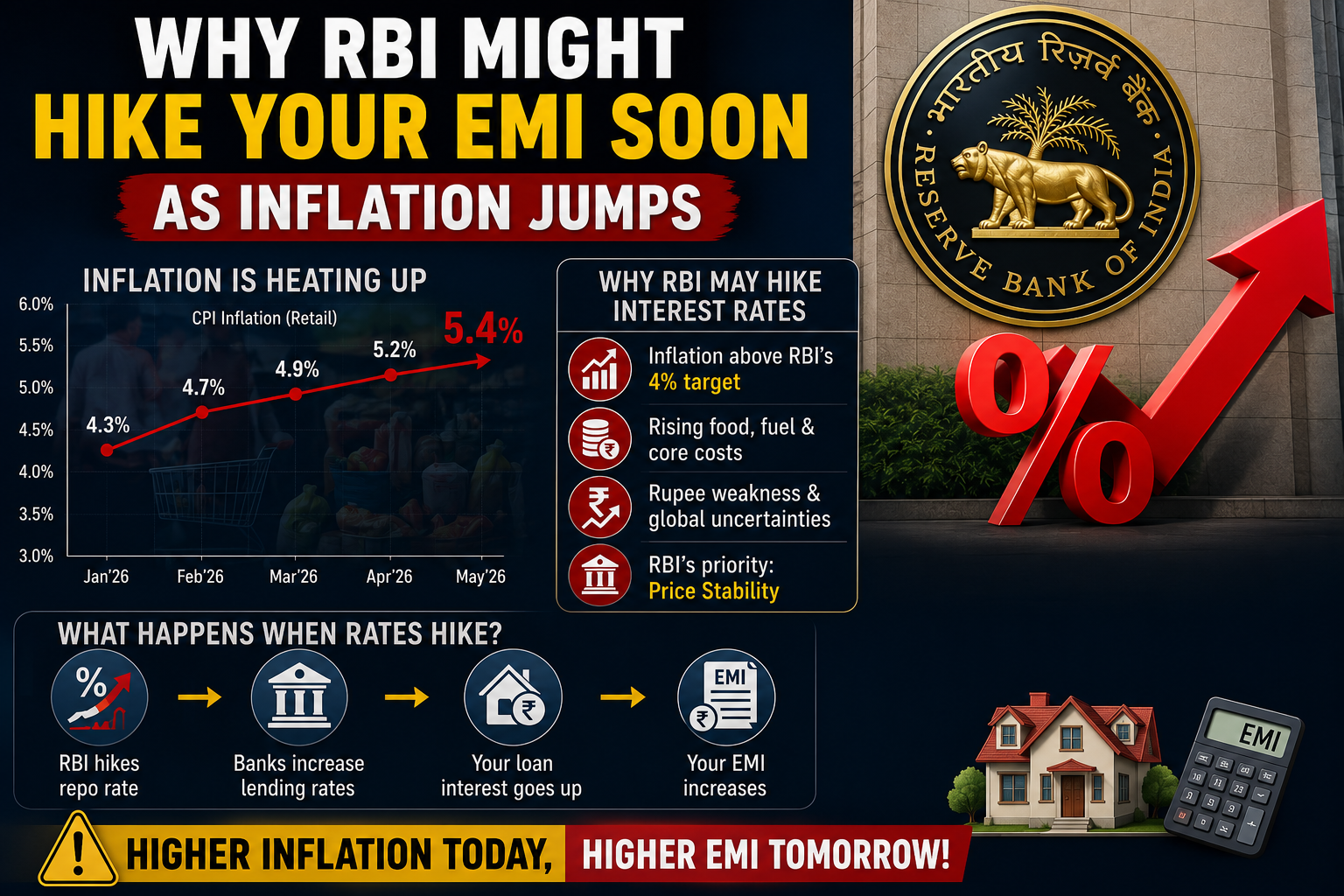
MUMBAI: India’s Inflation Crisis Forget about your bank loans getting cheaper anytime soon. If you were waiting for your monthly EMIs to go down, that plan is officially on hold. Everyone in the market thought inflation was under control and interest rates had peaked. But sudden global shocks and bad weather at home have ruined the calculations.
Right now, factory input costs are up, and household budgets are completely messed up. The Reserve Bank of India (RBI) is stuck in a corner and might have to raise rates again.
Inflation hitting from both sides
India is facing price hikes from two different angles. First, companies are paying way more at the factory gate (Wholesale Price Index). Second, ordinary people are feeling the pinch directly at local markets (Consumer Price Index).
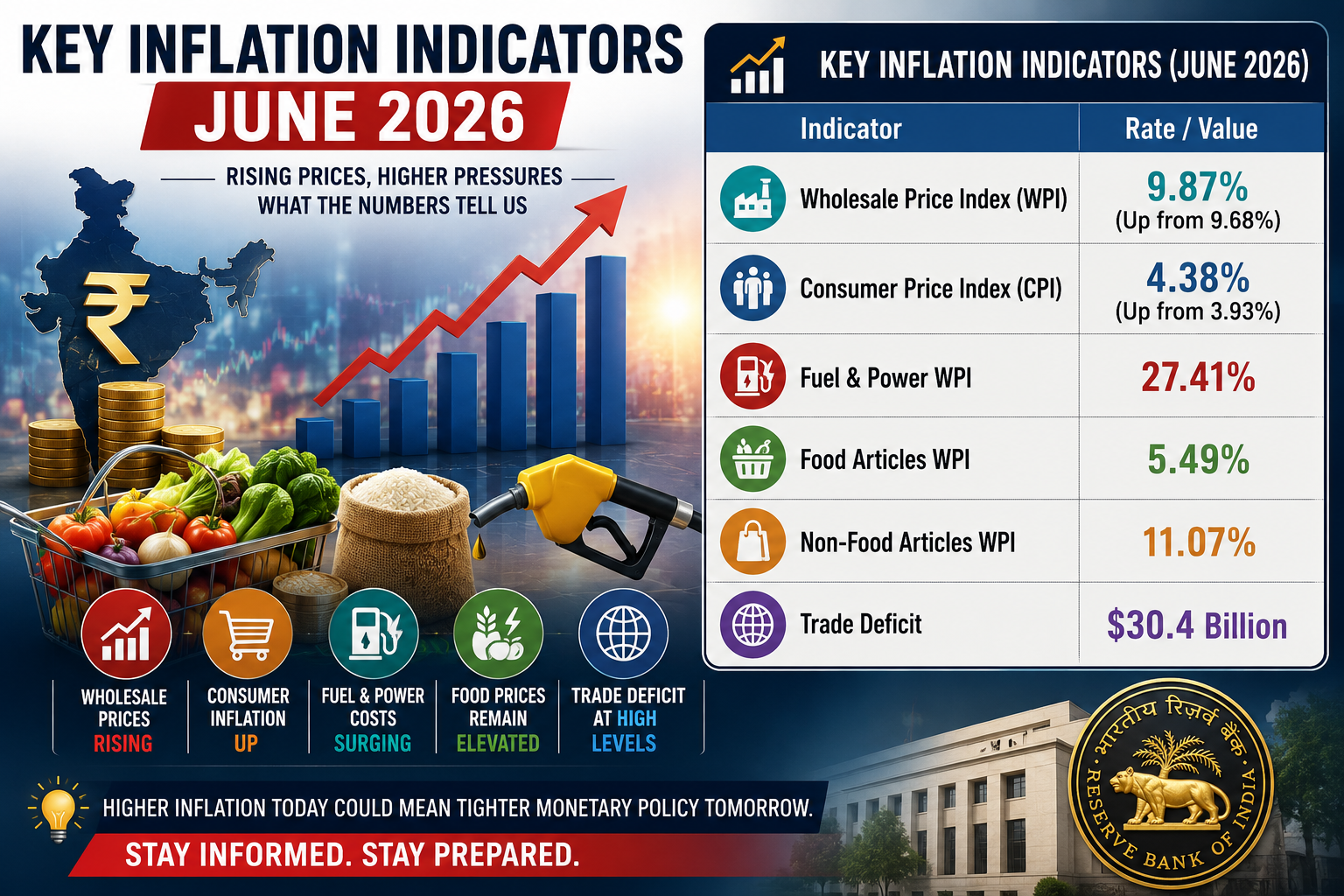
New government data shows wholesale inflation jumped to 9.87% in June from 9.68% in May. It is almost touching the 10% mark now. This means raw materials like petrol, diesel, and manufacturing chemicals are getting costly for businesses. Wholesale food prices also shot up to 5.49%.
On the retail side, things look bad for ordinary families. Retail inflation (CPI) hit a 17-month high of 4.38% in June. The RBI’s main job is to keep this number below 4%. This is the first time in nearly a year and a half that inflation has crossed this red line, and it is causing panic inside the central bank.
Why are prices going up?
There are two main reasons for this mess: war abroad and bad weather at home.
The biggest issue is in West Asia. The ongoing conflict has blocked the Strait of Hormuz, the world’s most important route for oil tankers. Because of this, ships have to take longer routes, shipping costs have gone up, and Brent crude oil crossed $80 a barrel.
India imports around 90% of its oil. So when global prices went up, local petrol and diesel prices jumped immediately. Since trucks run on diesel, moving vegetables, grains, and factory goods across states became expensive. This forced consumer companies to hike prices of daily items like soaps, detergents, and packaged foods by 5% to 7%.
To make it worse, the monsoon has been highly unpredictable this year. Some states have droughts, while others have floods. This has messed up the summer crop sowing cycle, meaning food items could get even costlier soon.
Rupee under pressure
India’s trade deficit—the gap between imports and exports—widened to a massive $30.4 billion in June. As we spend more US dollars to buy costly oil, the Indian Rupee is getting weaker. A weak rupee makes every single imported item automatically more expensive for us.
Meanwhile, the US Federal Reserve is facing its own inflation problems. They have made it clear that they will not cut interest rates anytime soon and might even hike them. If the US hikes rates, foreign investors will pull their money out of India and take it back to America. This capital flight will crash the rupee further and push Indian inflation even higher.
Will your EMI increase?
Until now, the RBI kept the repo rate steady at 5.25%, hoping the monsoon would fix food prices. But with retail inflation crossing the 4% mark, they cannot sit quiet.
Market experts think the RBI could hike interest rates by 0.50% (50 basis points) in the next policy meeting.
How this will affect you:
Home and car loans: If you have taken out a loan, your monthly EMI will increase. Banks will deduct a larger amount from your account.
Business: Borrowing will become more expensive for both small and large companies, which could lead to a reduction in new hiring and job opportunities.
Stock market: Rising interest rates impact corporate profits; consequently, selling pressure may be observed in the stock market.
The bottom line is that the era of cheap loans is over. Inflation and bank EMIs are expected to rise in the coming months. Now is the time to cut down on unnecessary expenses and manage your budget carefully.