
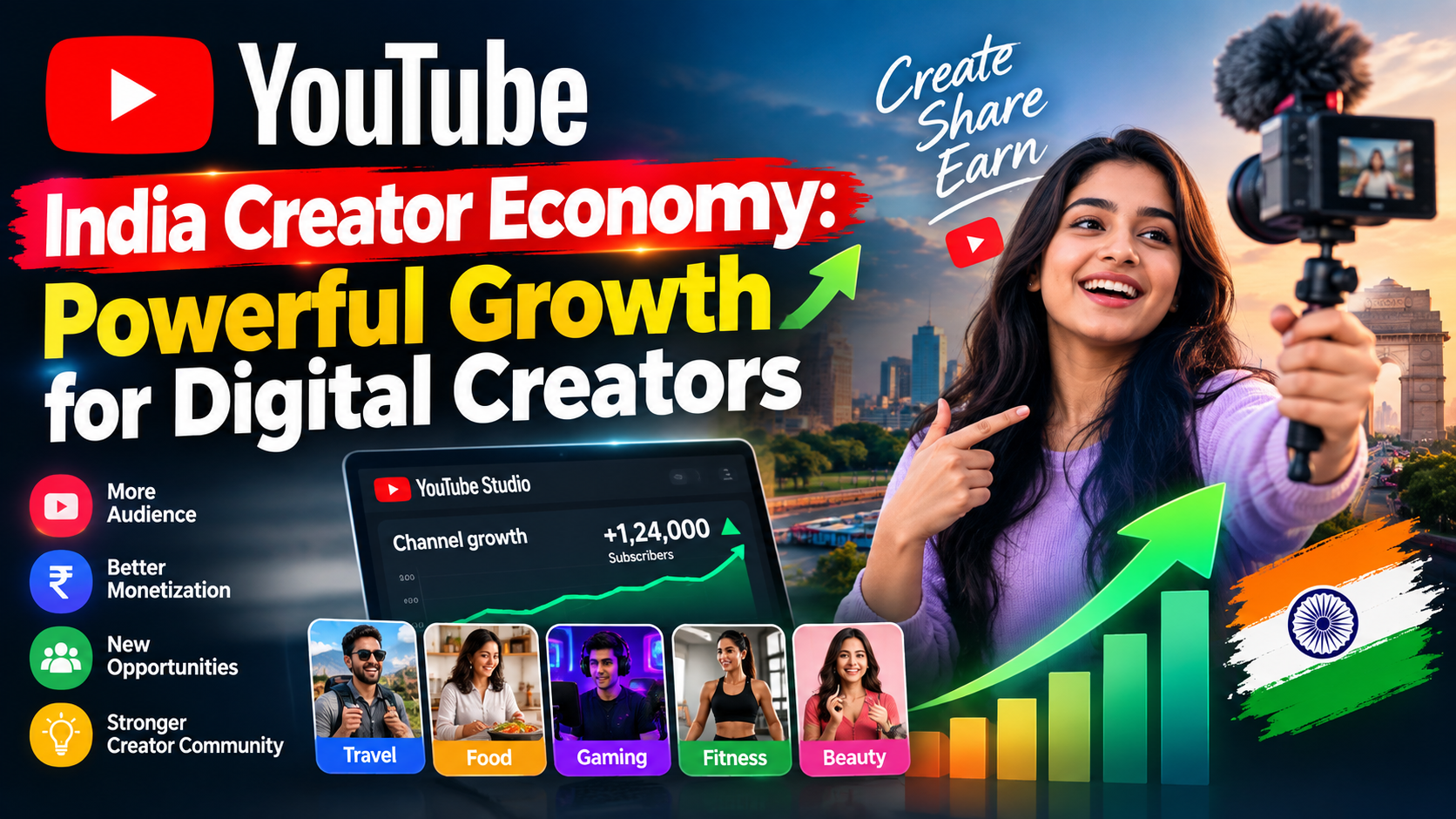
The YouTube India Creator Economy is becoming a part of Indias digital business world. It is opening doors for individuals, small businesses and media entrepreneurs. What started as a place to share videos has slowly turned into a source of income, jobs and business growth for thousands of creators across the country.
According to YouTube’s 2025 India impact report the platform helped add ₹18,000 crore to Indias economy. It also supported one million full-time equivalent jobs. These numbers show how much online video content is now shaping India’s economic landscape.
In an interview, with NDTV, Gunjan Soni, the Managing Director of YouTube India talked about how creators are no longer just making videos alone. They are now building structured and organised businesses. She pointed out that more channels are earning money and that new creators have real opportunities to succeed.
The report shows a bigger change happening in India’s economy. Making videos is not something only people do from their homes anymore. It is now connected to work, marketing, learning, entertainment and starting businesses. Content creation is becoming a career path and a driver of economic activity.
YouTube India Creator Economy: Key Highlights
Here are the major figures and developments highlighted in the report and the interview:
₹18,000 crore: Contribution to India’s economy in 2025.
Nearly 1 million jobs: Full-time equivalent employment supported by YouTube’s ecosystem.
3 lakh additional people: Apprentices and other people supported by creators, as stated in the interview.
20% growth: Year-on-year increase in the number of creators earning seven-figure incomes.
Around 2 lakh channels: Channels monetised for the first time during the previous year.
20,000+ channels: Indian YouTube channels with more than one million subscribers as of June 2026.
73% of creators: Say YouTube is their primary source of income, according to the report cited in the interview.
Together, these figures show how online video has developed into an economic ecosystem involving creators, employees, advertisers, production teams, and other service providers.
YouTube’s ₹18,000 Crore Contribution to India’s Economy
One of the findings in the 2025 India impact report is that YouTube contributed ₹18,000 crore to the country’s economy. This number shows how much economic activity is linked to the platform. It includes not the money earned by video creators but also the wider effects on businesses and jobs connected to YouTube.
The contribution comes from areas. For example content production involves people who edit videos, design graphics, write scripts do research and manage marketing. When a channel grows it often hires staff or contracts outside help. That spending supports professionals and creates new employment opportunities.
This kind of activity helps grow the creator economy. The rise of the creator economy is now part of conversations about jobs and business innovation in India. It shows how digital platforms can support entrepreneurship and employment.
It’s important to note that the ₹18,000 crore figure does not mean YouTube made this amount in revenue.. Does it mean this is the total income earned directly by creators. Instead it reflects the economic impact reported in the study. It accounts for all the effects, like service providers and related business growth that happen because of YouTubes presence.
Nearly One Million Jobs Supported by YouTube
Employment is another important part of the report.
According to the figures shared by Gunjan Soni, YouTube supported nearly one million full-time equivalent jobs in India. She also mentioned that creators supported another three lakh people through apprenticeships and related opportunities.
These figures highlight how digital content can support work beyond the person appearing on camera.
A creator who starts with a small setup may eventually need a team to manage editing, filming, research, production, business operations, and audience engagement.
The employment opportunities can extend to people who do not have their own channels but possess skills that are useful in the digital media industry.
Some examples include:
Video editors and post-production professionals.
Camera operators and production assistants.
Scriptwriters and researchers.
Graphic designers and animators.
Digital marketing and social media professionals.
Translators and regional-language content specialists.
Business development and channel management teams.
The growth of these roles suggests that the creator economy is developing into a broader employment sector.
At the same time, the number of full-time equivalent jobs should not be interpreted as a count of permanent salaried positions. It represents an employment measure and may include different types of work supported by the ecosystem.
From a Small Room to a Growing Media Business
One of the examples discussed in the interview was the YouTube channel Simple Ghar.
The channel reportedly began in 2022 with the aim of helping households make better purchasing decisions. It started with a converted room and a small camera, reflecting the modest beginnings of many online creators.
According to Soni, the channel now employs 35 people and produces content in more than seven languages.
The example illustrates how a small content project can develop into a business with a team, a defined audience, and a wider production operation.
A channel that initially focuses on publishing videos may gradually introduce new formats, expand its subject coverage, and reach viewers in different languages.
As its audience grows, the creator may need additional staff to handle research, filming, editing, distribution, and business operations.
The Simple Ghar example also highlights the potential of practical, information-based content. Videos that help viewers compare products or make household decisions can build an audience around a specific need.
However, the growth of one channel does not mean that every creator will achieve similar results. The example demonstrates a possible business pathway rather than a guaranteed outcome.
More Creators Are Earning Seven-Figure Incomes
One of the important things mentioned in the interview is the rise in the number of creators who are making seven-figure incomes.
Gunjan Soni said the number of creators earning seven figures went up by 20% compared to the year.
This shows that more creators are reaching income levels through their work on the platform.
The term “seven figures” needs a little explanation. It means an income with seven digits—like $1,000,000 or more. However the interview doesn’t say if that amount is annual, monthly or based on an income type.
Also just because the number grew doesn’t mean every creator is earning more.
Income can be very different from one creator, to another. It depends on how big the audience’s what kind of content is being made how much advertisers are willing to pay how engaged the audience is and whether there are sponsorships or other business efforts.
Still the increase shows that more creators are finding ways to make their work financially stable. It’s a sign that some people are building lasting businesses.
Around Two Lakh Channels Monetised for the First Time
Another important point raised by Soni is the number of channels joining YouTube’s monetisation ecosystem.
She said that around two lakh new channels were monetised for the time in the past year.
This number is important because it shows that more creators are entering the platform’s system where they can earn money.
Monetisation lets eligible creators make money using supported features long as they meet YouTube’s rules and requirements.
For new creators getting monetised is a big step. It means their channel has reached the needed standards to access income opportunities.
Being monetised does not mean a creator will earn a lot of money.
Earnings depend on things like how many people watch the videos, the type of content how much advertisers are willing to pay, where the viewers are from and the kinds of income options available.
Still the rise, in monetised channels shows that more people are joining India’s growing digital content market.
More Than 20,000 Indian Channels Have One Million Subscribers
The scale of India’s creator ecosystem is also reflected in the number of channels with large audiences.
According to the figures cited in the report, more than 20,000 YouTube channels in India had crossed one million subscribers as of June 2026.
Crossing the one-million-subscriber milestone can provide creators with a larger audience and greater visibility.
For some channels, a large subscriber base may help attract brand partnerships, expand business opportunities, and support the development of a professional production team.
However, subscriber count alone does not determine income or profitability.
A channel with a smaller but highly engaged audience may have different commercial opportunities from a channel with a much larger audience but lower engagement.
The reported figure shows the scale of established channels in India, while the growth in newly monetised channels points to continued participation from smaller and emerging creators.
YouTube Channels Earning ₹10 Lakh or More See Growth
The report also points out that more channels are now making ₹10 lakh or more in revenue.
According to the numbers mentioned in the article the count of these channels went up by over 20% compared to the year.
This rise shows that a growing number of channels are hitting a revenue level that could help them support content creation and run their operations better.
For some creators higher income can allow them to buy equipment hire people create new types of content and even start producing videos in different languages.
Revenue is not the same as profit.
A channel might have costs like paying staff buying cameras, traveling, renting studio space doing research and covering production expenses. The real profit depends on what’s left after all these costs are paid.
So the increase reported is, about channels reaching a certain revenue amount. It does not mean each of them is making a profit.
YouTube Is Becoming a Primary Source of Income for Creators
The report states that 73% of creators surveyed said YouTube was their primary source of income.
This finding highlights the role that online video plays in the livelihoods of many creators.
For people who depend on content creation as their main occupation, consistent publishing and audience engagement can become central parts of their working lives.
Creators may also need to manage several responsibilities, including researching topics, planning videos, recording content, editing, responding to viewers, and monitoring performance.
As channels grow, some creators shift from working independently to managing teams and operating small businesses.
At the same time, relying on a single platform for income can create financial uncertainty.
Advertising demand, audience preferences, platform policies, and changes in video performance can affect how much a creator earns.
For this reason, some creators explore additional income sources such as sponsorships, merchandise, memberships, and other business activities, where available and appropriate.
The 73% figure reflects the survey findings cited in the interview and should not be treated as a measurement of every YouTube creator in India.
How YouTube Is Changing the Way Creators Build Businesses
The growth of the YouTube India creator economy reflects a change in how digital content’s produced and managed.
In the stages of a channel one person may handle almost every task. As the channel grows the workload can become too large for a creator.
This creates opportunities to build a team and establish a structured business.
1. Content Creation Is Becoming Organised
Creators who publish regularly may need a defined production process.
This can include research, scripting, recording, editing, publishing and reviewing audience feedback.
A structured workflow can help channels manage volumes of content and maintain consistency.
2. Regional Languages Are Expanding Audience Reach
The growth of content can help creators reach viewers who prefer to consume information in their own language.
The Simple Ghar example with content reportedly produced in than seven languages illustrates how language expansion can become part of a channels business model.
Regional-language content can also create opportunities for translators, writers, voice artists and production professionals.
3. Creators Are Building Teams
As content businesses expand creators may employ people with skills.
These teams can include editors, researchers, camera operators, designers and marketing professionals.
This transition can change the creators role from producing every video to managing a wider media operation.
4. Content Can Support Other Businesses
YouTube channels can also influence activities beyond video production.
For example educational channels can support learning while product-focused channels can help viewers research purchases.
Businesses may use video content to explain products, demonstrate services and connect with audiences.
These activities can create opportunities, for creators and related service providers.
What This Growth Means for New YouTube Creators
The figures highlighted in the report may encourage people who are considering content creation as a career or business.
The increase in newly monetised channels suggests that new participants continue to enter the ecosystem.
However, starting a channel should be approached as a long-term project rather than a guaranteed source of income.
New creators may need to focus on a clear subject, understand their intended audience, and develop a publishing routine that they can maintain.
Useful steps include:
Choosing a topic that matches their knowledge and audience interests.
Creating original content that offers clear value to viewers.
Improving video quality, presentation, and storytelling over time.
Studying audience feedback and channel performance.
Understanding monetisation rules and copyright requirements.
Managing production costs and avoiding unnecessary spending.
Exploring different revenue sources when the audience and business model support them.
The creator economy offers opportunities, but outcomes can differ widely. Audience growth and income may take time, and not every channel will become a full-time business.
Challenges Facing India’s Creator Economy
Despite the reported growth, content creation also comes with challenges.
Income Uncertainty
Creator earnings can change from month to month. Advertising rates, audience engagement, and content performance can affect revenue.
Competition
As more channels enter the market, creators may find it difficult to attract and retain viewers.
Originality, audience understanding, and consistent quality can become increasingly important.
Production Costs
Professional content may require cameras, lighting, editing software, staff, and other resources.
These expenses can reduce profits, especially for smaller channels.
Platform Dependence
Creators who rely heavily on a single platform may be affected by policy changes, monetisation requirements, or shifts in audience behaviour.
Copyright and Content Rights
Creators need to understand copyright rules when using music, footage, photographs, and other material.
Using content without the necessary rights can create legal and monetisation risks.
These challenges show why content creation requires more than uploading videos. It can involve financial planning, creative development, business management, and an understanding of platform rules.
What Lies Ahead for YouTube’s Creator Economy in India?
The figures in the report suggest that YouTube’s creator ecosystem is continuing to expand in India.
The reported economic contribution, employment figures, growth in monetised channels, and increase in higher-earning creators point to the growing role of digital content in business and employment.
The next phase of development may involve more specialised channels, multilingual production, professional teams, and new ways of connecting content with audiences.
The growth of regional-language content could also help creators reach viewers beyond major urban centres.
At the same time, the long-term development of the sector will depend on factors such as audience demand, creator skills, monetisation opportunities, business costs, and changes in the digital advertising market.
The available figures provide a snapshot of the ecosystem’s reported scale, but they do not establish how quickly every part of the industry will grow in the future.
YouTube Is Creating New Business Opportunities in India
The YouTube India Creator Economy is changing from individual video creation to a wider system of businesses, jobs and digital entrepreneurship.
According to YouTubes 2025 India impact report the platform helped the countrys economy by 18,000 crore rupees. Helped support almost one million full-time equivalent jobs. The interview with Gunjan Soni also showed growth in monetised channels higher-earning creators and channels with large numbers of subscribers.
The example of Simple Ghar shows how a small content operation can grow into a team-based business that serves audiences in languages.
For people who want to become creators these changes show the opportunities that exist through content while also showing the importance of original work connecting with an audience and having good business plans.
As Indias digital media industry grows YouTubes creator ecosystem is expected to stay a part of the discussion, about online business, jobs and how work is changing.