
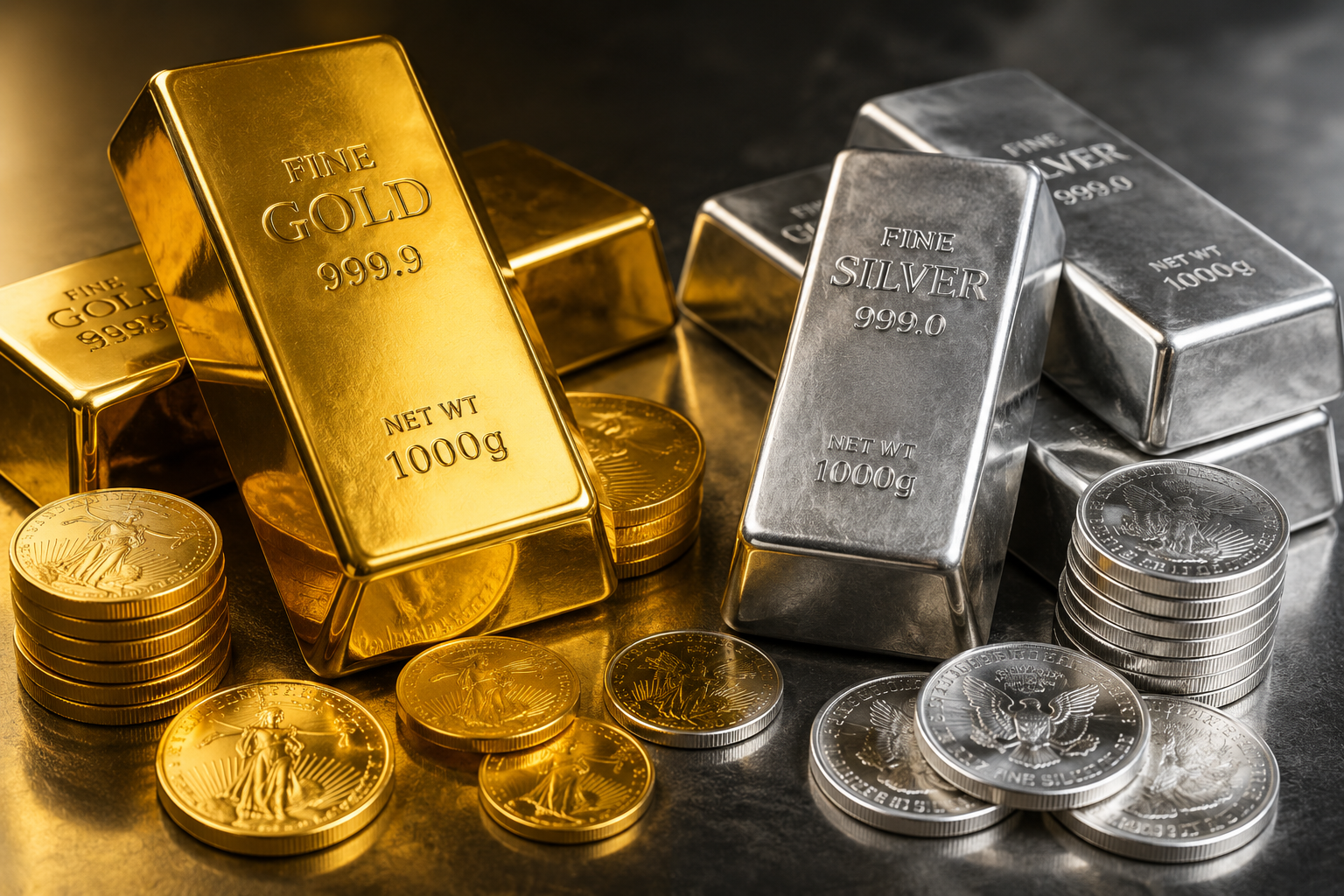
The bullion market in India is seeing some strategic movements today, bringing both new opportunities and important updates for everyday retail buyers, jewelry lovers, and long-term investors. As global economic changes continue to affect domestic commodity boards, keeping a close eye on daily price shifts is essential. Today, on July 13, 2026, Gold and Silver Price across major Indian hubs show a market balancing global inflation pressures with local seasonal demand.
In this comprehensive market update, we break down the latest prices for 24-karat, 22-karat, and 18-karat gold, along with a detailed look at silver prices in Kolkata, West Bengal, and other major states across India.
Gold and Silver Price Today : Kolkata Bullion Market
Kolkata, historically known as one of India’s biggest hubs for gold trading and beautiful jewelry craftsmanship, is showing steady pricing today with minor downward corrections.
Gold Prices in Kolkata per Gram (July 13, 2026)
24 Karat Gold (99.9% Purity): Today, the price for the highest purity 24K gold stands at ₹14,432 per gram, marking a tiny dip of ₹1 compared to the previous trading session.
22 Karat Gold (91.6% Purity): The standard hallmark gold used heavily for traditional ornaments is priced at ₹13,229 per gram, also seeing a minor dip of ₹1.
18 Karat Gold (75.0% Purity): Popular for modern, lightweight, and stone-studded jewelry designs, 18K gold is trading at ₹10,824 per gram, down by ₹1.
Silver Prices in Kolkata (July 13, 2026)
Silver rates in Kolkata continue to follow gold movements closely, maintaining a strong position built over recent months.
Silver per Gram: ₹234.90, showing a small correction of -₹0.10.
Silver per Kilogram: ₹2,34,900, down by ₹100 from the previous close.
Market Note: Despite today’s minor routine correction, silver has rallied remarkably since the start of the year, posting solid gains of around 5% to 7%. This growth is heavily supported by strong international industrial demand and firm overseas prices.
State-Wise & City-Wise Precious Metal Directory
To give a clear view for pan-India investors, the following comprehensive directory outlines the retail pricing for gold (per 10 grams) and silver (per kg) across key Indian states and metropolitan regions.
Note: Local prices fluctuate across state lines due to varying local market taxes, transportation costs, and specific regional bullion association policies.
West Bengal (Kolkata Hub)
As detailed above, the Eastern market remains strongly rooted around Kolkata’s pricing ecosystem. Districts across West Bengal generally mirror these rates, with minimal regional logistics variations.
24K Gold (10 grams): ₹1,44,320
22K Gold (10 grams): ₹1,32,290
Silver (1 kg): ₹2,34,900
Consolidated Domestic Price Reference Table
| Location / State | 24K Gold Price (per 10g) | 22K Gold Price (per 10g) | 18K Gold Price (per 10g) | Silver Price (per kg) |
| Kolkata (West Bengal) | ₹1,44,320 | ₹1,32,290 | ₹1,08,240 | ₹2,34,900 |
| Mumbai (Maharashtra) | ₹1,44,280 | ₹1,32,250 | ₹1,08,180 | ₹2,34,750 |
| Delhi (NCR Region) | ₹1,44,450 | ₹1,32,400 | ₹1,08,350 | ₹2,35,100 |
| Chennai (Tamil Nadu) | ₹1,44,500 | ₹1,32,450 | ₹1,08,400 | ₹2,35,400 |
| Bengaluru (Karnataka) | ₹1,44,350 | ₹1,32,300 | ₹1,08,250 | ₹2,34,950 |
| Hyderabad (Telangana) | ₹1,44,380 | ₹1,32,330 | ₹1,08,280 | ₹2,35,000 |
Core Market Drivers: Why Are Prices Moving This Way?
Understanding the underlying factors behind precious metal pricing helps smart investors make proactive choices rather than reactive ones.
1. The Interconnected Gold-Silver Correlation
Silver prices almost always move in tandem with gold. When global economic uncertainties or inflation worries drive investors to secure their capital in gold, silver naturally benefits from the rising market trend. However, silver also has massive industrial utility (used in electronics, solar panels, and EV components), causing its value to gain significant ground independently when global manufacturing indexes are up.
2. Global Currency Dynamics and the Indian Rupee
Because international bullion is traded predominantly in US Dollars, the value of the Indian Rupee (INR) against the dollar (USD) plays a massive role. If the rupee weakens, importing gold becomes more expensive, which drives up retail prices domestically even if global spot prices remain flat.
3. Central Bank Accumulation
Central banks worldwide, including the Reserve Bank of India (RBI), regularly adjust their foreign exchange reserves by purchasing physical gold bullion. This sustained buying by central banks acts as a macro price floor, keeping prices stable over longer fiscal quarters.
Essential Checklist for Retail Buyers
Before walking into a jewelry store or transacting online, keep these guidelines handy to get the best value for your money:
Verify the Karatage: Always explicitly confirm whether the quoted rate matches 24K, 22K, or 18K, depending on the items you are purchasing.
Demand BIS Hallmarking: Ensure every piece of jewelry features the Bureau of Indian Standards (BIS) hallmark logo alongside the unique HUID (Hallmark Unique Identification) alphanumeric code.
Understand Making Charges: Retailers add making charges, which can vary from 5% to 25% depending on the complexity of the design. Always ask for a transparent breakdown of the raw gold cost versus labor charges.
Track the Daily Base Price: Check reliable daily platforms right before purchasing to ensure your jeweler’s base rate aligns closely with the official commodity market pricing of the day.
Disclaimer: This information is compiled from various news agencies and market inputs for educational purposes only. It should not be treated as financial or investment advice. Because bullion rates fluctuate in real-time due to market volatility and local taxes, buyers are strongly advised to check live prevailing rates and consult a certified financial advisor before making any purchasing decisions.